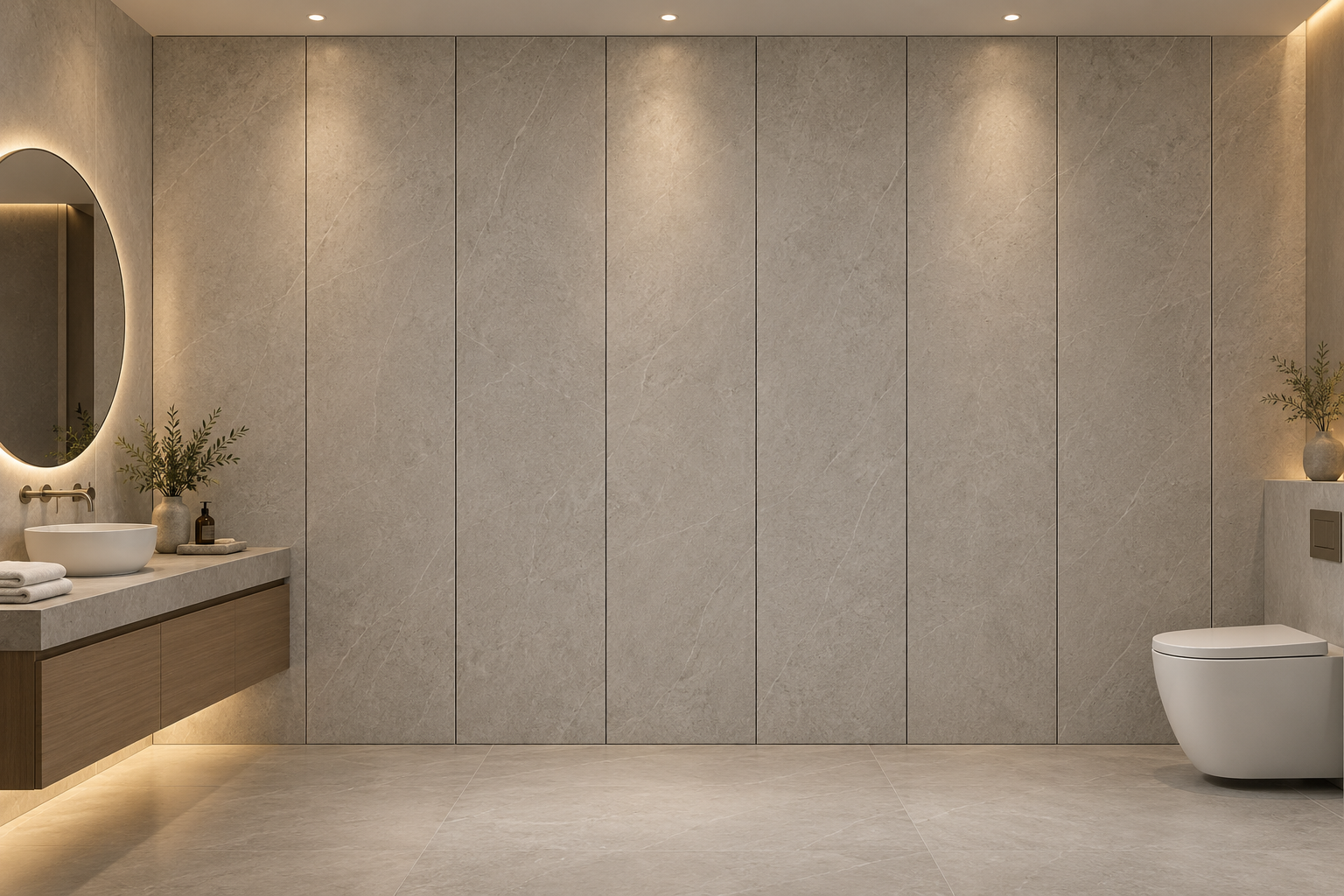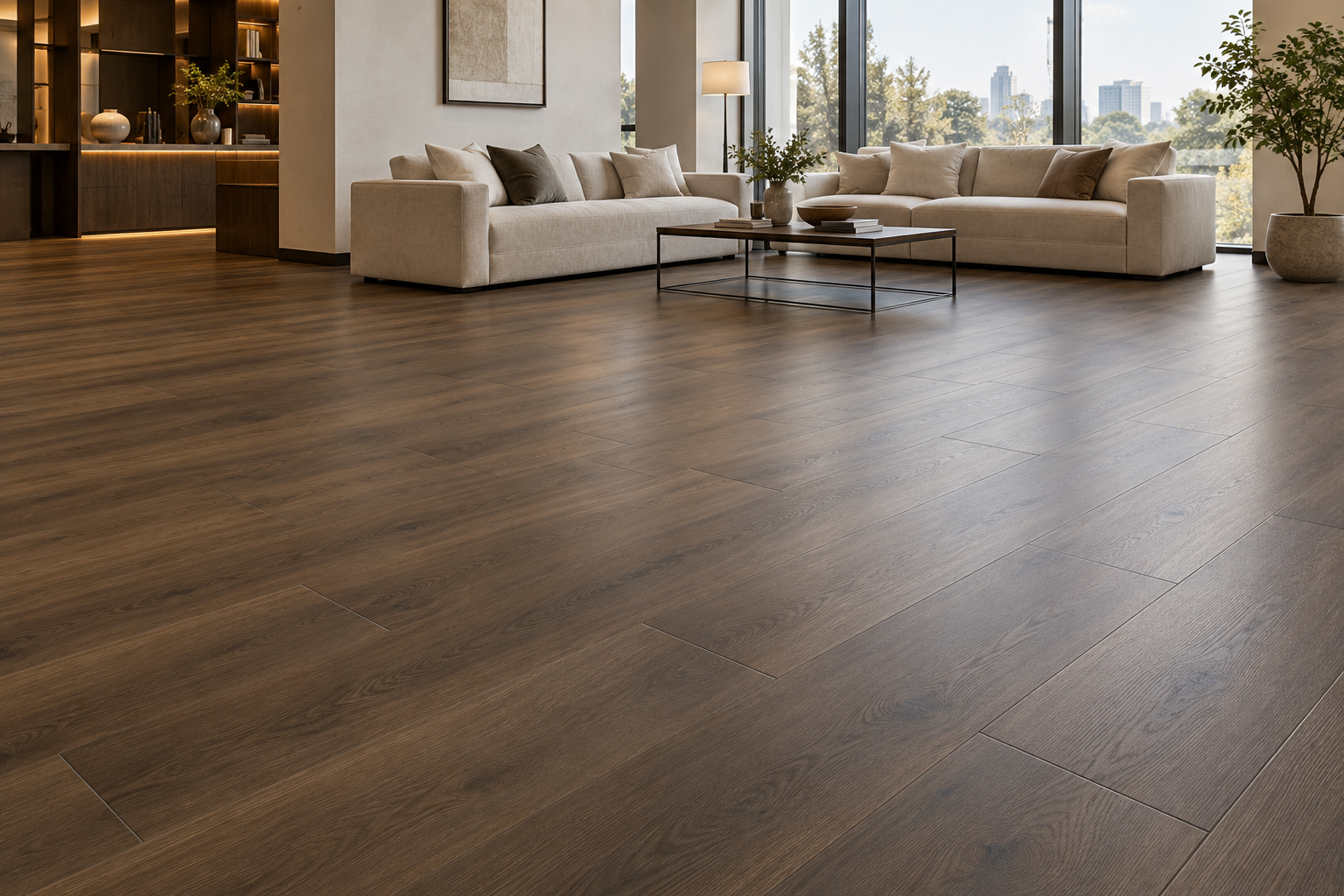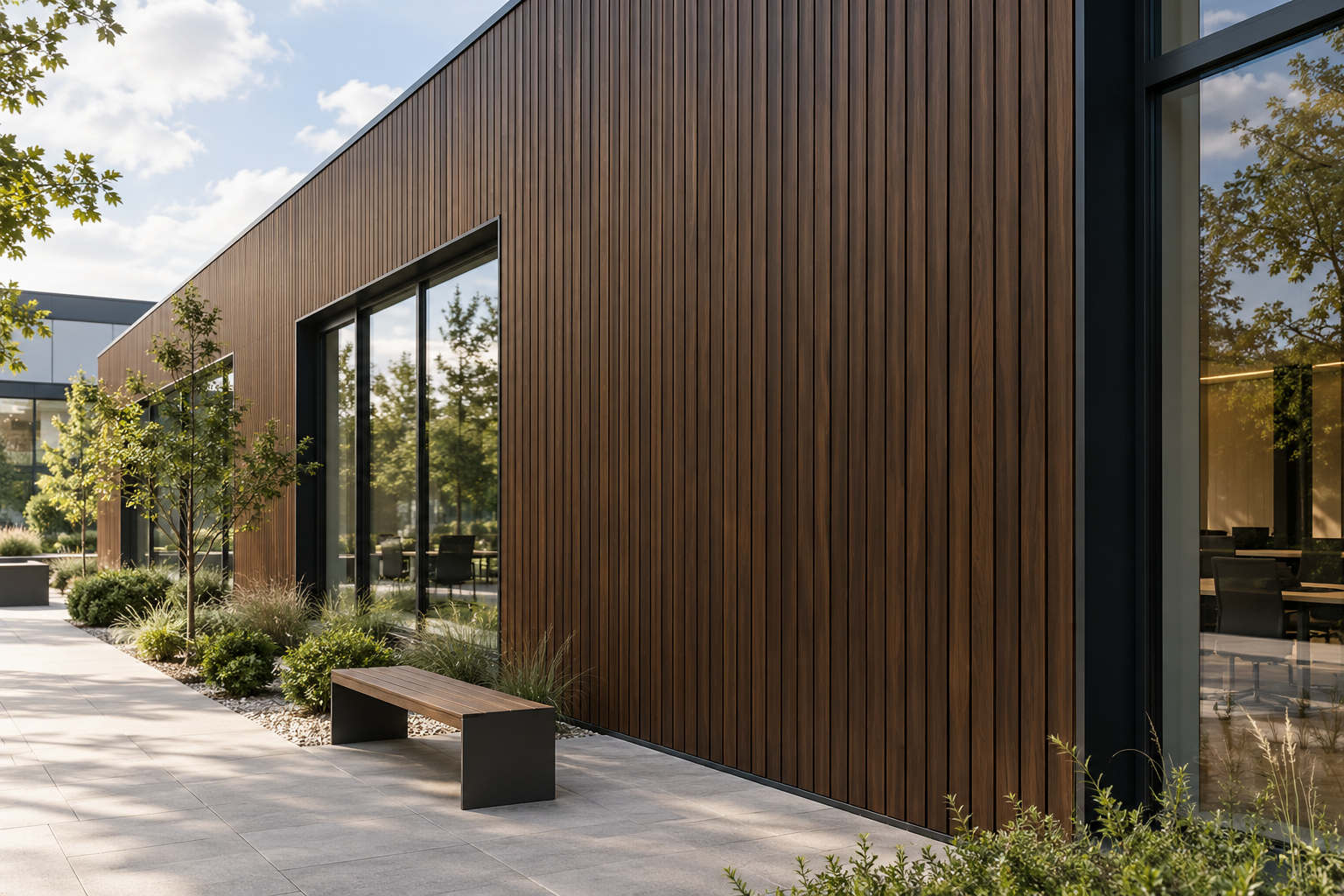
A hotel meeting room may specify a warm wood-look feature wall while the purchasing brief simply asks for a “fire-rated panel.” That phrase leaves several decisions unresolved. An importer might receive one quotation marked Class A and another carrying a Euroclass designation. Treating these labels as interchangeable can send the wrong evidence into project procurement, even when both suppliers provide genuine documents.
For indoor WPC wall panels, separate the desired appearance from the evidence the project requires. A wholesale distributor needs a clear description of the exact product, the relevant assessment route and the intended application. Consequently, the first comparison concerns the meaning and scope of the documents, before price or delivery terms.
Quick Answer: Does Class A Mean the Same as Euroclass A1?
No. A Class A interior-finish claim associated with ASTM E84 or UL 723 is not a direct translation of Euroclass A1, A2 or another EN 13501-1 classification. The systems use different assessment frameworks. Keep each designation with its named standard and supporting documents, then ask the project’s qualified reviewer whether that evidence satisfies the specification. Neither an isolated letter nor the phrase “fireproof WPC” provides enough information for purchasing approval.
Read the Standard Beside the Letter
ASTM E84 reports surface flame-spread and smoke-developed indices under defined test conditions. Its published scope explains that a flame-spread index alone does not establish noncombustibility, and the test does not measure heat transmission through the surface. Therefore, buyers should not turn an E84 result into a claim for a fire-resistance duration. See the ASTM E84 scope.
Meanwhile, EN 13501-1 provides a reaction-to-fire classification procedure and considers products in their end-use application. Its categories distinguish general construction products from floorings and certain insulation products. A flooring classification therefore does not automatically answer a wall-finish request. See the BSI overview of EN 13501-1.
Where a classification includes suffixes such as s1 and d0, retain them in the procurement record. They concern smoke production and flaming droplets or particles within the relevant classification framework. Do not shorten a complete designation to its first letter. The European classification tables show these separate attributes; they do not provide a universal purchasing conversion from an ASTM label.
Compare Evidence Fields Without Inventing an Equivalence
Use two columns in the submittal register when a supplier supplies both routes. However, leave a missing route blank and request clarification instead of filling it from the other result.
| Purchasing question | Class A claim associated with E84 or UL 723 | EN 13501-1 classification claim |
|---|---|---|
| Which route supports the claim? | Record the exact test method and report | Record the classification standard and report |
| What result should remain visible? | Retain both reported indices and classification context | Retain the complete classification, including applicable suffixes |
| Which product does it cover? | Match product identity and tested construction | Match product identity and stated field of application |
| What installation applies? | Check the documented specimen and mounting details | Check the covered end-use conditions |
| Who accepts the evidence? | The project’s designated technical reviewer | The project’s designated technical reviewer |
| What must buyers avoid? | Converting the letter into Euroclass A1 | Replacing missing E84 evidence with an assumed equivalent |
This comparison organizes evidence. It does not choose the required fire rating for a hotel, office or other occupancy. The project team must establish that requirement using the applicable jurisdiction, specification and installation conditions.
Apply the Comparison to a Finished Meeting Room
Consider an illustrative hotel meeting room with vertical walnut-look indoor WPC wall panels behind a conference table. The designer also proposes a lighter oak-look finish in an adjacent lounge. Although the two walls share a product family name, the purchasing team should identify the offered profile, composition, decorative surface and product code for each selection.
Next, compare those identities with the documents. Ask the supplier to explain whether the supporting evidence covers both finishes and the proposed installation. A common brochure heading cannot establish coverage for every decorative layer, profile or formulation.
Also identify the planned backing and attachment arrangement. If the project changes from a bonded lining to a cavity-mounted arrangement, route that change to the technical reviewer before committing the order. England’s published guidance illustrates why application scope matters: reaction-to-fire results apply within specified conditions rather than automatically to every installation. See the Approved Document B scope guidance.
Keep Commercial Approval Separate From Technical Acceptance
A decorative building materials supplier can offer an attractive MOQ and lead time while a document question remains unresolved. Record that situation honestly: commercially quoted, technically pending. Otherwise, a purchasing system may treat a price approval as permission to manufacture or ship.
For example, agree who must confirm the product-to-report match, who reviews the project application and which document revision closes the issue. Then link the accepted product code to the purchase order. If a supplier proposes a substitute finish after approval, reopen the affected review instead of retaining the original acceptance by default.
Similarly, keep OEM/ODM cooperation and custom colors within this change process. Ask how a proposed customization affects the existing evidence before promising the same classification to downstream customers. Written confirmation helps sales teams avoid repeating an unsupported statement across several markets.
Budget for the Approved Wall, Not Just the Panel
Once the reviewer accepts the proposed system, the building contractor can price the matching backing, attachments, trims and finishing work. This connects installation cost with an identifiable scope. In contrast, a panel-only quotation leaves buyers uncertain about the cost of satisfying the approved construction.
However, fire documentation answers only part of the buying decision. Buyers should verify test reports, VOC limits, fire-rating documents and warranty terms for the specific product and project. Review durability and cleaning guidance separately, because a reaction-to-fire result does not establish scratch resistance or maintenance cost.
Finally, align container loading and delivery planning with the approved product list. Keep finish codes, quantities and document references together. A shipment of visually similar substitute panels does not resolve a missing technical approval.
Five Questions B2B Buyers Ask
Can we accept a brochure that says only Class A?
Request the named standard, complete report and exact product identity. The letter alone leaves the assessment route unclear. Ask the project reviewer to confirm which documents and acceptance criteria apply before releasing the order.
Can one supplier provide documents for both systems?
Possibly, but verify each document independently. Check that both describe the offered SKU and relevant conditions. Do not assume that a report for one product line also covers another line from the same factory.
Does a sample prove the fire classification?
No. Sample evaluation helps assess color, profile, joints and finish quality. Use qualified laboratory documentation for fire-related claims. Moreover, do not perform informal flame demonstrations or treat a sales video as a substitute for the required evidence.
Should every custom color trigger new testing?
Do not make that decision from color appearance alone. Ask the supplier and competent reviewer whether existing documentation covers the proposed variation, and what additional assessment or testing they require if it does not.
What should a bulk inquiry include?
Send the destination market, intended room, wall application, proposed installation and required assessment route. Include quantities, finish references and the document deadline. This allows suppliers to identify gaps before a purchase commitment.
Request a Product-Specific Documentation Package
For a Witop Decor inquiry, request samples, technical specifications, technical data sheets and available supporting reports for the exact indoor WPC wall panels under consideration. Share the project requirement without replacing it with a generic “fireproof” request. Then ask for a project quotation that identifies the proposed supply scope, outstanding technical questions and approval responsibilities before bulk ordering.

James is a content creator and decorator with five years of experience designing home decor. In his daily life, james is constantly on the lookout for the latest, great examples of house design and further optimizes his solutions. Additionally, he writes articles related to outdoor design, interior design, and architectural decorating materials to help brands build more engaging relationships with their audiences.