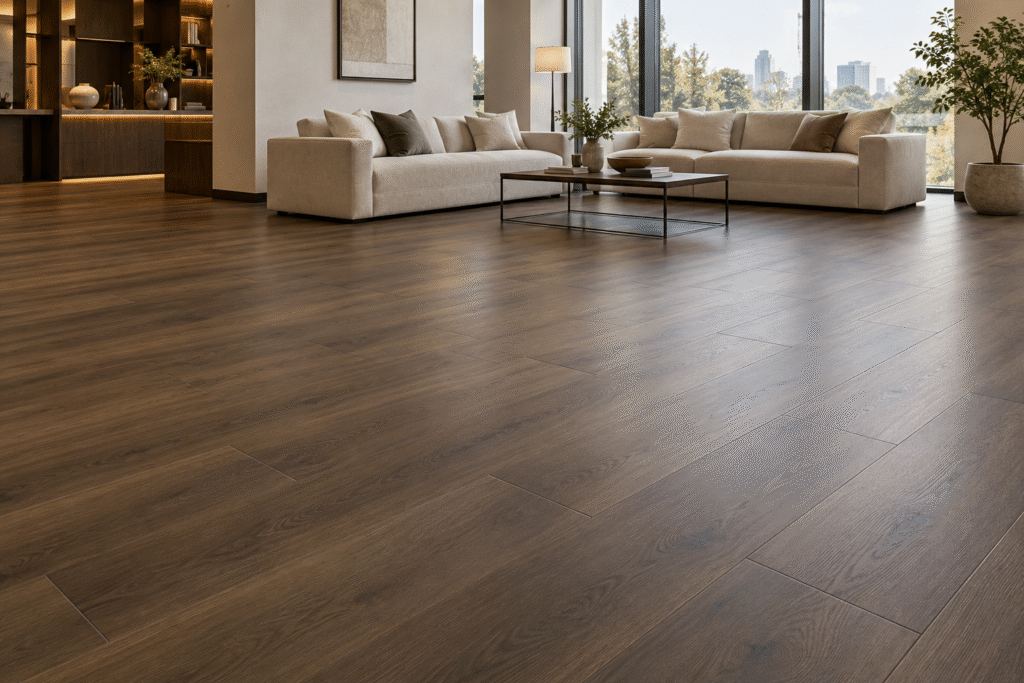
Two wood-look floors can create similar first impressions in a completed hotel guest room. However, a quotation that lists only overall thickness cannot explain how each product handles its intended use. An importer needs to understand the separate construction layers before comparing offers or presenting a specification to a project team.
For SPC flooring, overall thickness and wear layer thickness answer different questions. Consequently, treating either number as a complete quality grade can produce a misleading purchasing decision. Start with a clearly identified product, then connect its construction to the proposed rooms and commercial terms.
Quick Answer: Does Thicker SPC Flooring Mean Better Wear Resistance?
No. Overall thickness describes the complete product according to the supplier’s stated measurement basis. Wear layer thickness describes a particular protective layer above the printed design. A thicker product may include more core material or a thicker attached backing without increasing its wear layer. Therefore, compare these measurements separately, identify the surface treatment, and verify performance evidence for the exact SKU and intended application.
Separate the Numbers in the Quotation
Ask the decorative building materials supplier for a labeled construction drawing that matches the offered product code. Also, request confirmation of whether the headline thickness includes an attached backing. A quotation and a technical data sheet should use the same definition.
The construction generally distinguishes a decorative print, a clear wear layer, a rigid core and, where supplied, an attached backing. A specialty top coat may provide additional surface protection. These elements serve different purposes; a single total cannot describe them all. Mannington’s construction explanation provides useful background, but its own product specifications do not establish Witop specifications.
| Specification entry | What buyers should establish | What it cannot establish alone |
|---|---|---|
| Overall thickness | Measurement basis and whether backing counts | Abrasion performance or commercial suitability |
| Wear layer thickness | Declared thickness and relevant product evidence | Scratch resistance under every condition |
| Rigid construction | Exact product structure and locking system | Performance from thickness alone |
| Surface treatment | Treatment identity and supported care instructions | Unlimited stain or scuff resistance |
| Attached backing | Material, thickness and approved installation system | Permission to add another underlay |
Compare the Thickness Breakdown Before Comparing Price
Consider two hypothetical quotations that both advertise 6 mm overall thickness. One includes a 1 mm backing; the other includes a 1.5 mm backing. Subtraction leaves 5 mm and 4.5 mm respectively for the rest of each product. Neither remainder represents pure core thickness because other layers also contribute. These figures illustrate quotation analysis only, not available Witop products.
The example exposes a common comparison error: equal headline thickness does not mean identical construction. Moreover, a larger remainder does not prove a stronger locking joint. Obtain the supplier’s actual technical specifications and relevant performance results rather than assigning quality from arithmetic.
Evaluate the Wear Layer and Surface Treatment Together
Ask which declared measurement describes the clear wear layer and how the supplier identifies any separate surface treatment. Then request the applicable abrasion, scratch or stain information for the proposed service conditions. Keep each result attached to its test method, product identity and stated limitations.
For example, a wear-through warranty may define failure differently from visible scratches, loss of gloss or staining. Read those definitions before using the warranty in a sales proposal. Likewise, do not turn a thicker wear layer into a promised number of service years. Durability also depends on use, care and the complete product construction.
Specify Guest Rooms and Shared Lounges Separately
A hotel guest room and a shared lounge may use the same oak-look design, yet the purchasing team should describe their activities separately. Record expected occupancy, footwear, cleaning arrangements and furniture use. Next, ask the supplier whether its written application guidance covers each room type.
This approach helps a wholesale distributor present a consistent visual collection without assuming that one construction suits every location. If the project chooses different SKUs, confirm appearance compatibility through sample evaluation. Similar photographs cannot establish an exact match in color, embossing or gloss. Finally, obtain project approval for the actual combination before releasing the order.
Include Backing in the Installation Discussion
An attached backing forms part of the offered system. Therefore, give its identity and installation instructions to the building contractor during project procurement. Ask the manufacturer whether the specified subfloor and any proposed additional underlay fit that system. Do not authorize an extra layer simply to make the floor feel thicker.
Also, keep substrate preparation, moisture checks and installation requirements within the contractor’s review. A thicker plank does not automatically remove those tasks. Compare installation cost using the approved complete system, including preparation and necessary accessories, so the quote does not hide work that the site still needs.
Connect the Specification to Commercial Evidence
Ask the supplier to identify which reports cover the selected SKU, backing and construction. Buyers should verify test reports, applicable VOC limits, fire-rating documents and warranty terms for the destination and project conditions. A shared product name or matching thickness does not prove that every construction has the same fire rating or emissions evidence.
Similarly, confirm commercial warranty scope for the named application. Check exclusions, claim documentation and responsibility for replacement materials and labor. Meanwhile, review the cleaning instructions with hotel operations. Maintenance cost estimates should reflect approved products and procedures rather than a general claim that vinyl flooring requires no care.
Build an Order Record That Prevents Substitution
Create one approved specification record with the product code, construction drawing, overall thickness basis, wear layer, backing and finish. Link it to the quotation and retained sample. Additionally, record who approves changes if the supplier proposes another construction after the initial sample.
For repeat orders, ask whether custom colors or OEM/ODM cooperation changes the MOQ, lead time or documentation requirements. Request confirmed carton dimensions, weight and packing quantities for container loading; do not estimate them from plank thickness alone. Finally, keep price comparisons tied to the same accepted specification so a lower offer does not quietly introduce a different product.
B2B Buyer FAQs
Can two floors with the same overall thickness have different wear layers?
Yes. The total describes several components together. Therefore, request a separate wear layer declaration and an identified construction for each offer before comparing them.
Should buyers always choose the thickest available wear layer?
No single number settles the purchase. Match the intended use, relevant evidence, maintenance requirements and commercial warranty to the project, then compare the complete cost.
Does attached backing count toward overall thickness?
It may, depending on the supplier’s stated measurement basis. Ask for an explicit answer in the quotation and technical data sheet, then reconcile any conflicting descriptions.
Does greater overall thickness guarantee a stronger locking system?
No. Request the specified joint design, installation requirements and relevant evidence. Avoid comparing locking performance through total thickness or a face sample alone.
What should a distributor send with a bulk order inquiry?
Send room types, estimated quantities, design preferences, required documents and delivery expectations. Also, identify any mandatory construction details and the person responsible for approving substitutions.
Request a Construction-Specific Project Quotation
Contact Witop Decor to request samples, technical data sheets and a project quotation for the SPC flooring construction under consideration. Include guest-room and shared-lounge requirements separately. Then ask the team to confirm available specifications, packing and commercial terms before a bulk order. A documented comparison gives both buyer and supplier a clearer basis for the decision.
Primary Reference: Mannington Commercial’s explanation of rigid core flooring construction supports the distinction between construction layers. Product availability and performance require separate confirmation for the offered SKU.

James is a content creator and decorator with five years of experience designing home decor. In his daily life, james is constantly on the lookout for the latest, great examples of house design and further optimizes his solutions. Additionally, he writes articles related to outdoor design, interior design, and architectural decorating materials to help brands build more engaging relationships with their audiences.