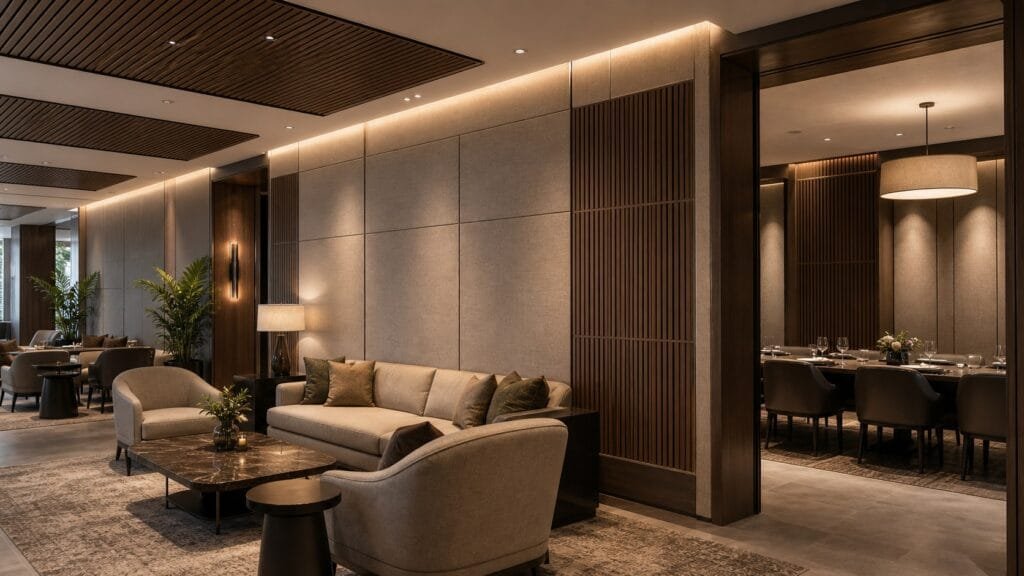
Acoustic Panels for Hospitality Projects: NRC, Fabric Durability, Fire Documents, and Contractor Delivery Control
Direct Answer: Why Do Hospitality Contractors and Importers Compare Acoustic Panels?
Hospitality contractors, importers, and wholesale distributors compare acoustic panels because hotels, restaurants, lounges, meeting rooms, and banquet halls need sound comfort as much as visual design. Therefore, buyers should evaluate NRC performance, panel thickness, fabric durability, fire-rating documents, VOC information, installation method, packing, MOQ, and lead time before bulk purchase. Moreover, a reliable factory supply plan helps B2B buyers reduce project delays, protect margins, and support repeat orders across hospitality channels.
What Are Acoustic Panels in B2B Hospitality Supply?
Acoustic panels are sound-absorbing decorative panels that help reduce echo, improve speech clarity, and create a more comfortable indoor environment. In hospitality projects, contractors often use them in hotel lobbies, guest corridors, conference rooms, restaurants, bars, reception areas, cinemas, coworking lounges, and training rooms. However, B2B buyers should not treat acoustic panels as simple wall decoration. They need a product system that combines acoustic performance, surface design, installation efficiency, compliance documents, and consistent supply.
For example, a hotel owner may request a calm lobby, while a restaurant operator may need lower reverberation during busy dinner hours. Meanwhile, an importer must consider container loading, dealer display samples, fabric color range, project MOQ, reorder stability, and after-sales risk. Consequently, the purchasing decision requires both technical and commercial evaluation.
Witopdecor supplies decorative building materials for overseas B2B markets, including acoustic panels, WPC wall panels, UV marble sheets, bamboo charcoal panels, and SPC flooring. Additionally, many hospitality projects combine several materials in one interior package, so buyers often need coordinated color options, sample kits, and project quotation support.
Search Intent: What Do B2B Buyers Really Need to Know?
When buyers search for “acoustic panels for hotels” or “acoustic panels supplier,” they usually want more than a product photo. Importers want to know whether the supplier can provide repeatable quality, reasonable MOQ, safe packing, and marketable colors. Contractors want to know how the panels perform in real spaces, how quickly installers can mount them, and whether documents can support project approval. Designers want to know whether the surface fits hospitality interiors without making the room look like a technical studio.
Therefore, a strong sourcing discussion should answer specific questions: What NRC value should buyers compare? Which panel thickness fits hotel corridors or meeting rooms? What fabric or PET surface can handle frequent contact? What fire-rating and VOC documents should project buyers verify? How does the supplier pack panels for ocean freight? As a result, B2B buyers can move from vague acoustic claims to measurable procurement standards.
Acoustic Panels vs. Other Interior Wall Solutions
| Material Option | Main Function | B2B Advantage | Procurement Risk to Check | Best-Fit Hospitality Area |
|---|---|---|---|---|
| Acoustic Panels | Sound absorption and decorative wall/ceiling finish | Improves speech comfort, supports design, reduces echo, offers project customization | NRC data, fire-rating documents, fabric durability, color consistency, installation method | Meeting rooms, restaurants, lobbies, corridors, lounges, banquet spaces |
| WPC Wall Panels | Decorative wall cladding | Fast installation and strong visual texture | Profile stability, surface consistency, accessories, expansion details | Feature walls, corridors, reception areas |
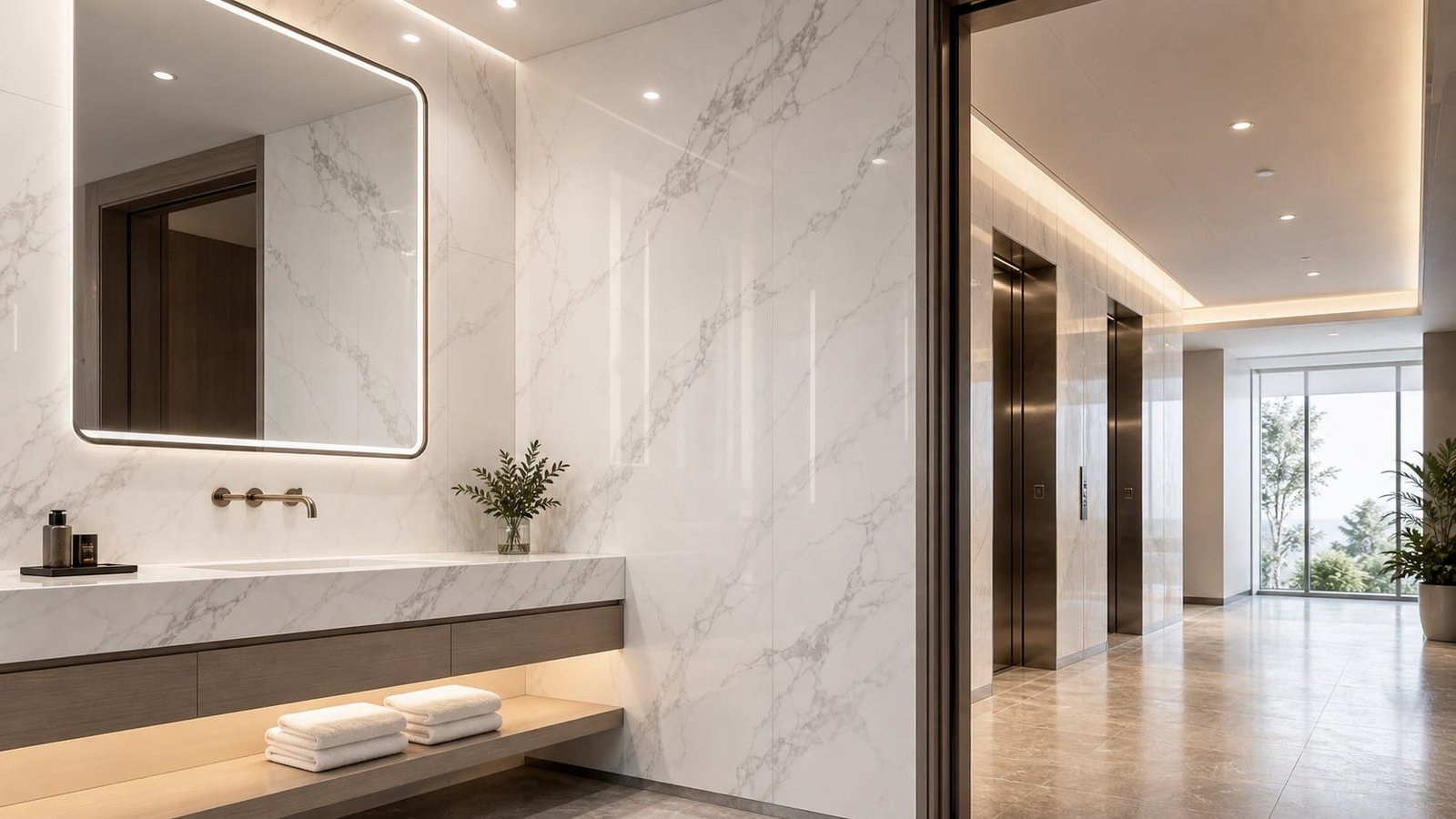
| UV Marble Sheets | Marble-look wall finish | Large-format visual impact and renovation speed | Surface gloss, edge protection, freight damage, adhesive compatibility | Lobbies, bathroom walls, elevator areas |
| Painted Walls | Basic color finish | Low material entry cost and simple local repainting | Little sound absorption, frequent maintenance, lower premium value | Back-of-house areas or low-budget rooms |
| Gypsum Board Alone | Partition and wall base | Common construction material and easy availability | Weak acoustic comfort without additional treatment | Base wall system before decorative/acoustic finishing |
Key Technical Specifications B2B Buyers Should Compare
1. NRC Value and Real Room Expectations
NRC, or Noise Reduction Coefficient, helps buyers compare sound absorption performance. However, buyers should understand that one number does not solve every room. Room size, ceiling height, furniture, floor finish, glass area, and installation coverage all influence the final result. Therefore, contractors should use NRC data as a specification reference and then evaluate room conditions. Additionally, project buyers should ask whether the supplier can provide test reports or technical data sheets for the selected panel type.
2. Panel Thickness and Core Density
Panel thickness and core density affect acoustic behavior, rigidity, cutting, and perceived quality. A thicker panel may support stronger absorption in many applications, although it can increase packing volume and freight cost. In contrast, a thinner panel may suit budget projects, decorative feature walls, or areas with limited depth. Therefore, importers should compare sample performance, installation method, and landed cost per square meter instead of buying only by unit price.
3. Surface Fabric, PET Felt, or Decorative Finish
Hospitality spaces require surfaces that look refined and handle frequent contact. For example, a meeting room may need a fabric surface with a soft appearance, while a restaurant may prefer PET felt or slatted acoustic panels with easier visual maintenance. Moreover, designers often request warm neutrals, grey tones, wood combinations, or custom colors. Consequently, distributors should build a focused color range that supports fast quotation and reasonable inventory turnover.
4. Fire-Rating Documents and VOC Information
Hotels, restaurants, and public interiors may require fire-rating documents, VOC information, and warranty terms. However, requirements differ by country, project type, and local authority. Therefore, buyers should verify test reports, fire-rating documents, VOC limits, installation instructions, and warranty conditions before confirming project orders. Additionally, importers should avoid broad claims that they cannot support in their own market. A careful document review can reduce approval delays and protect long-term distributor credibility.
5. Installation Method and Site Coordination
Acoustic panels can use adhesive, clips, frames, battens, or integrated wall systems depending on the product structure and project requirements. Therefore, contractors should check wall flatness, substrate type, ceiling connection, corner treatment, cutting method, and access for future maintenance. Moreover, hotels and restaurants often renovate within tight schedules. As a result, panels with clear installation guidance and stable dimensions can help contractors reduce labor confusion and site waste.
Hospitality Scenarios: Matching Acoustic Panels to Real Project Needs
Hotel Lobbies and Reception Areas
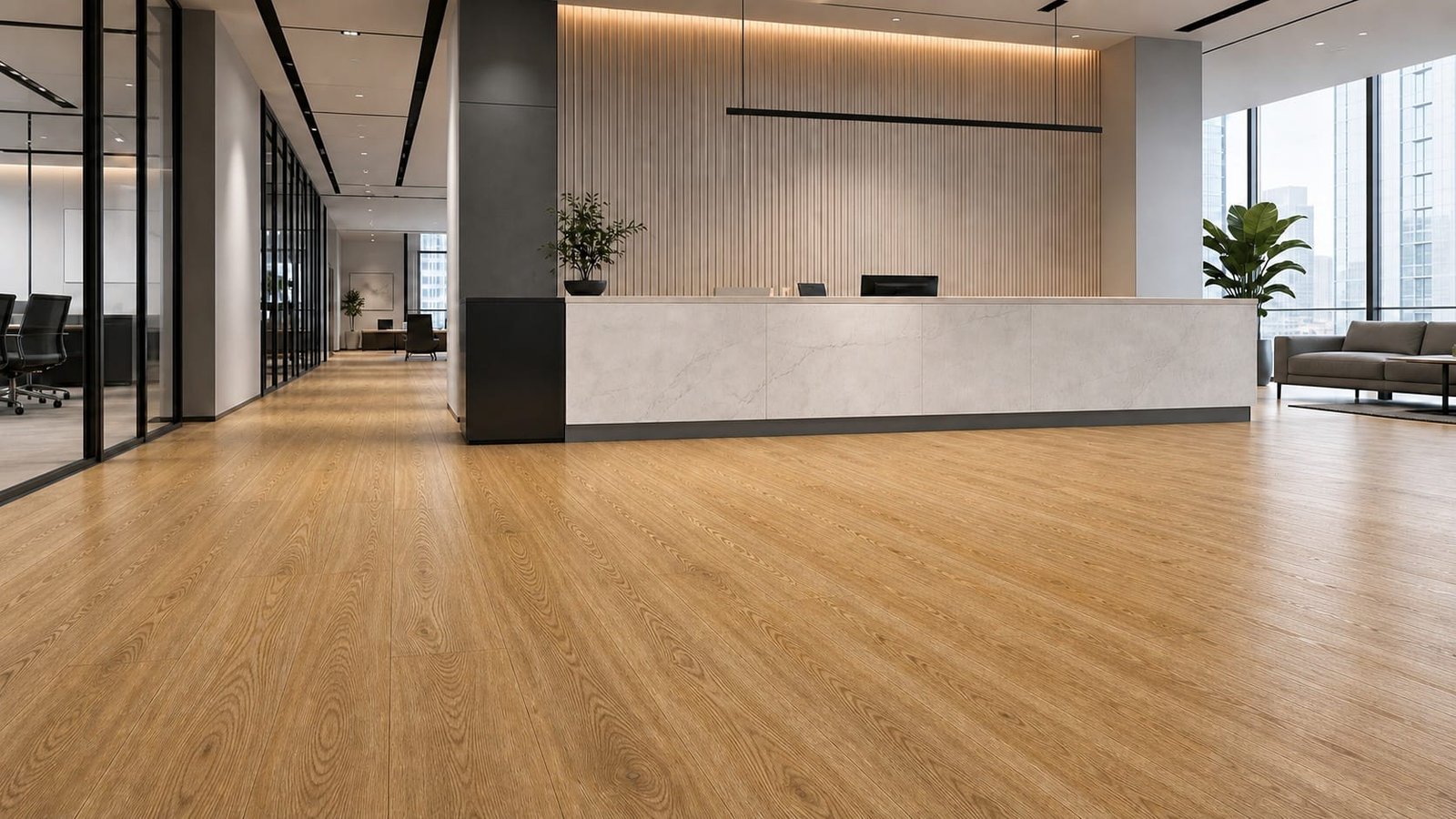
Hotel lobbies combine hard floors, glass, high ceilings, and guest movement. Consequently, echo can affect the first impression. Acoustic panels can help soften the sound environment while supporting a decorative wall or ceiling design. However, buyers should balance absorption area with aesthetics, because a lobby also needs brand character and durable surfaces.
Restaurants and Bars
Restaurants need energy, yet excessive noise can reduce comfort and shorten guest stay time. Therefore, operators often add acoustic treatment to ceilings, feature walls, booths, or private dining rooms. For B2B suppliers, this creates a strong opportunity because restaurant groups may repeat the same material package across multiple locations. Additionally, distributors can support contractors with sample boards, fast-moving colors, and clear MOQ planning.
Meeting Rooms and Conference Spaces
Meeting rooms require speech clarity. Therefore, buyers should compare NRC data, panel placement, and fabric finish more carefully. Moreover, conference spaces often need fire documents and low-emission material information before approval. Contractors should ask for technical data sheets, project references, and installation diagrams before final quotation.
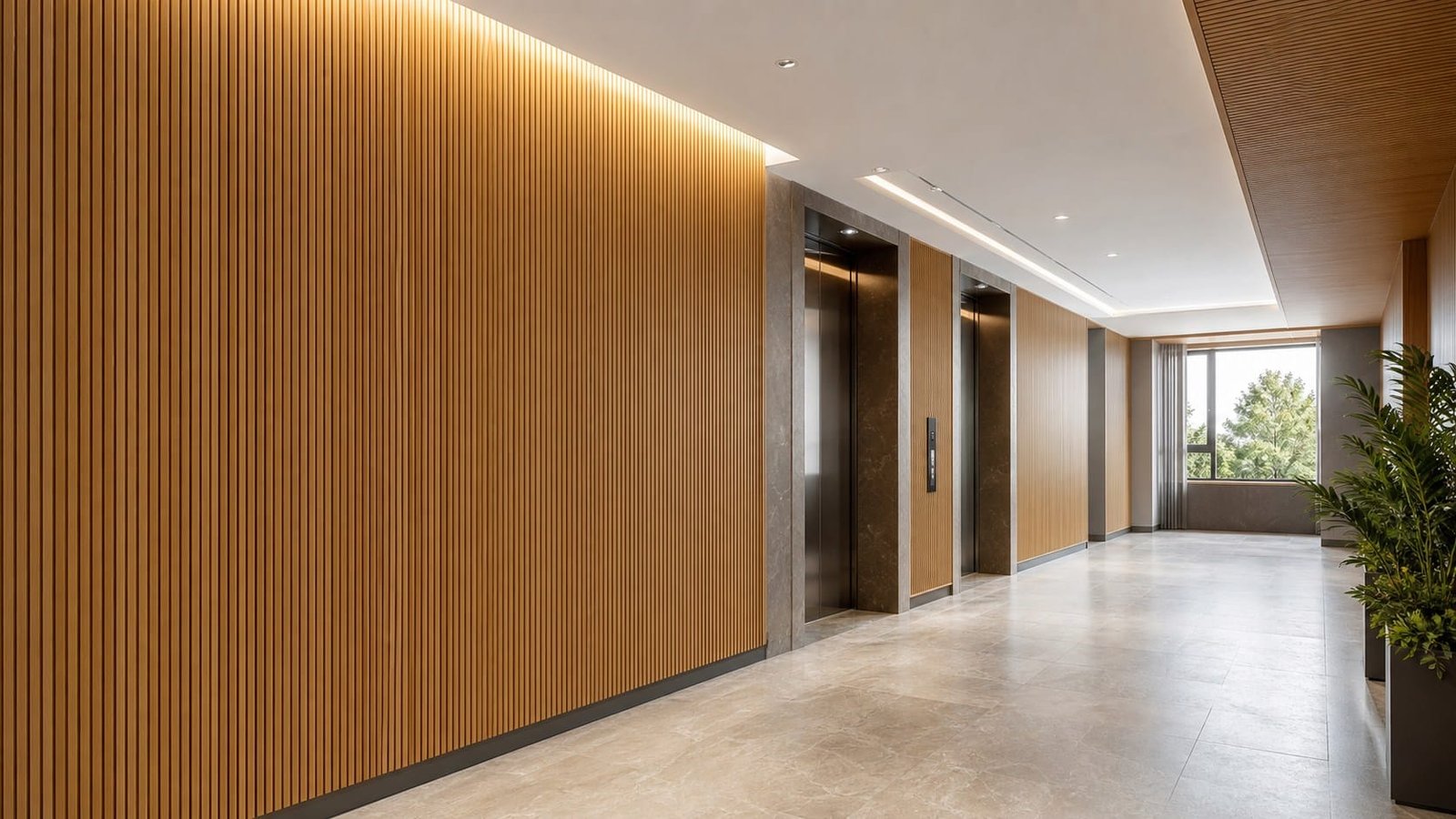
Guest Corridors and Elevator Areas
Guest corridors often use long hard surfaces that reflect sound. Acoustic panels can reduce harshness while creating a warmer interior. However, corridor walls also face luggage contact, cleaning, and frequent traffic. Therefore, buyers should compare surface durability, edge protection, color maintenance, and installation height before bulk purchase.
B2B ROI: Why the Cheapest Acoustic Panel May Cost More
Importers and distributors often compare unit prices first. However, long-term ROI depends on a wider cost structure. A low-priced acoustic panel can become expensive if it creates weak sound performance, unstable colors, poor packing, difficult installation, or missing project documents. In contrast, a better-specified panel can support higher dealer trust, faster contractor approval, fewer complaints, and better repeat orders.
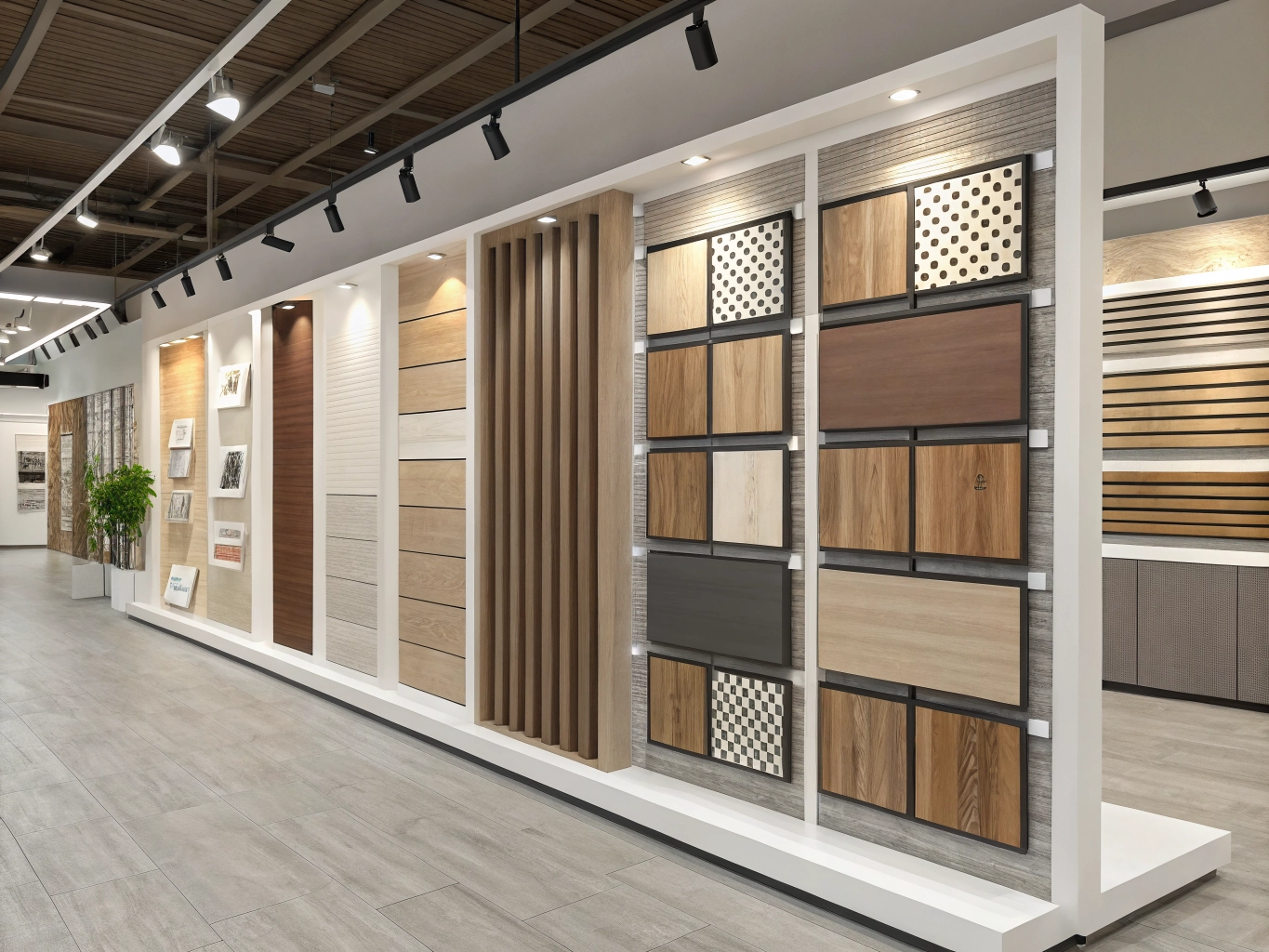
For example, a distributor can evaluate ROI through five measurable factors: landed cost per square meter, container loading efficiency, installation waste, claim rate, and reorder frequency. Additionally, project buyers should compare sample kits and showroom displays because acoustic panels rely on touch, color, and real material perception. Consequently, a market-ready acoustic panel program often performs better than a random low-cost SKU list.
Importer and Distributor Checklist for Acoustic Panels
- Define the target segment: hotel contractors, restaurant chains, office fit-out companies, importers, wholesale distributors, or design studios.
- Compare acoustic data: NRC, thickness, density, panel structure, and recommended coverage.
- Review surface options: fabric, PET felt, slatted finish, wood-look combinations, custom colors, and cleaning expectations.
- Verify documents: technical data sheets, fire-rating documents when applicable, VOC information, warranty terms, and installation guidance.
- Check packing: carton strength, corner protection, pallet plan, SKU labels, and container loading efficiency.
- Test installation: cutting, adhesive or clip system, wall flatness tolerance, ceiling transition, and corner details.
- Discuss MOQ, lead time, OEM/ODM packaging, sample kits, and reorder color consistency.
- Plan after-sales communication before bulk orders, especially for project deadlines and mixed-SKU shipments.
How Witopdecor Supports Acoustic Panel Sourcing
Witopdecor helps overseas B2B buyers compare acoustic panels for hospitality, commercial, and project-based interiors. The sourcing discussion can include samples, specifications, color options, packing details, OEM/ODM cooperation, MOQ, lead time, and project quotation support. Moreover, buyers can coordinate acoustic panels with other decorative building materials, such as WPC wall panels, UV marble sheets, bamboo charcoal panels, and SPC flooring.
This broader product view helps importers build a more complete interior material program. Additionally, it helps contractors combine sound comfort, visual design, and installation efficiency in one project package. Therefore, B2B buyers should discuss project requirements early and request technical data sheets before finalizing container orders.
FAQ: Acoustic Panels for B2B Hospitality Buyers
1. What NRC value should hotels and restaurants choose?
The right NRC value depends on room size, ceiling height, surface materials, furniture, and acoustic goals. Buyers should compare technical data sheets and ask acoustic consultants or project designers when the space requires strict performance targets.
2. Do acoustic panels need fire-rating documents?
Many hospitality and public interior projects require fire-rating documents. However, local rules differ. Therefore, buyers should verify test reports, project specifications, installation conditions, and local compliance requirements before bulk orders.
3. Can acoustic panels support custom colors or OEM packaging?
Many B2B projects and distributor programs require custom colors, sample kits, private-label packaging, or OEM/ODM cooperation. Buyers should confirm MOQ, lead time, color approval process, and carton artwork requirements before ordering.
4. How should importers reduce freight damage risk?
Importers should review carton strength, corner protection, pallet structure, moisture protection, and container loading plans. Additionally, they should request clear SKU labels and inspection photos before shipment, especially for mixed-color orders.
5. Are acoustic panels only for offices?
No. Acoustic panels also fit hotels, restaurants, bars, schools, cinemas, meeting rooms, retail spaces, and public interiors. However, each project type requires different surface durability, acoustic goals, fire documents, and installation planning.
Conclusion: Acoustic Comfort Is a Commercial Specification
Acoustic panels can help hospitality contractors, importers, and wholesale distributors improve sound comfort while strengthening interior design. However, successful B2B sourcing depends on NRC comparison, surface durability, compliance documents, installation planning, packing control, and repeatable supply. Therefore, buyers should compare samples, verify documents, discuss container loading, and evaluate full project ROI before bulk orders.
Contact Witopdecor to request acoustic panel samples, technical data sheets, wholesale pricing, OEM/ODM options, custom colors, container loading support, and project quotations for hotels, restaurants, meeting rooms, and commercial interiors.

James is a content creator and decorator with five years of experience designing home decor. In his daily life, james is constantly on the lookout for the latest, great examples of house design and further optimizes his solutions. Additionally, he writes articles related to outdoor design, interior design, and architectural decorating materials to help brands build more engaging relationships with their audiences.