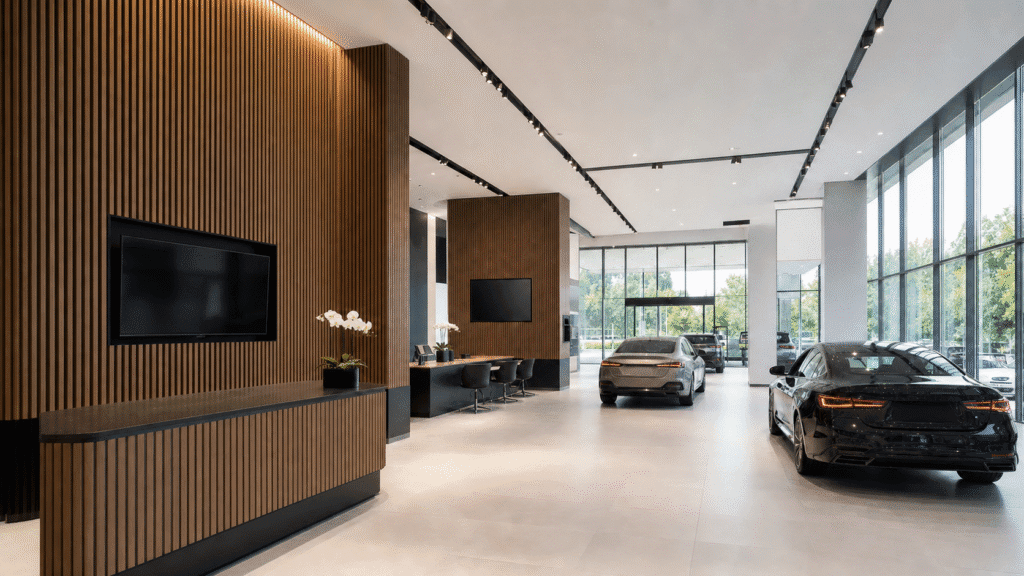
Car dealerships use interior walls to support brand identity, vehicle presentation, customer trust, and daily sales activity. Large glass facades bring strong daylight into the showroom, while spotlights and linear fixtures create changing reflections across wall surfaces. Meanwhile, display screens, vehicle specification boards, charging points, desks, doors, and promotional graphics place practical demands on the wall system.
For importers, wholesale distributors, contractors, and dealership rollout teams, WPC wall panels can provide a repeatable decorative solution for selected interior zones. However, the buyer should not approve a product through one catalog image. Lighting response, profile geometry, fixing method, fixture loads, impact exposure, cleaning, color control, fire and VOC documents, packing, and replacement supply all affect project risk.
Direct Answer: How Should Buyers Specify WPC Wall Panels for Car Dealerships?
B2B buyers should divide the dealership into functional zones and match each zone with a documented WPC wall panel construction. Compare profile dimensions, material composition, surface finish, color tolerance, fixing details, fixture interfaces, cleaning guidance, relevant fire and VOC documents, packing, MOQ, lead time, and spare-panel availability. Before a bulk order, review physical samples under showroom lighting and build a mock-up that includes trims, joints, corners, screens, and signage fixings.
Why Automotive Showrooms Expose Wall Finish Weaknesses
A dealership combines high visual expectations with active commercial use. First, large windows expose differences in gloss, texture, and color. Second, directional lighting can reveal uneven joints or surface waviness. Third, staff regularly change campaigns, display boards, and digital screens. Finally, customer routes, vehicle movement, cleaning equipment, and furniture create impact zones that a quiet office may never experience.
Therefore, buyers should define the wall function before they compare prices. A feature wall behind a reception desk faces different loads from a low wall beside a vehicle display. Likewise, a customer lounge needs a different cleaning and touch strategy from a delivery bay corridor. When the project team maps these conditions early, the factory can propose more relevant samples, trims, packing, and quantities.
Map the Dealership Into Procurement Zones
Vehicle Display and Brand Walls
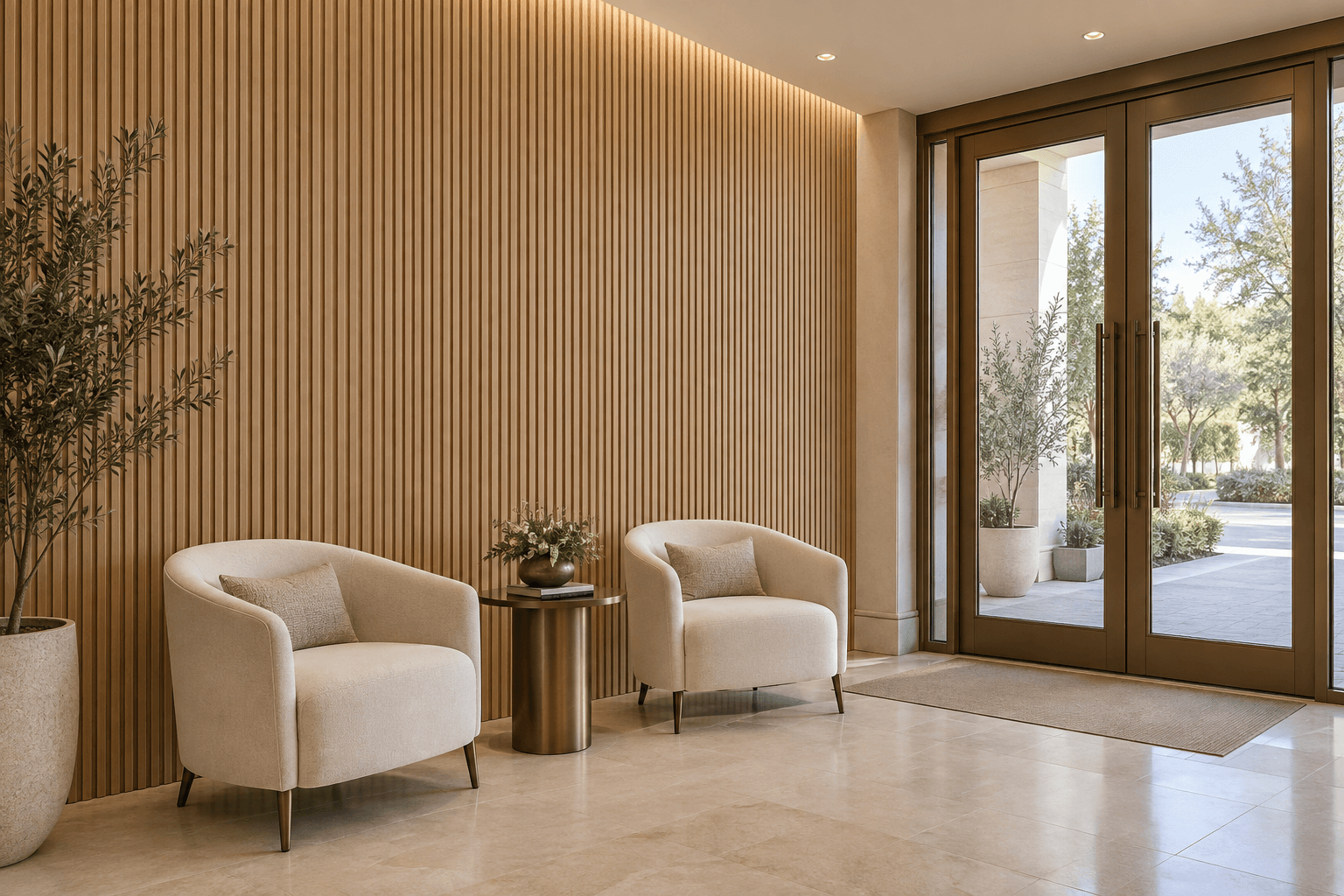
Display walls often sit behind vehicles under focused lighting. Consequently, joint alignment, panel direction, color consistency, and trim quality become highly visible. Designers may also mount logos, screens, shelves, or campaign graphics in these areas. The contractor should coordinate fixing points with the supporting wall rather than assume the decorative panel can carry every load.
Reception and Sales Desks
Reception zones receive frequent hand contact, chair movement, cable installations, and signage changes. Moreover, desks may meet the wall at several heights. The panel layout should align with counter lines, power outlets, access panels, and corner protection. A clear elevation drawing can reduce random field cuts and incomplete edges.
Customer Lounges and Consultation Areas
Customer-facing lounges need visual warmth, easy maintenance, and controlled transitions around doors, glass, and furniture. However, the buyer should also consider acoustic comfort, especially when several sales conversations happen close together. WPC wall panels provide a decorative surface, but buyers should evaluate separate acoustic treatment when the room needs sound absorption.
Vehicle Handover and Service Corridors
Handover zones can place walls close to vehicles, trolleys, tools, and cleaning activity. Therefore, project teams should identify low-level impact areas and select suitable protection details. In contrast, workshops and high-temperature or chemical exposure areas may require another wall system. Buyers should not extend an interior decorative specification into unsuitable operational spaces without a specific review.
WPC Wall Panel Specification Matrix for Dealership Projects
| Procurement dimension | Project risk | Buyer action |
|---|---|---|
| Profile geometry | Width, depth, joint design, and internal ribs affect alignment, strength, cutting, and accessory fit. | Request a dimensioned cross-section, tolerances, weight, and matching trim drawings. |
| Surface finish | Gloss, grain, embossing, and film quality react differently under daylight and spotlights. | Review full-size samples under project lighting and from several viewing angles. |
| Color tolerance | Long walls and phased branch rollouts can reveal batch variation. | Approve a master sample, define tolerance, record batch codes, and plan spare stock. |
| Subframe and fixing | Wall flatness and fixing spacing influence joint quality and long-term stability. | Confirm substrate requirements, fixing centers, fasteners, battens, and expansion details. |
| Fixture interface | Screens, shelves, logos, and displays may create loads or require service access. | Provide fixture weights and locations; connect structural fixings to the supporting wall. |
| Impact exposure | Vehicle doors, carts, chairs, and cleaning machines can damage lower wall zones. | Map impact heights and add rails, plinths, guards, or replaceable modules where needed. |
| Cleaning compatibility | Incorrect chemicals or abrasive tools can change the surface. | Request written cleaning guidance and test the routine on an approved sample. |
| Fire and VOC documents | Commercial projects may require evidence for the exact construction. | Verify test scope, product match, report validity, and local project requirements. |
| Packing and loading | Long profiles can bend, crush, scratch, or shift during export transport. | Review bundle support, face protection, corner guards, pallet plan, and container loading. |
| Replacement supply | Campaign changes, impacts, or branch updates may require matching panels later. | Define spare quantity, retained samples, storage, future MOQ, and product-code control. |
Evaluate Lighting Before Approving Color and Texture
Dealership lighting can make a small surface difference look much larger. Daylight changes throughout the day, while narrow-beam spotlights create highlights and shadows across fluted profiles. Additionally, dark finishes can show dust, fingerprints, or fine scratches more clearly than mid-tone surfaces.
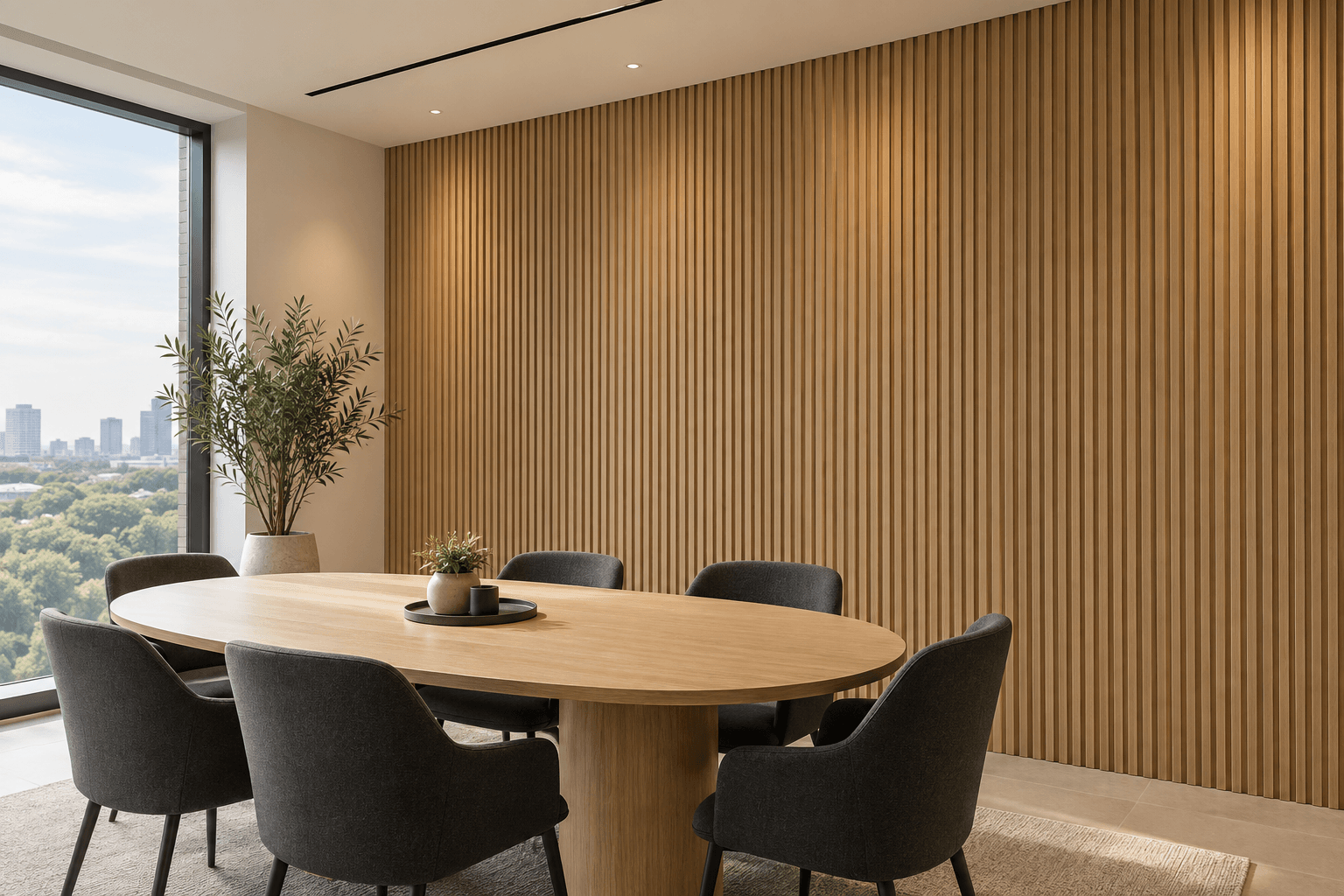
Therefore, sample approval should reproduce the main lighting conditions. The buyer can place several joined panels vertically, install the intended trim, and view the mock-up from the customer entrance, sales desk, and vehicle display area. For example, a texture that looks balanced under diffuse office light may appear too reflective beside a glazed facade.
Panel direction also affects perception. Vertical profiles can emphasize height, while horizontal layouts can make joint continuity more visible. Consequently, installers need a clear orientation mark and a room-by-room elevation. The factory and buyer should use the same approved sample direction when they compare production material.
Coordinate Screens, Logos, Shelves, and Charging Displays
Dealerships update fixtures more frequently than many other commercial interiors. Digital displays change size, campaign graphics move, and vehicle technology creates new information points. As a result, the wall design should support modification without forcing large-area replacement.
Decorative WPC panels should not carry structural fixture loads unless the tested system and project detail allow them. Instead, contractors should locate solid backing or anchors in the supporting wall. They can then coordinate cutouts, spacers, sleeves, and access panels with the decorative finish. Moreover, a removable module around key service points can reduce future maintenance cost.
Buyers should send fixture elevations to the supplier before production when custom lengths or preplanned accessories matter. However, site teams should verify actual dimensions before cutting. Clear responsibility between factory production and field installation prevents costly assumptions.
Control Impact and Cleaning in Customer-Facing Areas
Vehicle doors and mirrors can approach walls during display changes. Chairs and portable signs can also contact lower panels. Therefore, a project team should identify likely impact heights instead of expecting one surface to resist every event. Replaceable lower modules, protective plinths, or separate impact rails can provide a more practical solution.
Cleaning plans matter as well. Showrooms often follow strict appearance routines, and staff may clean walls more frequently near entrances or customer desks. Consequently, buyers should test dust removal, fingerprints, and approved cleaning liquids on a control sample. Strong solvents, abrasive pads, or excessive water may affect some films, coatings, adhesives, or joints.
Maintenance instructions should reach the building operator, not remain only in the procurement file. Additionally, spare trims and panels should carry clear product codes. This simple handover step can protect the appearance of the showroom after the installation team leaves.
Verify Fire, VOC, and Product Documentation
Importers should request documents for the actual proposed construction, including core, surface film, thickness, backing, and any relevant assembly details. A general brochure statement cannot replace product-specific evidence. Moreover, local authorities, consultants, or clients may apply different requirements to public showrooms, offices, corridors, and service areas.
Buyers should verify test reports, VOC limits, fire-rating documents, warranty terms, and report validity before purchase. If the supplier changes a component, the buyer should ask whether the change affects the documented product. Likewise, contractors should review local adhesives, battens, sealants, and substrates separately when the panel report does not cover the complete installed wall.
Plan Multi-Branch Rollouts Through SKU Discipline
Automotive groups often renovate several branches under one brand standard. Therefore, a controlled SKU list can reduce purchasing errors and simplify replacement. The schedule should connect each panel, trim, color, orientation, and accessory to a stable product code.
However, excessive customization can increase MOQ, production complexity, and leftover stock. Importers should separate core SKUs from project-only finishes. Core colors can support repeat sales and spare stock, while special finishes require confirmed project quantities and written approval.
Phased delivery also needs batch planning. If several branches share a continuous wall design, the buyer should discuss whether the factory can produce coordinated quantities together. Furthermore, carton and bundle labels should show branch, area, SKU, batch, and installation phase. Clear allocation saves time at the warehouse and site.
Compare Total Installed Cost, Not Only Panel Price
A low unit price can lose value through high cutting waste, weak accessories, damaged bundles, slow installation, or color disputes. Therefore, buyers should compare material cost together with subframe, fasteners, trims, labor, packing, freight, storage, damage allowance, spare stock, and replacement risk.
For example, a profile with coordinated inside corners, outside corners, end trims, and service details may reduce improvisation on site. Similarly, stronger export packing may cost more at the factory but prevent delays before a branch opening. As a result, landed cost and installation predictability often matter more than a small difference in panel price.
Recommended Sample and Approval Process
- Send dealership plans, elevations, lighting information, fixture positions, and rollout schedule.
- Shortlist panel profiles, colors, finishes, trims, and fixing systems.
- Review technical data sheets and applicable fire and VOC documents.
- Build a joined mock-up with a corner, end trim, screen cutout, and representative fixing.
- Approve a signed master sample under showroom lighting.
- Confirm product codes, batch controls, labels, packing, spare quantities, and delivery phases.
- Inspect production and packing against the approved specification before shipment.
Witop Decor can discuss WPC wall panel samples, profile options, custom colors, trims, OEM/ODM packing, MOQ, lead time, container loading, and project quotations. Buyers should provide drawings and market requirements early because custom profiles, colors, and packaging can affect sampling and production schedules.
Frequently Asked Questions
1. Can WPC wall panels support dealership screens or shelves?
Project teams should normally transfer significant loads to the supporting wall or a designed subframe. Buyers should provide fixture weights and locations, then confirm the fixing detail with the contractor and system supplier.
2. How should buyers check color under showroom lighting?
Install several joined panels with the intended orientation and trim. Review them under daylight, spotlights, and evening lighting from normal customer viewpoints. Then retain the approved mock-up or master sample for production comparison.
3. What information affects MOQ and lead time?
Profile type, custom color, surface film, length, trim mix, private-label packing, order quantity, and production schedule can all affect MOQ and lead time. A complete RFQ allows a more reliable answer.
4. How can importers reduce damage during container transport?
Review bundle length, internal support, face protection, corner guards, pallet design, stacking, moisture protection, and container weight distribution. Buyers should also define safe unloading and warehouse storage methods.
5. How many spare panels should a rollout order?
The answer depends on project size, cut complexity, impact risk, number of branches, storage capacity, and future MOQ. Buyers should reserve practical spares from the same batch and record their exact SKU and storage location.
Request a WPC Wall Panel Project Review
A dealership wall program succeeds when visual design, lighting, fixture coordination, impact protection, documentation, packing, and replacement supply work together. Contact Witop Decor for wholesale pricing, samples, technical data sheets, custom colors, OEM/ODM cooperation, distributor support, container loading discussion, or a project quotation. Share your elevations, branch schedule, and target market so the factory team can compare suitable WPC wall panel options.

James is a content creator and decorator with five years of experience designing home decor. In his daily life, james is constantly on the lookout for the latest, great examples of house design and further optimizes his solutions. Additionally, he writes articles related to outdoor design, interior design, and architectural decorating materials to help brands build more engaging relationships with their audiences.