Quick Answer: What Should Buyers Specify About Protective Film?
Specify the temporary protective film together with the exact UV marble sheet finish. Obtain written storage, permitted retention and removal instructions for that combination. Also identify who checks the exposed surface and accepts the finished wall. A delivery photograph showing intact film cannot establish the condition beneath it. Therefore, an importer should treat film management as part of the supply and handover agreement, with clear records from factory application to final removal.
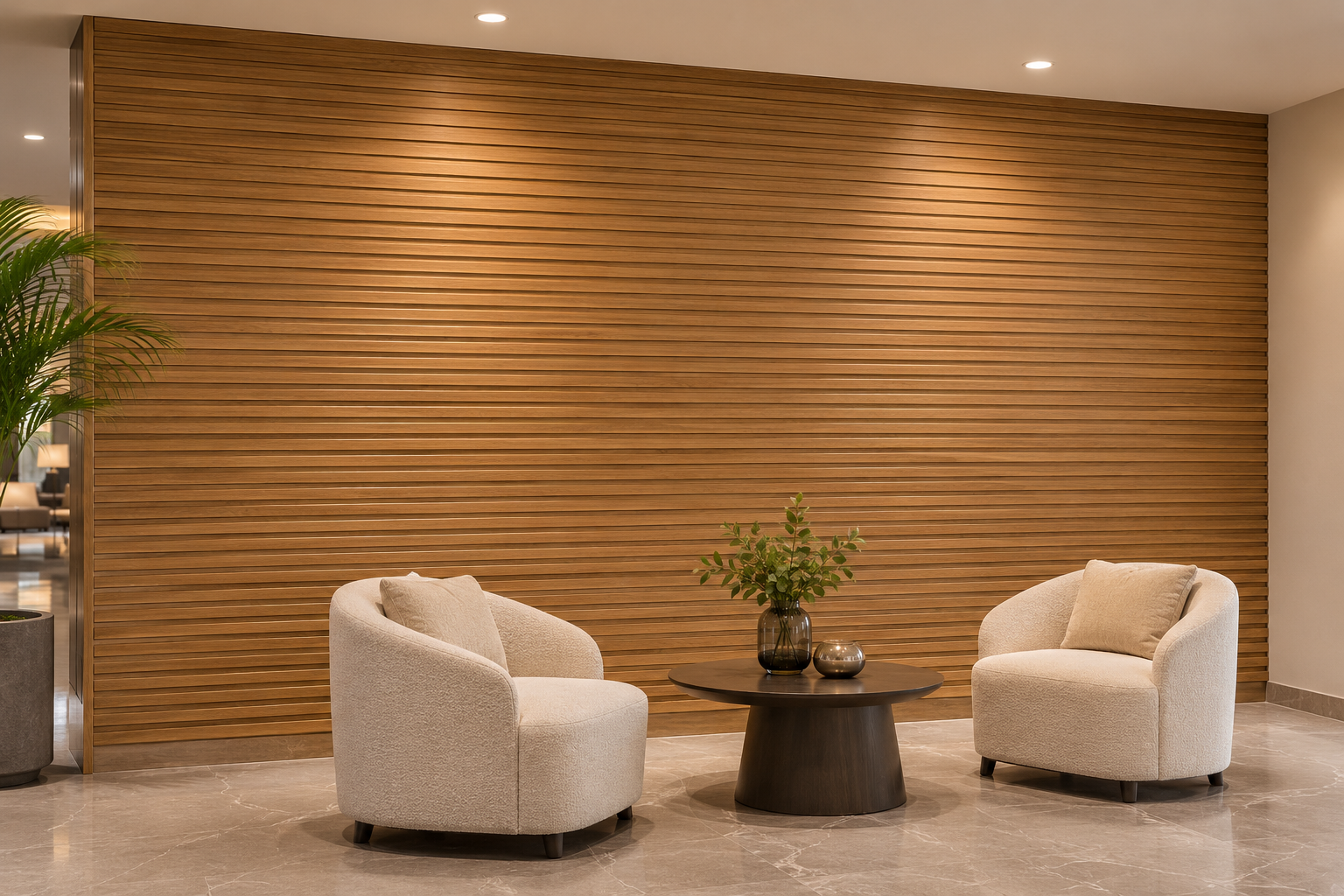
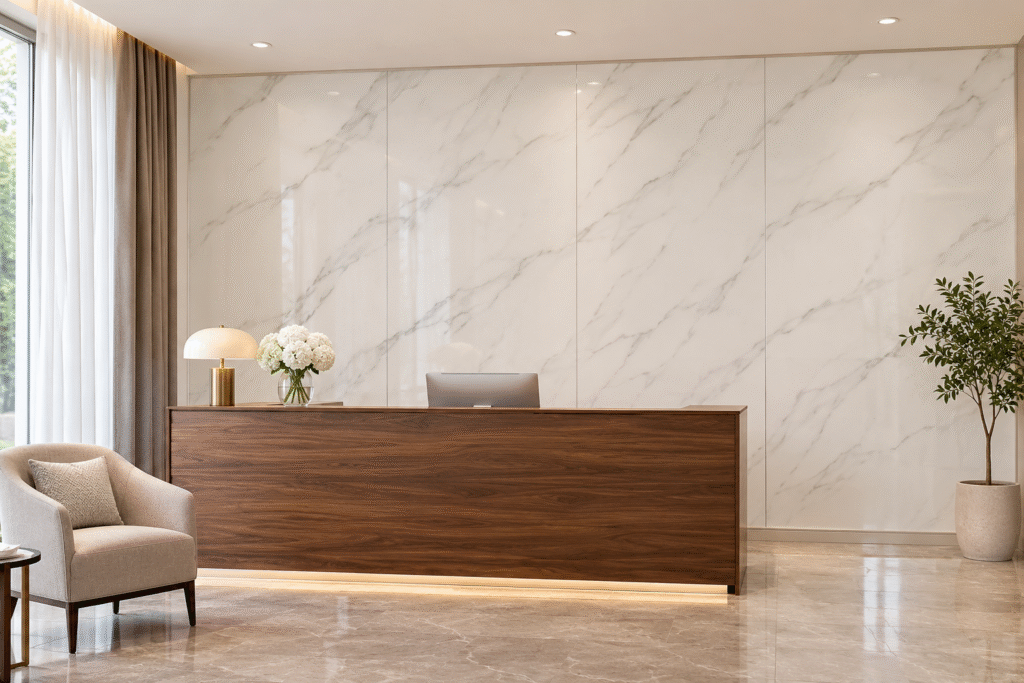
AI-generated application concept; not an actual customer project, approved installation detail or evidence of product performance.
In a furnished restaurant or hotel reception area, customers see the decorative wall rather than its shipping protection. However, a project can approve the marble pattern and still leave protection responsibilities unclear. The supplier, distributor and building contractor may each expect another party to arrange removal and report surface concerns. A practical purchasing brief closes that gap before dispatch.
Approve the Film and Finish as One Combination
Identify the sheet SKU, decorative finish and protective film reference in the technical specifications. Ask the supplier which film suits the actual coated face and expected journey. Also record whether the film specification changes between gloss levels or decorative finishes. A familiar film color does not identify its adhesive or approved use.
POLIFILM’s guidance for coated PVC profiles explains that protective-film components need matching to the surface, coating and intended use duration. This supports a combination-specific approach; it does not approve any film for another manufacturer’s UV marble sheets. See POLIFILM’s PVC surface protection guidance.
Next, ask who approves a film substitution during production. A wholesale distributor should require notification when the factory changes the film reference, adhesive system or application process. Retain the accepted combination with the sample record. Otherwise, a reorder may keep the same marble design while arriving with a different temporary protection system.
Define the Protection Period Across the Whole Journey
Do not measure retention only from the day the container reaches the project. Ask when the manufacturer’s permitted period begins and which conditions affect it. Record the application date where relevant, then consider transit, destination storage, site delays and the planned removal milestone. Confirm the specific interpretation in writing.
For context, Palram warns that heat and direct sunlight can make protective films on its flat sheets difficult to remove. Its guidance concerns its products; it does not supply a universal removal deadline for UV marble sheets. See Palram’s protective-film FAQ.
Consequently, the project procurement team should give the supplier a realistic storage and delivery scenario. If the programme changes, request a revised recommendation instead of assuming that leaving film in place always provides better protection. The panel’s product name also cannot establish the film’s sunlight resistance, weather suitability or permitted retention period. Keep the UV-curing and sunlight-resistance review separate from film approval.
Put Film Responsibilities into the Purchase Scope
Use a short responsibility matrix to connect documents, physical material and decisions. Agree the actual owners for each contract rather than assuming the following roles always apply.
| Decision or record | What to define | Suggested coordination owner |
|---|---|---|
| Film selection | Exact film and coated-face combination | Panel supplier |
| Permitted protection period | Starting event, conditions and removal instructions | Panel and film suppliers |
| Dispatch identification | Sheet batch, film reference and relevant dates | Export supplier |
| Destination storage | Conditions, delays and exception reporting | Importer or distributor |
| Site removal | Responsible party, timing and approved method | Building contractor |
| Surface acceptance | Viewing conditions, evidence and decision owner | Contractor and project representative |
| Unresolved concern | Isolation, notification and written response | Agreed claims coordinator |
Also specify whether the installation cost includes film removal, collection of waste film and final appearance review. A low material price can conceal an unfinished handover scope. Clarifying these items helps the contractor price the work and prevents the facilities team from inheriting an unexplained removal task after opening.
Evaluate Removal During Sample Approval
Request sample evaluation using the proposed production finish and film. Ask the supplier to recommend a representative evaluation period and conditions, then document what the trial actually covers. Examine the surface after removal for visible residue, changes in appearance and other agreed acceptance characteristics. Compare it with an appropriate approved reference.
However, a quick peel from a fresh sample does not reproduce a long transit and storage period. Describe that limitation in the approval record. If the project needs evidence for a longer protection period or different exposure, request suitable validation rather than treating the first sample as proof of every future condition.
Likewise, separate temporary film performance from the decorative sheet’s long-term durability. Easy removal does not establish abrasion resistance, stain performance or service life. Buyers should verify test reports, VOC limits, fire-rating documents and warranty terms for the actual sheet and intended application. A fire rating or emissions claim cannot answer whether the proposed temporary film suits that finish.
Plan the Final Reveal Before Other Parties Leave
Coordinate adhesive and substrate approval as a separate installation decision. Agree the removal milestone with the installation and handover programme, using the supplier’s written instructions. Confirm who provides access, protects nearby completed work and records the exposed finish. Also arrange a response route if the contractor encounters unexpected resistance, residue or surface change during removal.
Do not improvise a solvent, heat treatment or abrasive cleaning method to meet an opening deadline. Obtain instructions for the exact film and coated sheet before extending the work. Preserve the affected product reference and record the observed condition. These steps give the supplier a defined problem to assess without assuming that every mark has the same cause.
For a restaurant feature wall, schedule acceptance before normal service restricts access around tables. For a hotel reception background wall, coordinate the review with furniture placement and lighting completion. Meanwhile, clarify how the team will protect an accepted exposed finish if other trades still need access nearby.
Record the Exposed Finish Without Losing Batch Identity
Transfer essential product identification from packaging and film into the project record before disposal. Retain the sheet batch, film reference, removal date and responsible party. Also record any relevant storage exception or approved deviation. A later inquiry should not depend on finding a discarded wrapper.
Use consistent viewing conditions and photographs with enough context to locate the wall area. Distinguish the condition of the remaining film from the condition of the exposed sheet. If part of a wall remains covered, state that limitation rather than recording complete visual acceptance.
Connect Supply Planning to Finished-Surface Cost
Ask the decorative building materials supplier how the requested film arrangement affects MOQ, lead time and packaging. For container loading, preserve batch identification and provide the approved handling and storage information with the shipment. Additionally, align phased deliveries with the expected installation and removal sequence where practical.
Compare the complete handover scope rather than film thickness alone. Additional access visits, unresolved appearance reviews and specialist corrective work can change the project budget. Keep these potential costs distinct from routine maintenance cost after acceptance. Avoid promising savings until the buyer has evaluated its actual workflow and contractual responsibilities.
B2B Buyer FAQs
Can we leave the film until the building opens?
Only if the specific product instructions and project conditions permit it. Confirm the complete elapsed period and exposure history. Opening day alone does not define an acceptable removal date.
Does intact film prove the sheet surface is acceptable?
No. It shows the visible state of the protection. Arrange an agreed exposed-surface review and record any areas that remain unavailable for inspection.
Can the contractor replace the original film with local masking film?
Do not assume compatibility. Request approval for the proposed replacement and its intended use. Also clarify responsibility for the resulting protection and removal conditions.
Who pays if removal takes longer than expected?
The contract should define included work, exception reporting and responsibility review. Do not assign blame solely from a photograph; examine the combination, instructions and recorded conditions.
What should accompany a bulk order inquiry?
Send the finish reference, quantities, destination, delivery programme and expected protection period. Also request the film specification, technical data sheets and written removal guidance.
Request a Quotation with Film and Handover Details
Contact Witopdecor to request samples and a project quotation for UV marble sheets. Include protection, removal and acceptance requirements alongside the decorative design. For custom colors or OEM/ODM cooperation, confirm the film and finish combination before production approval so the bulk supply matches the complete agreed scope.

James is a content creator and decorator with five years of experience designing home decor. In his daily life, james is constantly on the lookout for the latest, great examples of house design and further optimizes his solutions. Additionally, he writes articles related to outdoor design, interior design, and architectural decorating materials to help brands build more engaging relationships with their audiences.