Brought to you by Witop Decor – a trusted name in high-quality decorative materials
When designing interior and exterior spaces, color consistency is often a top priority. Many homeowners and designers ask:
“Can the color of indoor WPC wall panels be used on outdoor wall panels?”
The answer involves material science, manufacturing processes, and weather resistance. This article breaks down the differences between WPC, HDPE, and UPVC wall panels, explains why color matching is challenging, and provides the best solution for achieving vibrant, long-lasting colors outdoors.
About the Expert Source
Witop Decor, affiliated with Chanta Group, specializes in high-quality decorative materials, including:
- WPC Wall Panels
- PVC Marble Sheets
- Bamboo Panels
- Acoustic Panels
- SPC Flooring
With 15 years of production experience and a dedicated trading department established in 2020, Witop Decor currently exports around 200 containers monthly to over 120 countries. As one of the top three companies in Shandong, we have consistently led the new trend in decorative materials. The insights shared in this article are drawn from our extensive manufacturing expertise and real-world project experience.
1. How Do Indoor WPC Wall Panels Get Their Color?
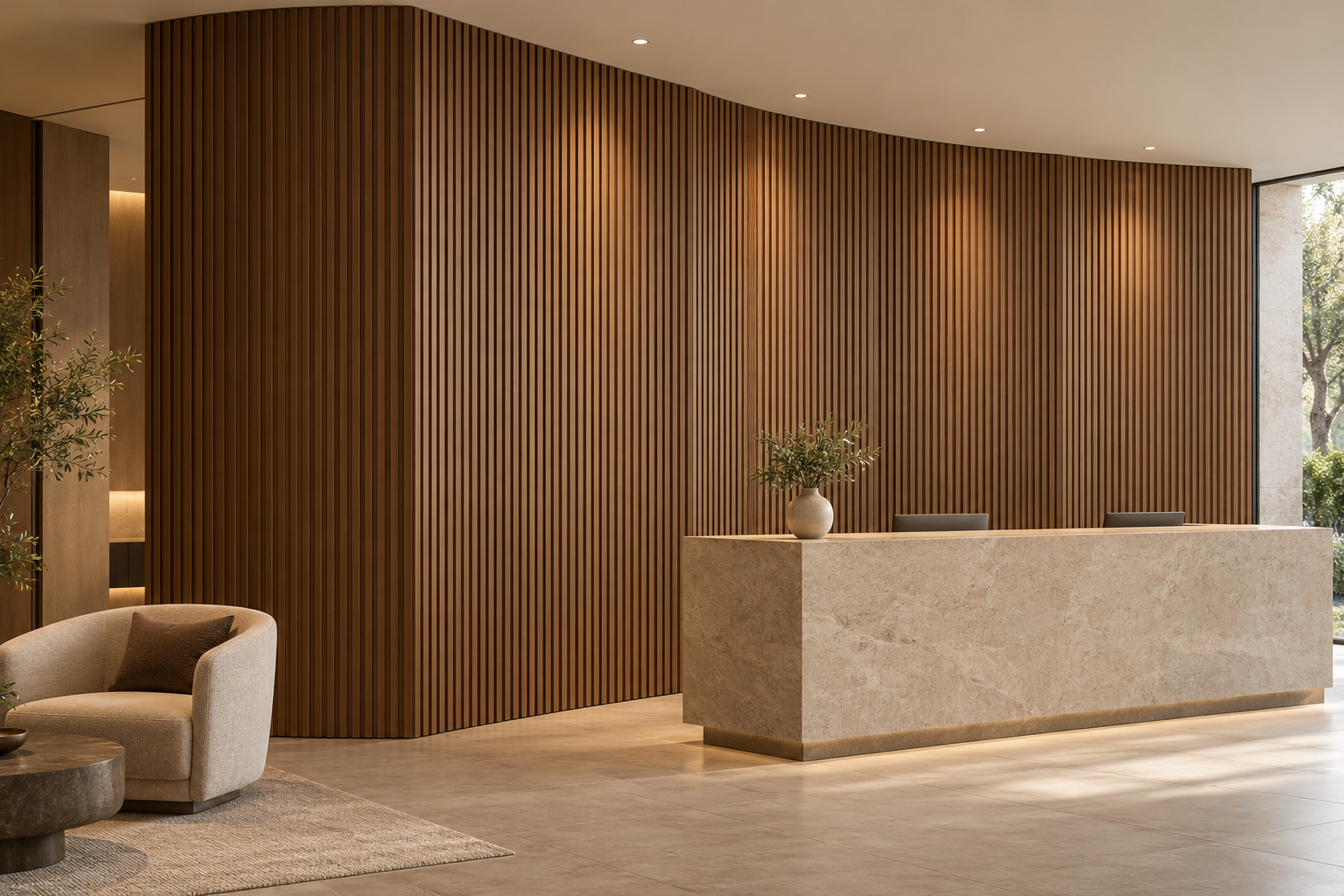
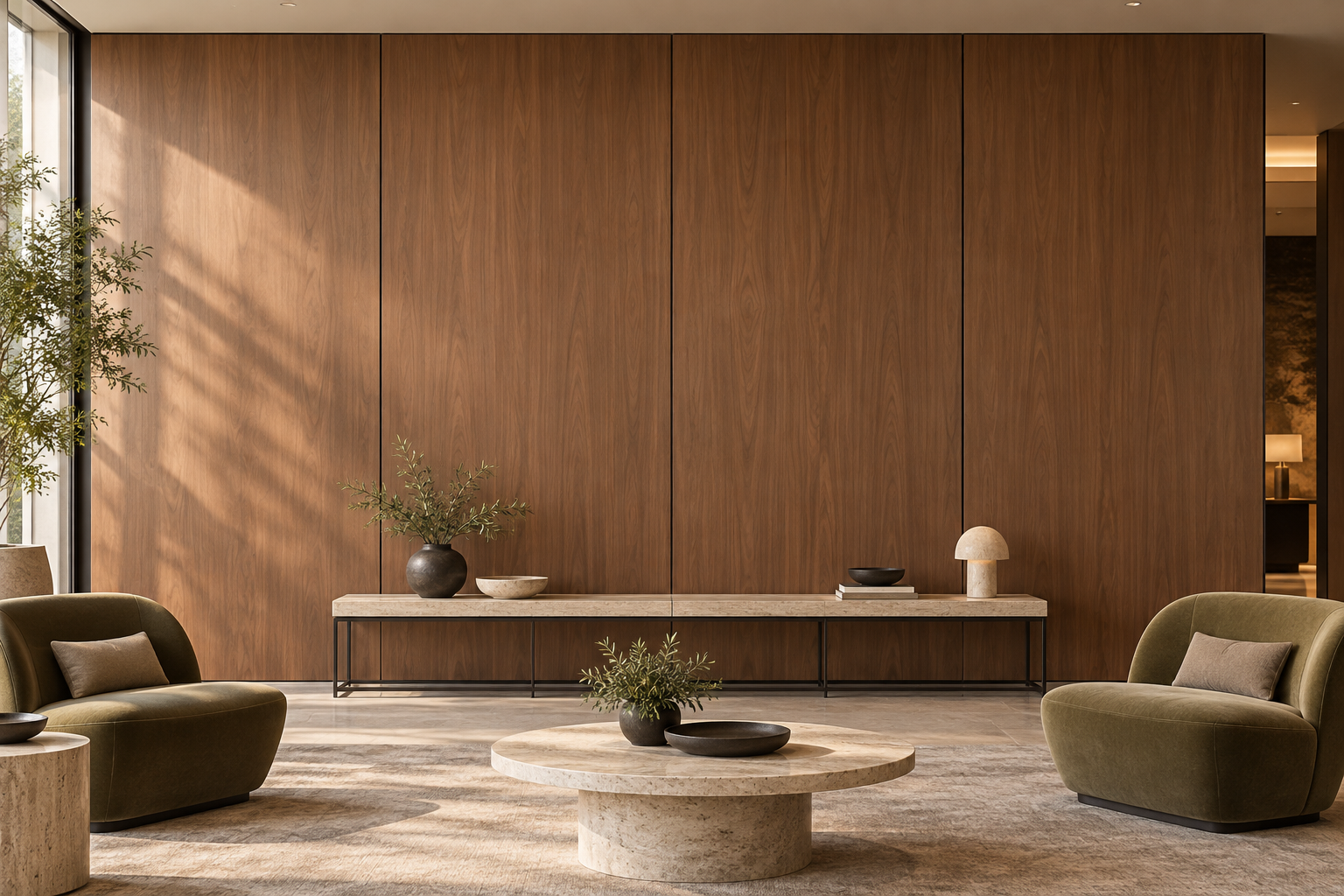
Indoor wall panels, commonly known as WPC (Wood-Plastic Composite) panels or “Great Wall panels” (长城板), achieve their realistic wood grains and solid colors through a PVC film printing process:
- A printed PVC film with the desired texture is laminated onto the WPC substrate.
- This allows for high-definition patterns and rich color options.
✅ Advantages: Vivid designs, realistic textures, cost-effective
❌ Limitation: The surface film is not UV-stable; prolonged outdoor exposure leads to fading, peeling, and degradation.
2. Why Is It Difficult to Match These Colors on Outdoor Panels?
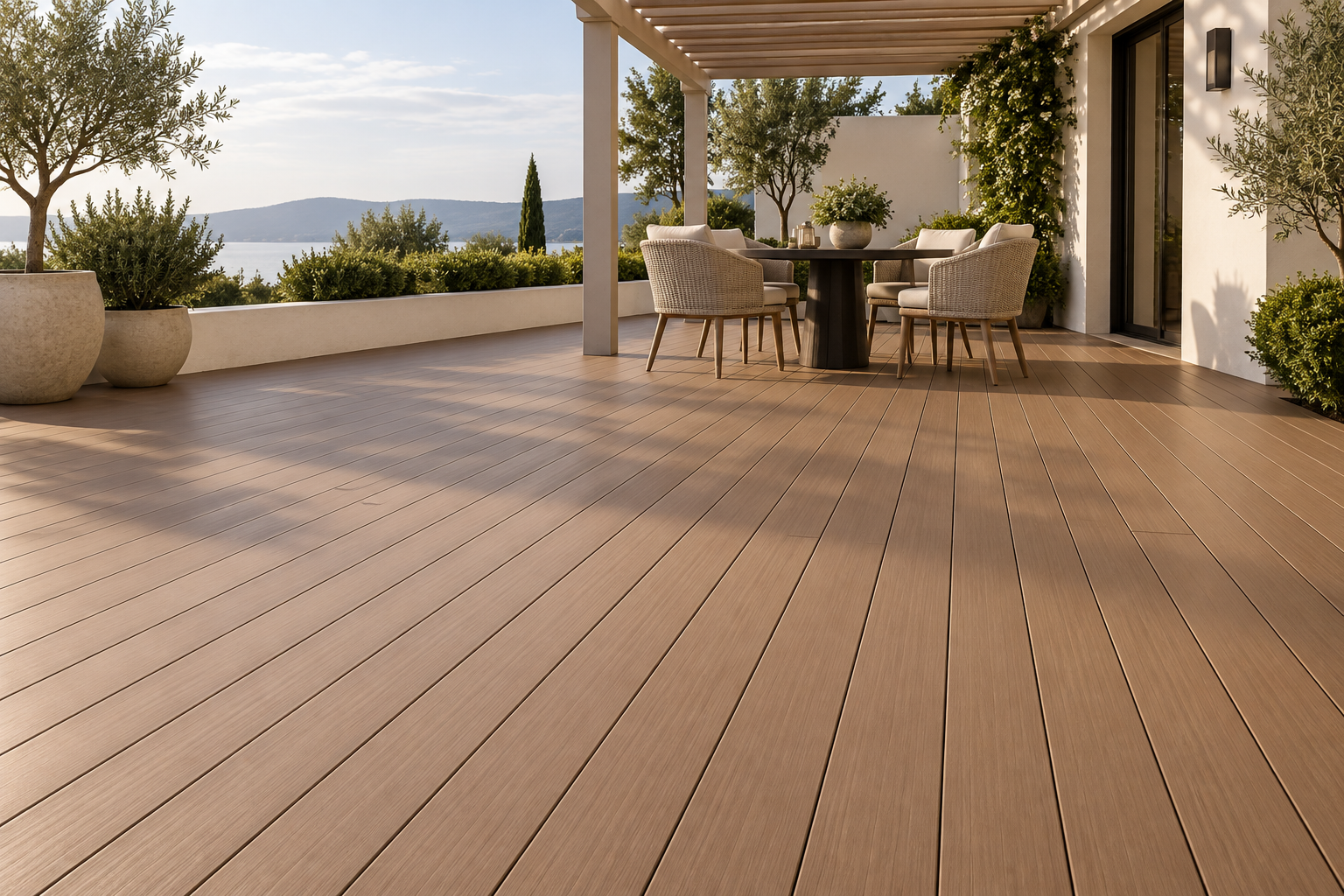
Outdoor wall panels are typically made from HDPE (High-Density Polyethylene) . Their coloring process is fundamentally different:
- Color is integrated into the material by adding color masterbatch (pigment powder) during extrusion.
- This results in through-body color—the color goes all the way through, not just on the surface.
- This method ensures excellent UV resistance and durability.
However, because:
- Materials differ (WPC vs. HDPE)
- Coloring processes differ (film lamination vs. integral coloring)
- Visual effects differ
👉 HDPE outdoor panels cannot precisely replicate the specific colors of indoor WPC panels.
3. UPVC Outdoor Cladding: The Best of Both Worlds
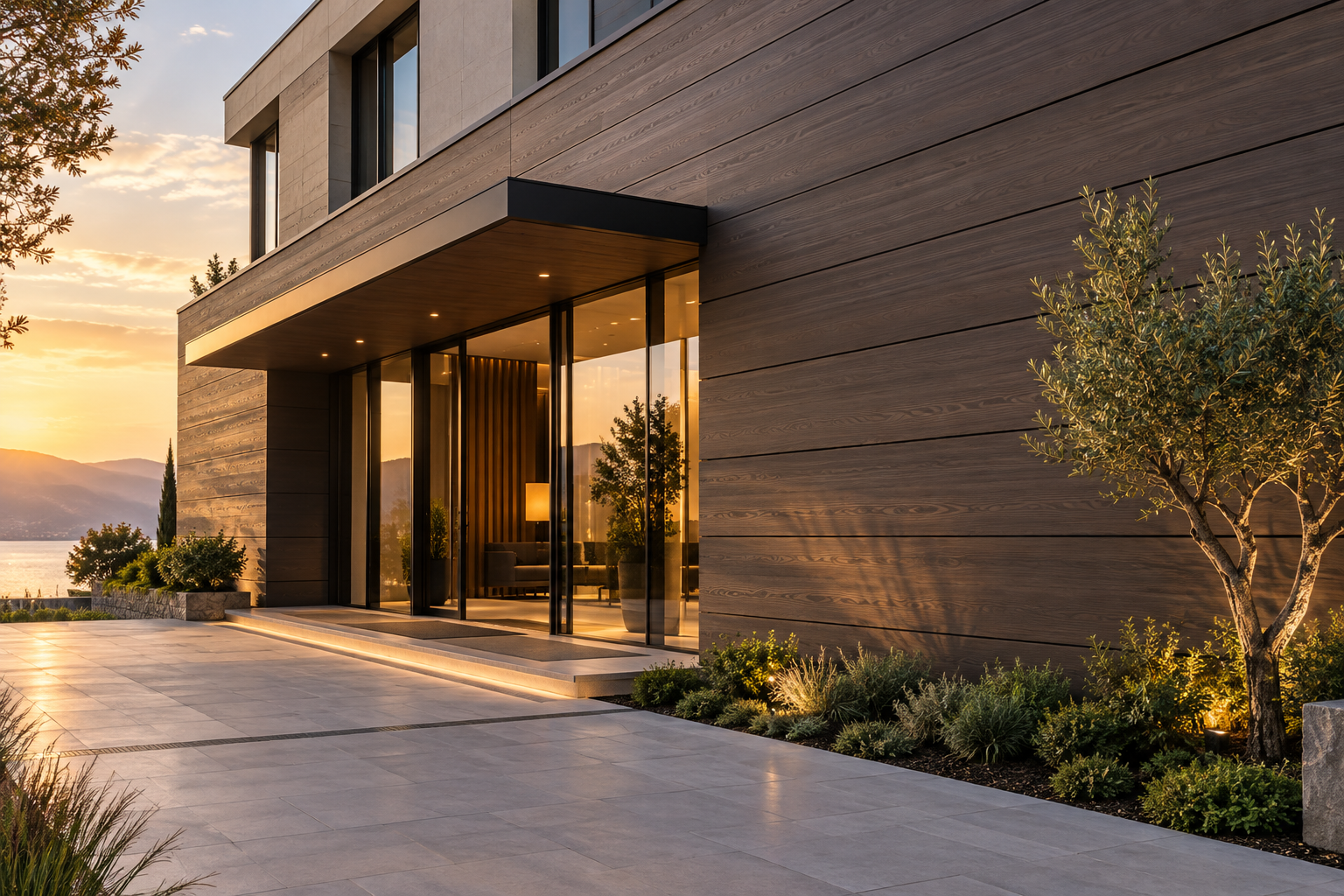
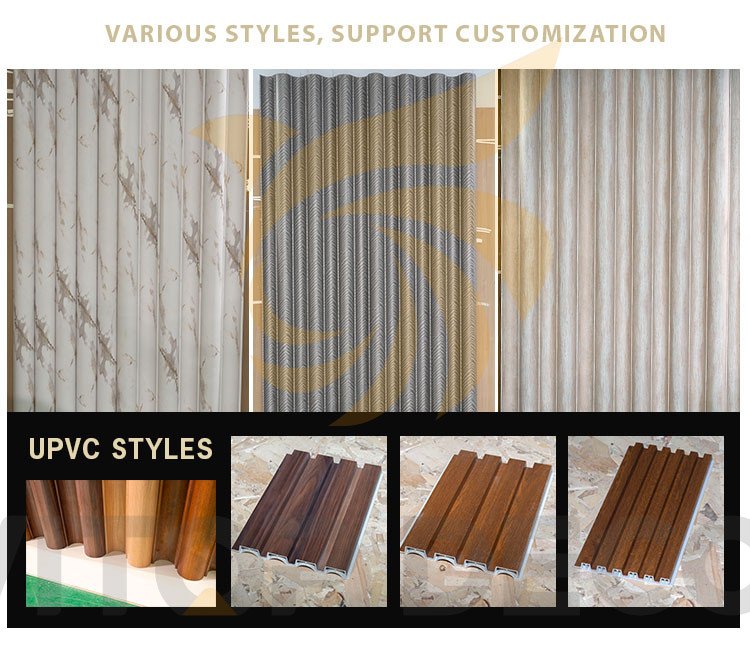
If you need an outdoor panel that closely matches the vibrant colors of indoor WPC panels, UPVC (Unplasticized Polyvinyl Chloride) outdoor cladding is the ideal solution.
Why UPVC Stands Out
| Feature | Description |
|---|---|
| Material | Rigid PVC – dimensionally stable and weather-resistant |
| Coloring Method | Weather-resistant outdoor film (not ordinary PVC film) |
| Color Vibrancy | High – can match indoor WPC aesthetics |
| UV Resistance | Excellent – designed for long-term outdoor use |
| Typical Applications | Exterior walls, facades, balconies, villa cladding |
Unlike HDPE, UPVC uses a film coating process, similar to indoor WPC, but the film is specifically engineered for outdoor conditions. This allows it to achieve the vivid colors and patterns expected from interior products while maintaining the durability required for exterior use.
4. Comparison: Indoor WPC vs. HDPE vs. UPVC
| Factor | Indoor WPC | HDPE Outdoor | UPVC Outdoor |
|---|---|---|---|
| Base Material | Wood-Plastic Composite | High-Density Polyethylene | Rigid PVC |
| Coloring Method | PVC film printing | Through-body color (masterbatch) | Outdoor-rated film |
| Color Vibrancy | High | Low to medium | High |
| UV Resistance | Low (indoor only) | High | High |
| Color Match with Indoor Panels | — | Difficult to match | Can match |
| Best Use | Interior walls | Exterior walls, decks | Exterior walls, facades |
5. How to Choose the Right Wall Panel for Your Project
- For interior projects that prioritize design and texture → choose WPC wall panels.
- For exterior projects where durability is the only concern and color matching is not critical → choose HDPE cladding.
- For exterior projects that require both weather resistance and a color similar to indoor panels → choose UPVC outdoor cladding.
6. Frequently Asked Questions (FAQ)
Q1: Can indoor WPC panels be used outdoors?
No. The PVC film on indoor WPC panels is not UV-resistant. Outdoors, it will fade, peel, and degrade quickly.
Q2: Which is better, UPVC or WPC?
It depends on the application. WPC is ideal for interiors. For exteriors, if you want vibrant colors, UPVC is the better choice; if you prefer solid, ultra-durable colors, HDPE is a good option.
Q3: Will UPVC outdoor panels fade over time?
High-quality UPVC uses outdoor-grade weather-resistant film with strong UV protection. While no material is entirely immune to long-term environmental exposure, premium products maintain their color significantly longer than standard alternatives.
About Witop Decor – Your Trusted Partner in Decorative Materials
At Witop Decor, we combine 15 years of production experience with a modern trading approach. Affiliated with Chanta Group, we are proud to be one of the top three companies in Shandong, setting new trends in decorative materials.
Our portfolio includes:
- WPC Wall Panels
- PVC Marble Sheets
- Bamboo Panels
- Acoustic Panels
- SPC Flooring
With a monthly export volume of 200 containers to over 120 countries, we bring quality, consistency, and innovation to every project. Whether you are looking for indoor WPC panels, UPVC outdoor cladding, or any other decorative solution, we offer expert guidance and reliable supply.
Contact us to learn more about color matching and product selection for your next project.

James is a content creator and decorator with five years of experience designing home decor. In his daily life, james is constantly on the lookout for the latest, great examples of house design and further optimizes his solutions. Additionally, he writes articles related to outdoor design, interior design, and architectural decorating materials to help brands build more engaging relationships with their audiences.