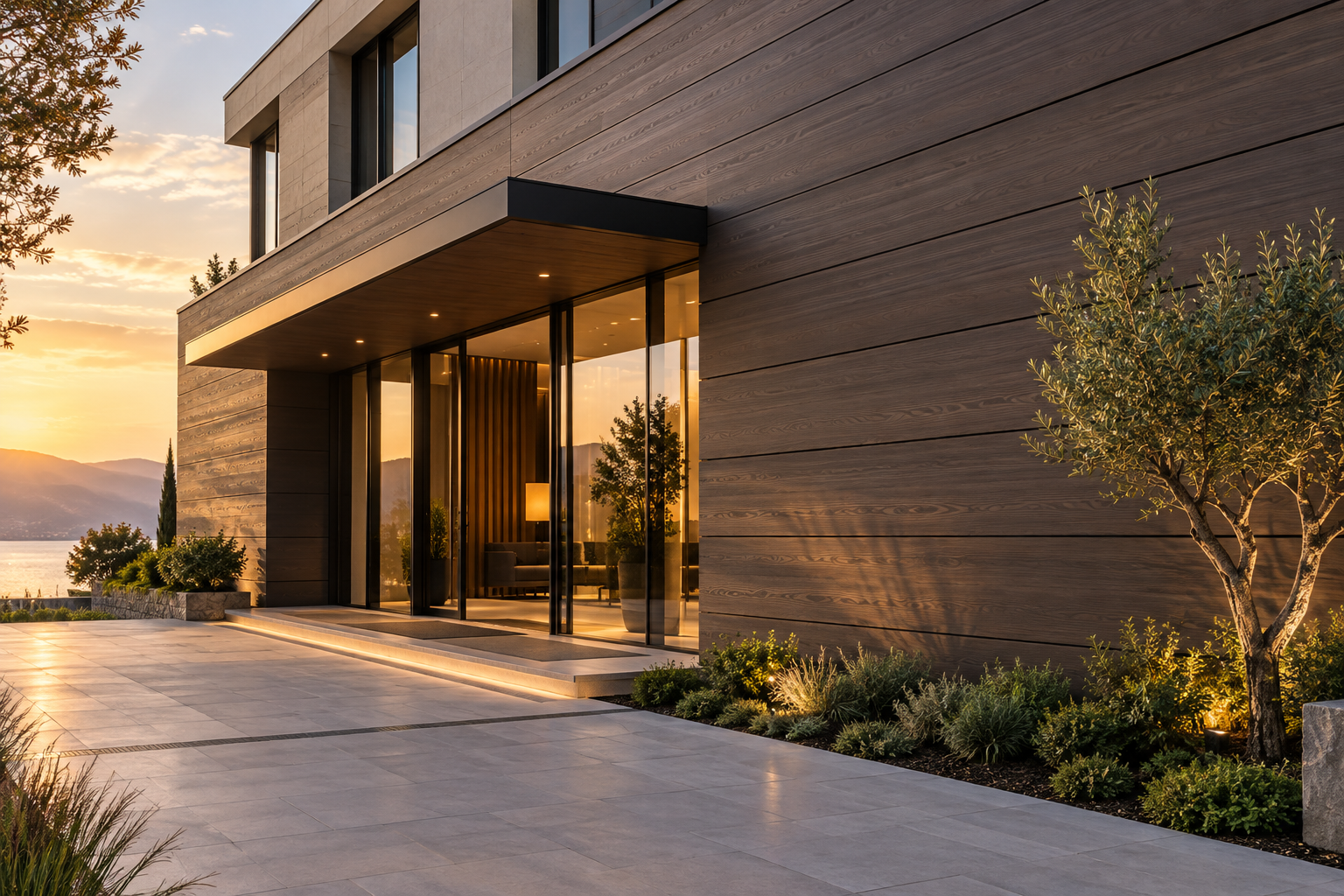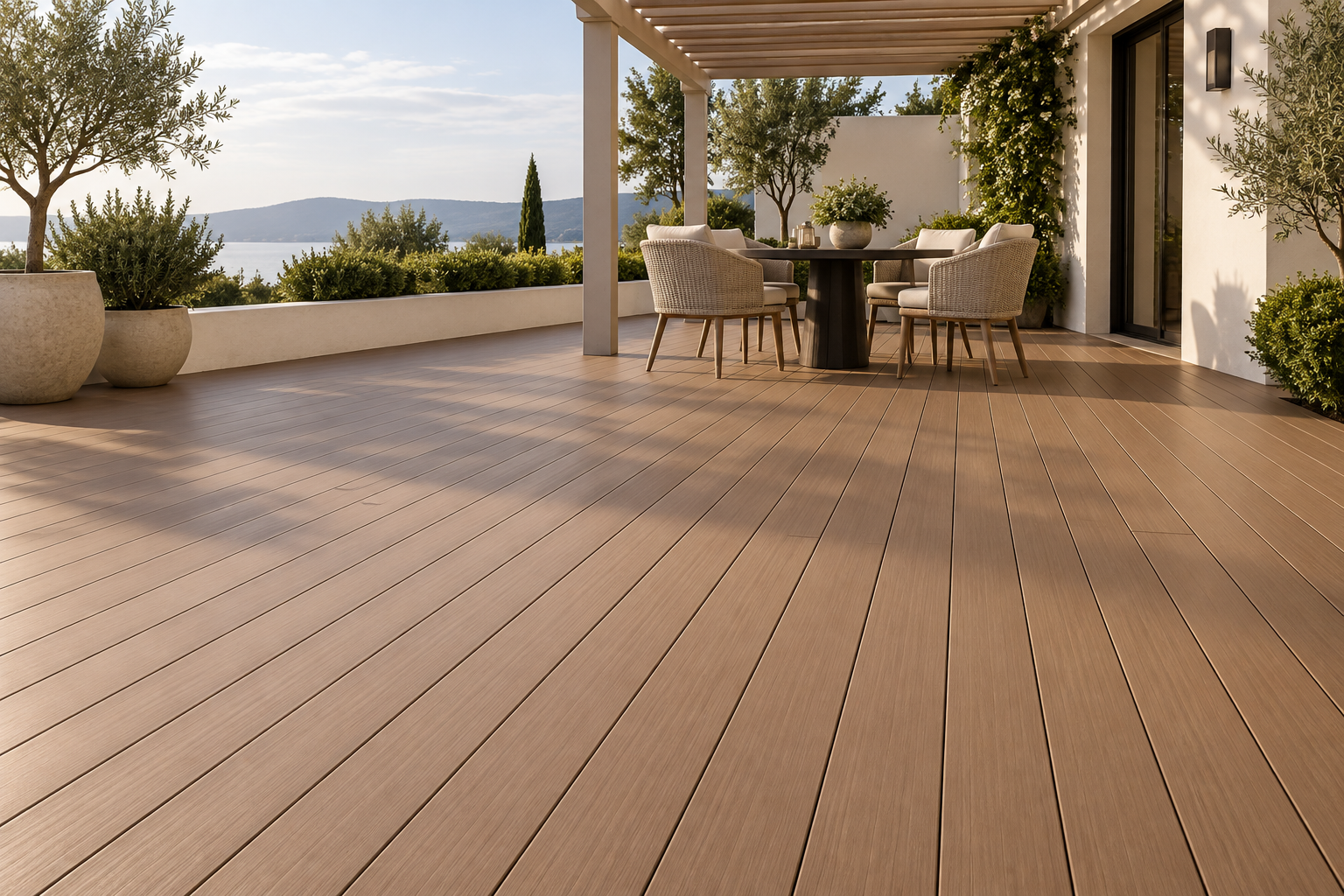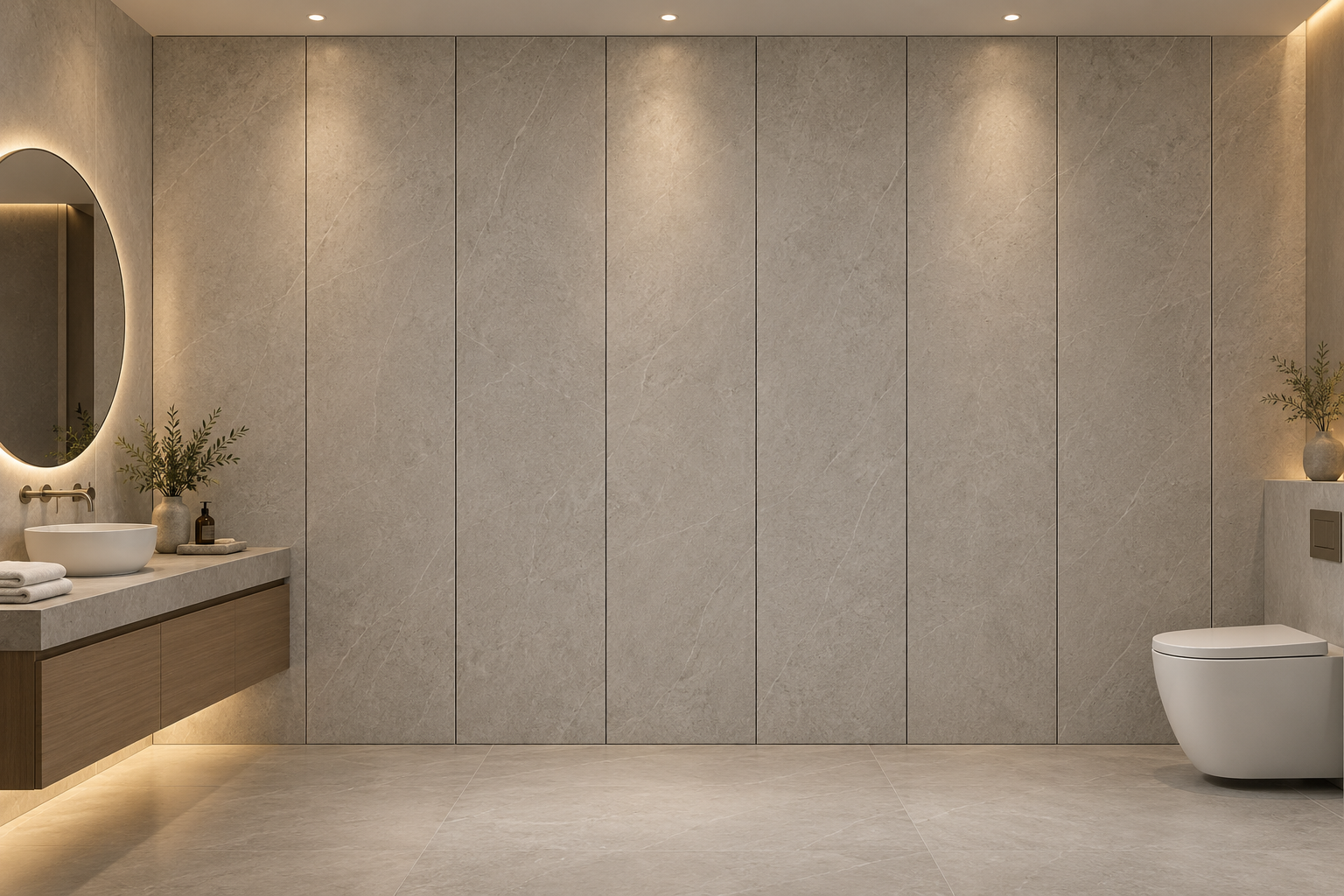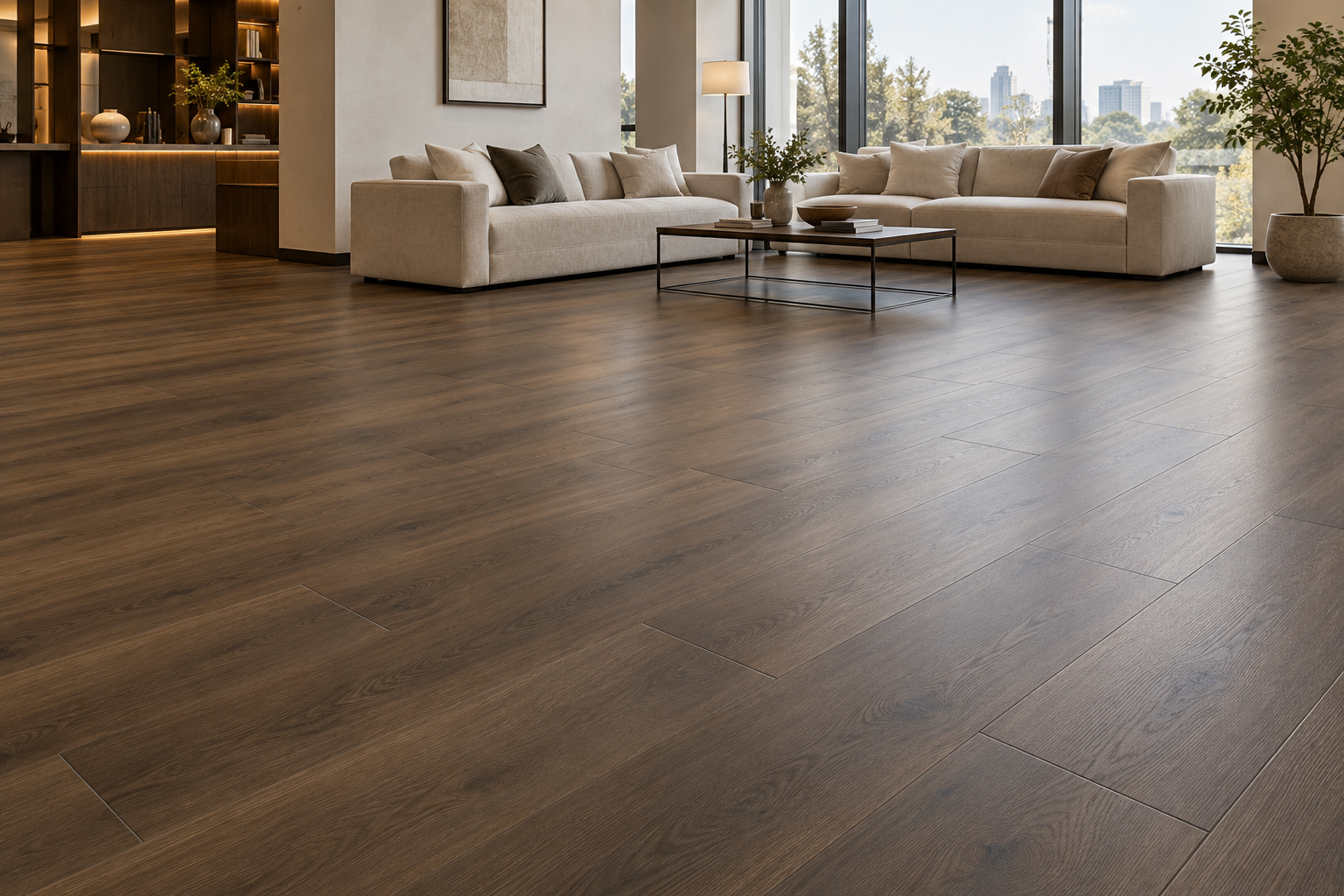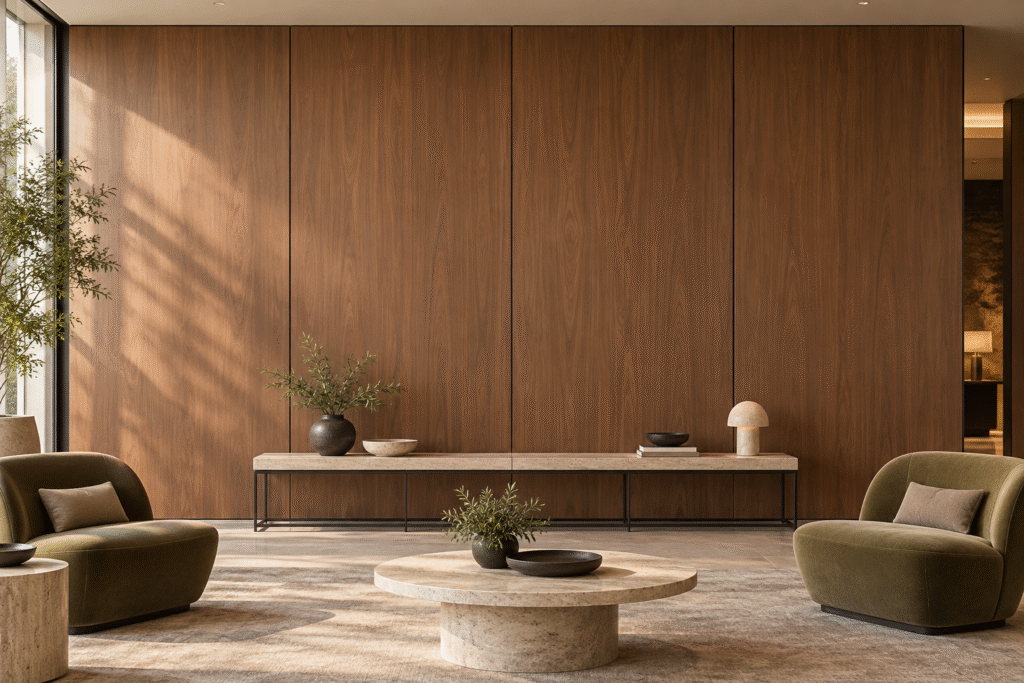
A completed hotel lounge can combine a walnut-look feature wall, a stone console and upholstered seating without using the same material for every surface. However, a designer may later ask the purchasing team to extend the wall finish across a reception counter or coffee table. That change introduces a new application, even when the desired color stays identical.
Another design concept pairs a champagne-metal-look wall in an office reception with a separately supported dark stone coffee table. Confirm the proposed wall finish’s availability and application scope with the supplier; the coordinated appearance does not require the table to use the wall material.
For an importer, the useful question concerns the exact product and its proposed role. A finish sample cannot establish whether a panel can act as a furniture surface or carry loads. Therefore, approve appearance and application scope together before the order enters project procurement.
Quick Answer: Can Bamboo Charcoal Wall Panels Also Cover Furniture?
Only when the supplier confirms that the exact SKU and complete proposed system suit that application. An approved vertical wall lining does not automatically qualify as a tabletop, countertop or load-bearing furniture component. Equally, buyers should not assume that every furniture application is unsuitable. Distinguish decorative vertical faces from horizontal working surfaces, then verify support, surface durability, edge details, cleaning and warranty coverage for the intended use.
Define What Each Surface Must Do
Begin with an application schedule that names the wall, reception-desk front, cabinet side, console top and table separately. Then describe how people will use each surface. A vertical feature wall may mainly provide decoration, while a countertop may receive concentrated loads, hot objects, repeated wiping and liquid spills. These differences deserve individual questions in the technical review.
Witop Decor identifies its bamboo charcoal wall panel product as an indoor wall decoration product. That description provides a starting category, not confirmation for every furniture detail. Ask for product-specific advice when a project moves beyond that stated role. See the Witop Decor product overview.
Compare the Application Before Choosing the Finish
Use the following dimensions of comparison when discussing the project with a decorative building materials supplier. The table identifies questions for approval; it does not declare that a particular panel passes them.
| Proposed role | Support question | Surface question | Evidence to request |
|---|---|---|---|
| Vertical wall lining | Which wall and attachment system apply? | What cleaning and contact conditions apply? | Installation guidance and application scope |
| Reception-desk front | Which structure supports the decorative face? | How will luggage and shoes contact it? | Approved facing detail and care guidance |
| Cabinet side or door | How will the furniture maker support and attach it? | What edge and repeated-use conditions apply? | Written suitability for the actual component |
| Console top | What carries objects and concentrated loads? | What spills, heat and wiping occur? | Confirmed horizontal-use specification |
| Tabletop | Which structure and fixing design carry the loads? | What abrasion, heat and cleaning apply? | Complete furniture application approval |
Separate a Decorative Face from Its Supporting Structure
A reception counter can present a matching vertical decorative face while its frame and top use different materials. Accordingly, the building contractor and furniture maker should identify which component carries loads and which provides the visible finish. Do not assign structural responsibility to a decorative panel merely because the drawing shows it wrapping around a corner.
Also, review cabinet doors separately from fixed wall areas. Ask the furniture maker to assess the proposed component, dimensions, attachments and edge treatment. A successful wall installation elsewhere does not settle those questions. When responsibilities cross between trades, record who approves the detail and who supplies each supporting component before anyone prices fabrication.
In particular, drawings should distinguish a decorative covering from the structure behind it. This helps the purchasing team avoid ordering a finish material against a drawing note that actually requires a complete furniture component.
Give Horizontal Surfaces Their Own Review
If the design calls for a matching console top, explain its intended activities to the supplier. For example, will users place bags, drinks, cleaning supplies or warm equipment on it? Will staff move decorative objects daily? Describe realistic contact conditions rather than requesting a broad promise of “high durability.”
Next, ask what evidence supports the complete horizontal application. Identify the panel, backing, adhesive or attachments, supported spans, edges and joints that the supplier actually approves. Do not infer suitable loads, temperatures or cleaning chemicals from a wall photograph. Moreover, a short informal sample demonstration cannot establish long-term service performance or extend the written warranty.
Use Sheet Dimensions for Layout, Not Performance Claims
Common formats for bamboo charcoal wall panels include 1220 x 2440 mm and 1220 x 2900 mm. These are common dimensions, not the only possible formats or a confirmation that every finish comes in both sizes. Keep the proposed SKU and available sheet size together when asking for a quotation.
Large sheets can influence the wall’s joint pattern and the furniture maker’s proposed cutting layout. However, sheet size alone does not establish unsupported span capacity, impact resistance or suitability for furniture. Ask for an approved layout that respects the actual product and system. Furthermore, include edge details and grain direction in sample evaluation, because a small face sample leaves these decisions unresolved.
Match the Documents to the Actual Application
Buyers should verify test reports, VOC limits, fire-rating documents and warranty terms for the exact product and relevant project conditions. Keep each document linked to the offered SKU and stated application. A wall-related fire rating does not answer every question about a completed furniture assembly, and an emissions document does not establish tabletop durability.
Likewise, request written care guidance for each approved role. Identify suitable cleaning methods, restrictions and responsibility for exposed edges or joints. Then compare maintenance cost using those instructions. If the supplier cannot confirm a horizontal application, keep the approved wall finish and ask the furniture designer to specify a suitable separate top material.
Keep the Purchase Order Clear Across Different Trades
A wholesale distributor can organize wall panels and furniture-facing requests under one design package while retaining separate approval lines. List the application beside each product code and finish reference. Consequently, the purchasing team can see whether a selection has visual approval, technical approval or an unresolved question.
Before comparing installation cost, ask each trade to include its supporting structure, preparation, attachments and finishing scope. Also, confirm MOQ and lead time for the approved selection. For container loading, obtain actual packing dimensions and weights rather than calculating the shipment from sheet area alone. Any requested change should return to the affected reviewer before a substitute enters the order.
B2B Buyer FAQs
Does a matching color mean two products have matching performance?
No. Similar colors can appear on different product constructions. Compare the exact codes and relevant technical specifications. A coordinated visual palette allows different materials to serve different roles without making unsupported claims about their performance.
Can we use an approved wall panel on a reception-desk front?
Ask for confirmation of that specific facing detail, support and contact conditions. A vertical desk front differs from the desk’s horizontal top. Keep both roles visible in the approval record instead of requesting one general furniture approval.
Can a large panel support a console top by itself?
Do not assume so from the sheet dimensions or appearance. Give the furniture designer and supplier the proposed structure and use conditions. Obtain an approved load-carrying arrangement before specifying the panel as part of that top.
Does the wall-panel warranty cover furniture use?
Check the written scope and ask the supplier to identify covered applications and exclusions. Record any additional conditions for the proposed system. Sales language or a matching sample does not replace application-specific warranty terms.
What information should accompany a bulk order inquiry?
Send room drawings, product roles, quantities, finish references and the proposed supporting details. Also, state expected contact, cleaning and service conditions. This gives the supplier useful information for identifying application questions before quotation approval.
Request an Application-Specific Quotation
Contact Witop Decor to request samples, technical data sheets and a project quotation for the proposed wall application. Include furniture-related requests as separate items for technical review. For custom colors or OEM/ODM cooperation, confirm the exact construction and approved use before commercial commitment. A coordinated lounge can maintain a consistent design while each surface follows a suitable, documented specification.

James is a content creator and decorator with five years of experience designing home decor. In his daily life, james is constantly on the lookout for the latest, great examples of house design and further optimizes his solutions. Additionally, he writes articles related to outdoor design, interior design, and architectural decorating materials to help brands build more engaging relationships with their audiences.