A hotel operator needs replacement planks for a furnished guest lounge. Purchasing finds the same oak color and nominal thickness in a new quotation. However, those descriptions do not answer whether the new planks can connect to the existing floor. For an importer, this unresolved detail can turn a small repair into a much larger procurement decision.
Treat appearance matching and joint compatibility as separate approvals. A wholesale distributor needs a record that connects the original product with the current offer. Likewise, a building contractor needs the approved replacement method before estimating disruption or labor. A familiar product name alone cannot close these questions.
Quick Answer: Does the Same Color and Thickness Mean the Click Profiles Match?
No. Request the exact original and current product identities, long-edge and short-edge profile references, revision history and written compatibility confirmation. Then arrange sample evaluation using the relevant old and new materials under the manufacturer’s procedure. Keep the decision pending if the original joint cannot be identified. A short connection trial supports review, but it does not establish long-term durability or authorize an unapproved repair method.
Specify Both Edges Instead of a Generic Click Label
Unilin Technologies’ resilient-flooring overview distinguishes angle locking, short-side drop locking and pattern-locking options. It also lists several different resilient click technologies. This illustrates why a broad installation category does not identify one exact connection. It does not establish which system Witop Decor offers or whether any two finished products connect.
Ask the decorative building materials supplier to identify both edges of the offered plank. Record the manufacturer’s product reference and its applicable installation document. If the supplier uses an internal profile code, ask how that code links to the approved product. Also, clarify whether a replacement short-end component forms part of the particular construction.
Build a Compatibility Record Before Comparing Prices
Use the following dimensions to organize the inquiry. They support a purchasing review rather than provide universal manufacturing tolerances or an installation recipe.
| Review dimension | Original floor evidence | Current offer evidence |
|---|---|---|
| Product identity | Manufacturer, collection, SKU and original order | Exact proposed SKU and responsible manufacturer |
| Long-edge connection | Profile reference and available retained sample | Current reference and written matching position |
| Short-edge connection | Joint type and any separate component | Offered joint type and component reference |
| Product revision | Original document or production reference | Revision history and identified changes |
| Complete construction | Dimensions, core, backing and edge finish | Current technical specifications and differences |
| Repair application | Existing layout and accessible boundaries | Manufacturer-approved replacement procedure |
Keep the record with the project procurement file. Next, assign someone to resolve missing entries before the team treats the quotation as a technically accepted substitute. A salesperson’s statement that a plank is “the same size” should trigger clarification of the remaining fields.
Give the review a defined scope: one project, identified original material and an identified current offer. Ask whether the supplier’s response covers only the samples examined or a specified production reference. If the supplier cannot connect that answer to the order, return the question for clarification. This keeps a useful technical response from becoming an unsupported promise about every carton sold under a familiar collection name.
Separate a New Production Lot from a Product Revision
A production lot identifies a manufacturing group; a revision identifies a change to the defined product or documentation. Neither term alone settles interchangeability. Ask the supplier whether the proposed order retains the relevant original specification, and request a clear explanation of any change that affects the connection or repair procedure.
For OEM/ODM cooperation, put change notification in the purchasing agreement. Identify which profile, core, backing and dimensional changes require buyer review. Moreover, establish who approves a revised sample and when that approval takes effect. Do not let a retained color code silently stand for a different product construction.
Define What the Sample Review Must Answer
Provide a traceable original plank when available, along with its order and installation records. Ask the supplier which current samples and review procedure it needs. Agree how the reviewer will assess long-edge engagement, end-joint engagement, alignment and any visible damage without forcing the connection or altering either profile.
Then record the materials examined and the outcome in writing. A trial with two current planks does not answer whether those planks connect with an older revision. Similarly, one attractive joint photograph does not establish compatibility across a whole purchase. Request relevant product evidence beyond the visual trial when the intended use requires it.
Keep Repair Approval Separate from Connection Approval
Even a confirmed matching profile does not explain how a contractor can reach the damaged area. The existing layout, fixed furniture and accessible room boundaries affect the work plan. Therefore, ask the manufacturer and contractor to confirm a suitable replacement method for the actual floor before approving the repair quantity.
Avoid improvised joint modifications or adhesive additions unless the relevant manufacturer expressly accepts the specific method. Also, review substrate and backing requirements through the product’s instructions. The compatibility decision concerns identified materials; it does not excuse unrelated installation conditions or replace the contractor’s assessment of the existing floor.
Use a Clear Decision When the Original Product Is Unknown
If reliable original records or samples remain unavailable, keep the proposed connection unapproved. Ask whether the project can define a replacement area with an appropriate boundary and an independently specified floor system. The designer, contractor and supplier should review that alternative together, including transitions, floor height and the operator’s access needs.
This route may change installation cost, closure time and quantities. Compare those consequences openly with the uncertain local-repair proposal. However, do not promise that changing more floor automatically solves every condition. Require the same project review and technical acceptance for the alternative before placing its order.
Connect the Technical Decision to the Commercial Offer
State whether the inquiry concerns a confirmed matching replacement, a product awaiting compatibility review or a separately defined replacement zone. Then confirm MOQ, lead time and the sequence for sample approval. Keep production release dependent on the agreed technical decision instead of allowing a delivery target to imply acceptance.
For container loading, identify approved order lines and their destination zones so commercial picking instructions preserve the decision. Estimate maintenance cost from a feasible repair plan rather than the price of one spare plank. Buyers should verify test reports, VOC limits, fire-rating documents and warranty terms for the actual offered construction; a matching connection does not establish these properties.
For example, a fire rating belongs in the relevant product evidence review, with its stated scope and application. Keep its acceptance separate from the profile review so one favorable answer does not silently approve the other requirement.
Describe the Finished Result Without Claiming Hidden Proof
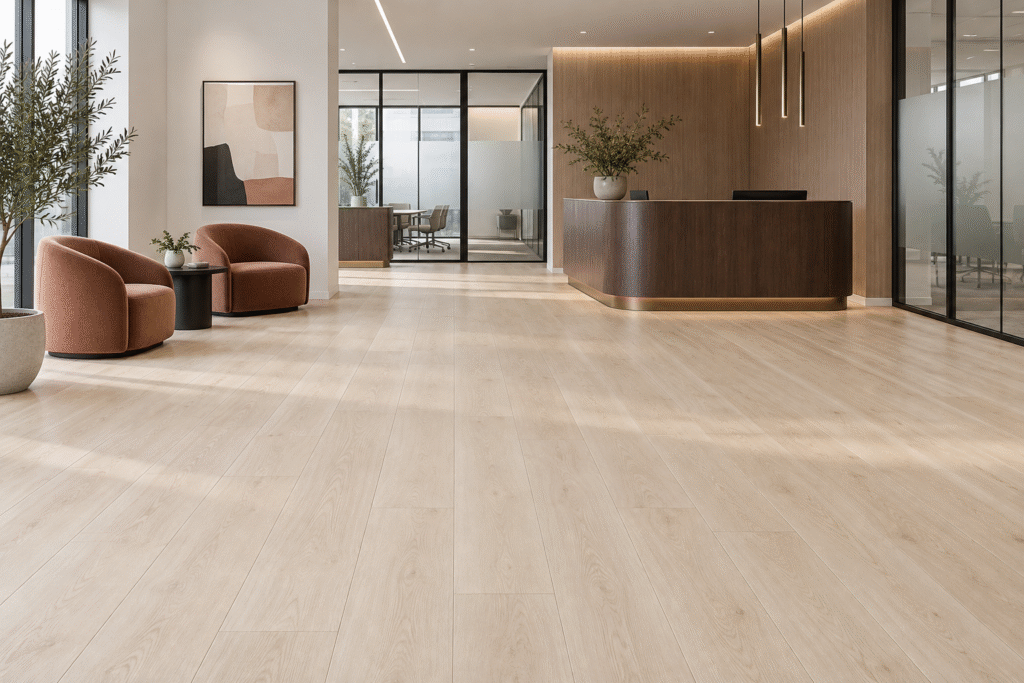
A completed hotel lounge with warm oak-look SPC flooring can illustrate the intended interior. A furnished office reception with pale wood-look planks can communicate a different design choice. Neither scene reveals the hidden profile revision or proves compatibility. Keep presentation images separate from the technical records used to accept the supply.
B2B Buyer FAQs
Can the same brand use more than one locking profile?
Do not use the brand as the compatibility decision. Request the exact product and edge references, then ask the responsible supplier to confirm the original-to-current relationship in writing.
Does matching overall thickness approve the replacement?
No. Overall thickness leaves the long-edge geometry, end connection, backing and product revision unresolved. Compare the full technical specifications and identified samples before approving their intended connection.
Can a successful connection trial replace the warranty review?
No. Record what the trial examined, then review warranty terms and other required evidence separately. A visible fit does not establish every service condition, performance claim or accepted repair method.
What should distributors do after a profile change?
Keep revised material identifiable and review its proposed use before offering it as a replacement. Update the quotation and approval records so staff do not promise interchangeability from an unchanged decor name.
What should buyers send with a bulk inquiry?
Send Witopdecor the original order reference if available, application, quantities, destination and replacement objective. Request samples, technical data sheets and a project quotation. Include custom colors or OEM/ODM needs, and confirm compatibility before authorizing mixed-lot use.

James is a content creator and decorator with five years of experience designing home decor. In his daily life, james is constantly on the lookout for the latest, great examples of house design and further optimizes his solutions. Additionally, he writes articles related to outdoor design, interior design, and architectural decorating materials to help brands build more engaging relationships with their audiences.