Quick Answer: Can the Hotel Use Its Existing Bathroom Cleaner?
Approve a cleaner for the exact SPC wall panel finish and the complete installed detail before adding it to the housekeeping routine. Identify the cleaning product, intended dilution, contact time, application method and rinse procedure. Then obtain written compatibility guidance for the panel, sealant and trims. A bathroom application description alone does not establish resistance to every descaler, disinfectant or cleaning tool.
An importer can deliver the correct color and still leave the hotel with an unresolved operating problem. The operator may already buy one chemical for ceramic tiles, another for taps and a third for mirrors. However, staff may spray these products across adjacent finishes during a busy room turnaround. Therefore, project procurement should review the proposed wall finish alongside the actual cleaning inventory before confirming the bulk order.
Separate the Cleaning Tasks Before Comparing Chemicals
Start with the task, rather than a generic request for a strong bathroom cleaner. Daily removal of fingerprints, soap residue or splashes differs from periodic treatment of mineral deposits. Likewise, a hygiene requirement may introduce a separate disinfecting product and operating procedure. Ask the operator to identify each task without assuming that one product can cover every situation.
Next, map where staff use each chemical. A vanity backsplash, toilet wall and upper decorative wall receive different contact patterns. Overspray from mirror or tap cleaning can also reach the panel. Consequently, include neighboring products in the review, even when the purchasing department does not classify them as wall cleaners. This simple inventory makes the compatibility question concrete enough for a supplier to answer.
Read Product-Specific Guidance Without Transferring Approvals
As one manufacturer example, the Pro-Tek wall panel care guide distinguishes routine neutral-detergent cleaning from limescale treatment and warns against specified abrasive materials, solvents and direct steam cleaning. Those instructions apply to its products. They do not approve a cleaner for Witopdecor SPC wall panels or establish performance for an untested finish.
For the proposed order, request current care instructions tied to the actual model and decorative surface. Ask the decorative building materials supplier to identify any exclusions, approval conditions and unresolved questions. If guidance only says mild cleaner, provide the proposed product details and request clarification. A familiar marketing description gives the reviewer less useful information than an identifiable formulation and intended use.
Create a Compatibility Register for the Whole Wall
The visible finish is only one part of the assembly. Joint sealants, edge trims, decorative trim coatings and adjoining fixtures also need compatible maintenance. Therefore, appoint one person to collect the responses and resolve conflicting instructions. A building contractor should not assume that the panel supplier also approves the sealant manufacturer’s chemical exposure limits.
| Review item | Evidence to request | Purchasing decision |
|---|---|---|
| Panel surface | Model, finish code and current care instructions | Approve the exact decorative face |
| Cleaner identity | Product name, supplier and current technical information | Prevent unnamed substitutions |
| Operating method | Dilution, dwell time, tool and rinse instructions | Define the intended exposure |
| Joints and trims | Compatibility guidance from the responsible suppliers | Review the complete detail |
| Unresolved combination | Written question and accountable reviewer | Hold approval until resolved |
Record the date and revision of each response. Moreover, distinguish written approval from a sample observation. A visually acceptable demonstration can inform the decision, but it does not create a warranty or establish resistance to years of repeated exposure. Keep both records so future reviewers understand exactly what supports the purchase.
Make Sample Evaluation Representative
Arrange sample evaluation before a hotel commits to a full rollout. Include the intended panel finish, one representative joint and the selected trim. Ask the suppliers to agree on the proposed evaluation procedure rather than inventing an aggressive exposure and calling it a standard test. Retain an untreated comparison piece and record the starting appearance under consistent lighting.
During the review, use only the agreed product and method. Note visible changes in gloss, color, texture, residue or joint appearance after the defined observation period. However, a short visual review cannot prove structural durability, long-term chemical resistance or hygiene efficacy. If the project needs quantified evidence, agree on the relevant laboratory assessment with qualified parties and the actual product suppliers.
Resolve Housekeeping Conflicts Before the Order
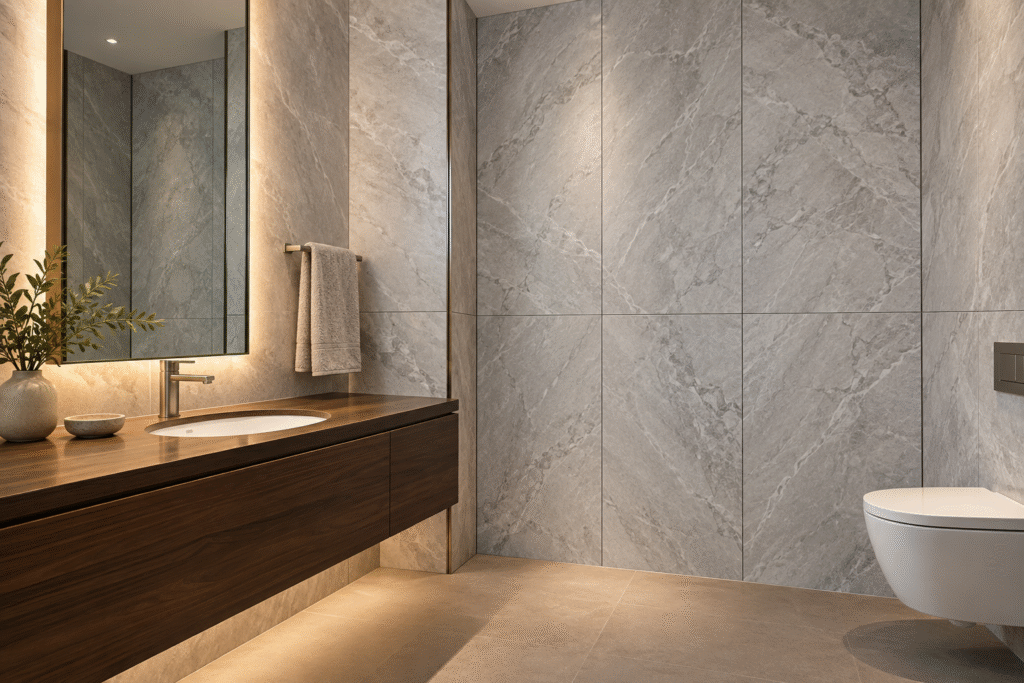
Suppose a hotel proposes a pale stone-look vanity wall and already uses a descaler near its taps. The buyer should ask whether that exact cleaner can contact the panel, sealant and metal trim under the intended routine. If one supplier restricts the combination, decide whether to change the product, revise the cleaning procedure or select another finish. Record that decision before staff receive contradictory instructions.
Also review how the hotel controls substitutions. A wholesale distributor may supply identical-looking panels months later, while the operator may switch cleaning contractors or chemical brands. Consequently, the approval register should specify when a new review becomes necessary. Changes to a finish, formulation or method should reopen the compatibility question rather than inherit an approval based only on a shared product category.
Connect Maintenance Approval to Quantities and Cost
Common SPC wall panel sizes include 600 x 1200 mm and 600 x 2400 mm. These are planning references, not the only sizes or a promise of model availability. Confirm the actual dimensions and joint layout when arranging the evaluation. Different layouts create different joint lengths and access conditions, so compare representative elevations rather than isolated panel faces.
Assess installation cost together with the future maintenance cost. Include staff access, approved consumables, training and any planned joint maintenance in the comparison. However, avoid claiming a percentage saving without operator records. A useful commercial evaluation states its assumptions, identifies who supplied them and keeps product price separate from recurring labor. That approach gives the buyer a reviewable decision instead of an unsupported return-on-investment promise.
Keep Chemical Compatibility Separate from Other Approvals
A satisfactory cleaning review does not establish waterproofing, suitability for continuous direct shower spray or compliance with local building requirements. Confirm the substrate, moisture-management design, installation system and project conditions separately. Buyers should also verify test reports, VOC limits, fire-rating documents and warranty terms for the exact product and intended assembly. No cleaning result replaces a required fire rating or emissions document.
For a bulk inquiry, send Witop Decor the room types, finish references, proposed cleaning inventory and project quantities. Request samples, technical specifications and technical data sheets, then discuss MOQ, lead time, container loading, custom colors and any OEM/ODM cooperation requirements. Ask for a project quotation that identifies the approved finish and outstanding decisions. This gives both parties a practical basis for supply planning and handover.
B2B Buyer FAQ
Does SPC mean that every bathroom chemical is acceptable?
No. The material name does not approve an individual decorative surface, cleaner, joint sealant or exposure method. Request guidance for the specified combination before the operator adds it to the routine.
Can an approval for ceramic tiles cover the wall panels?
Do not transfer it automatically. Ask the panel and accessory suppliers to review the exact cleaner. Moreover, include overspray from cleaning adjacent ceramic, glass and metal surfaces in that request.
Is a successful sample wipe enough for a long-term guarantee?
No. Record the observation as limited project evidence. Obtain the written conditions and warranty terms separately, and arrange appropriate technical assessment when the specification requires performance beyond a short demonstration.
Who should own the approval register?
Nominate a project procurement or facilities representative who can collect supplier responses and obtain the operator’s acceptance. Then give the building contractor and housekeeping manager the same approved revision at handover.
What information helps a supplier answer a cleaning inquiry?
Provide the panel model, finish code, cleaner identity, current product documents, proposed dilution, contact time and application method. Also identify the joints, trims and adjacent fixtures that may receive the same exposure.

James is a content creator and decorator with five years of experience designing home decor. In his daily life, james is constantly on the lookout for the latest, great examples of house design and further optimizes his solutions. Additionally, he writes articles related to outdoor design, interior design, and architectural decorating materials to help brands build more engaging relationships with their audiences.