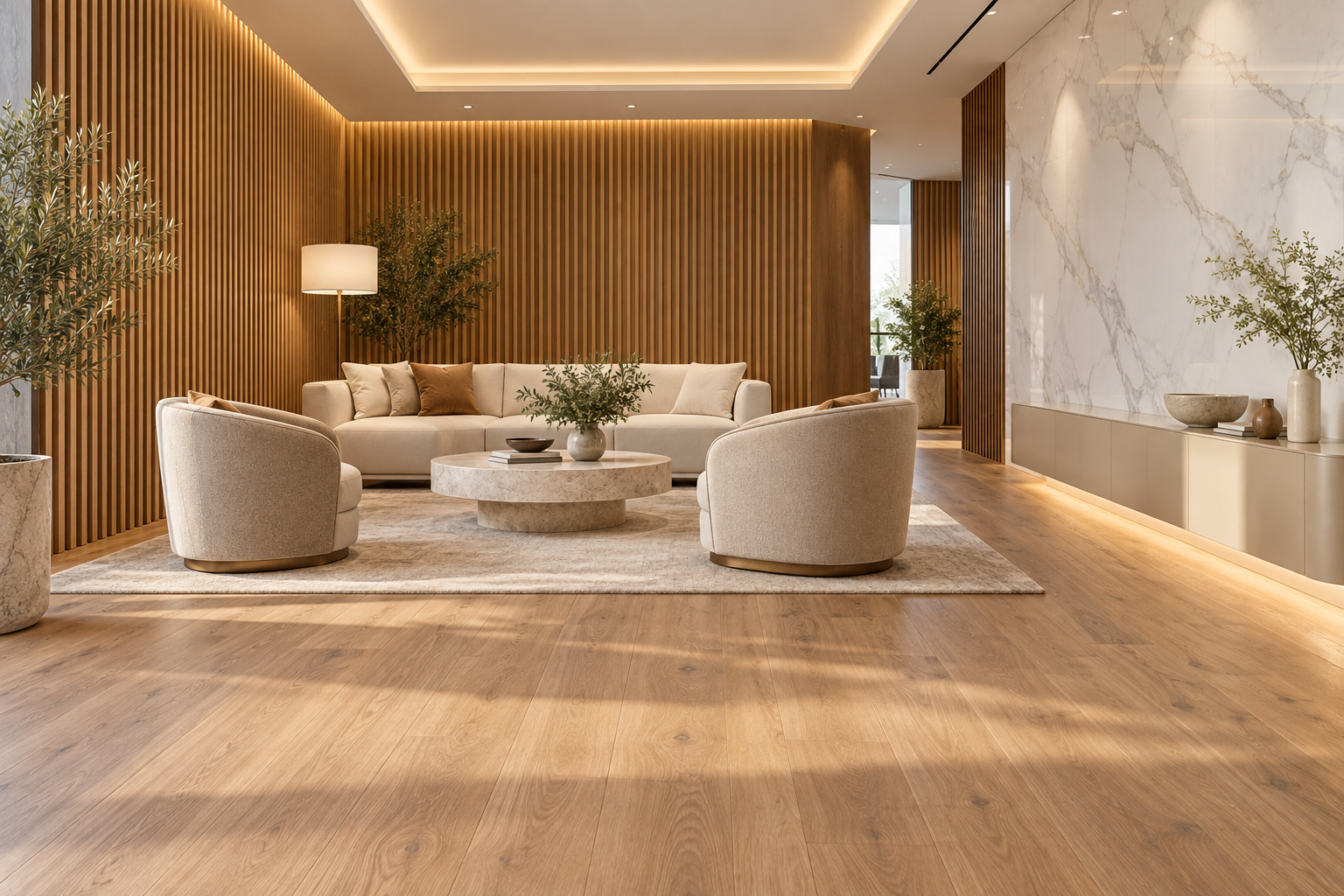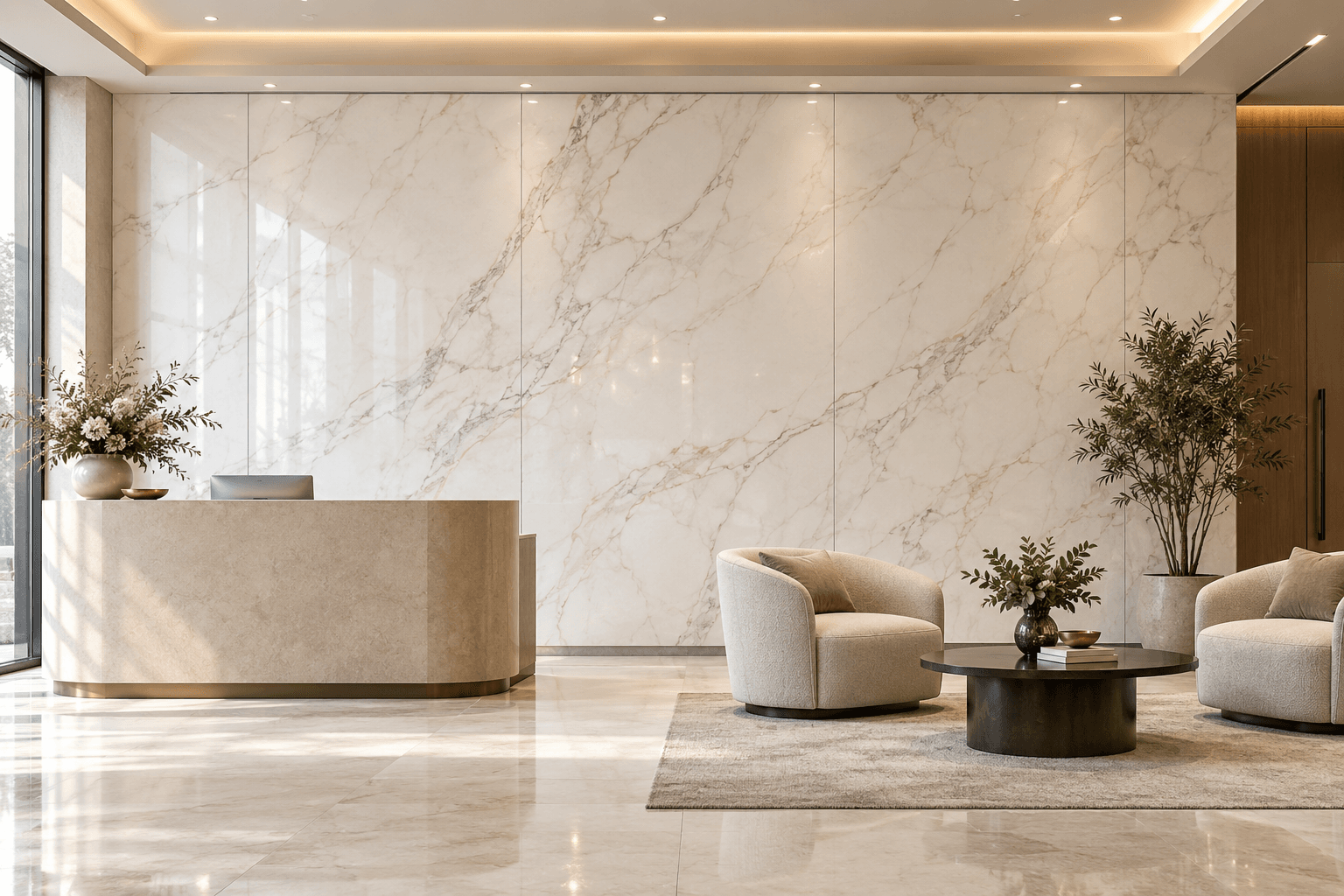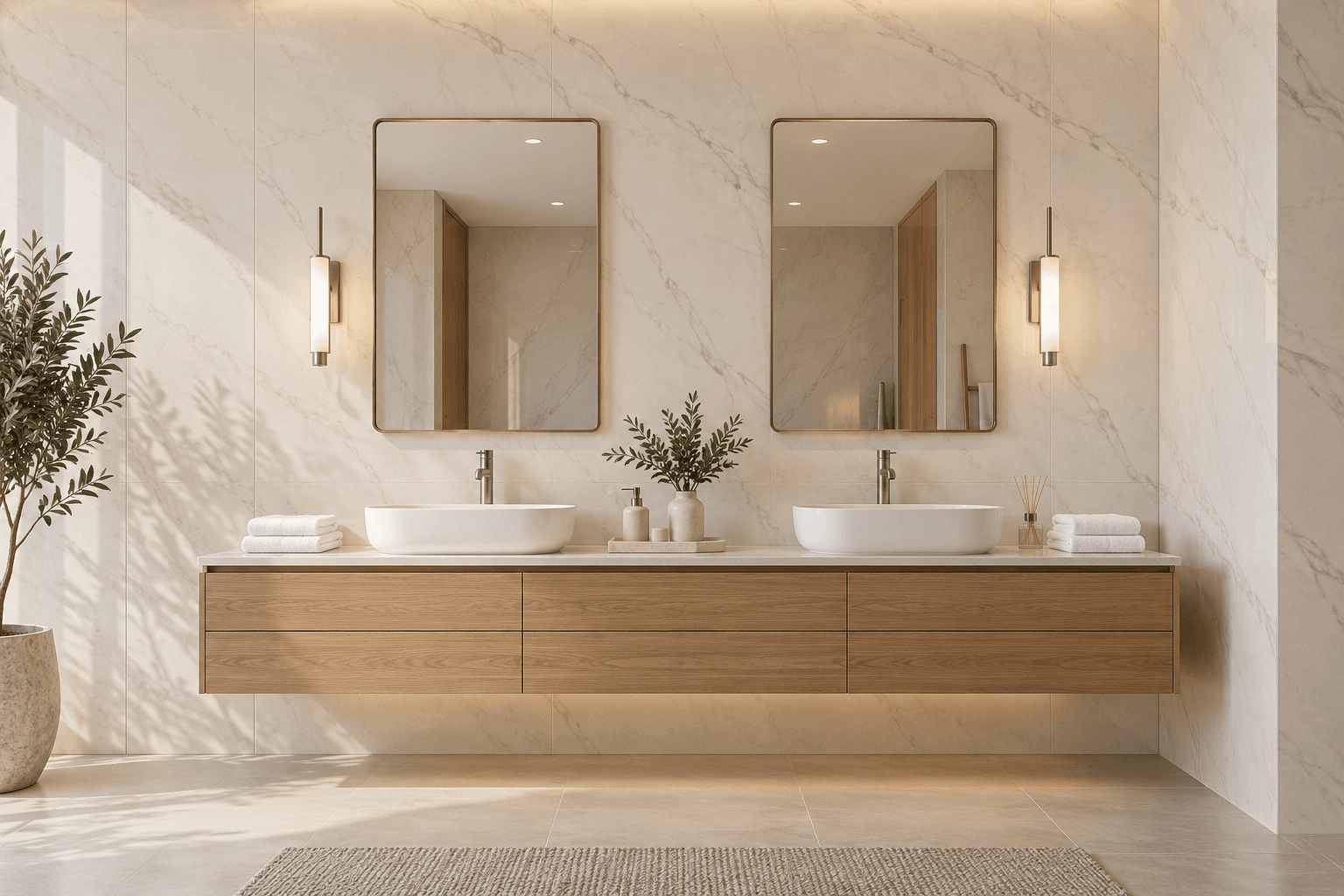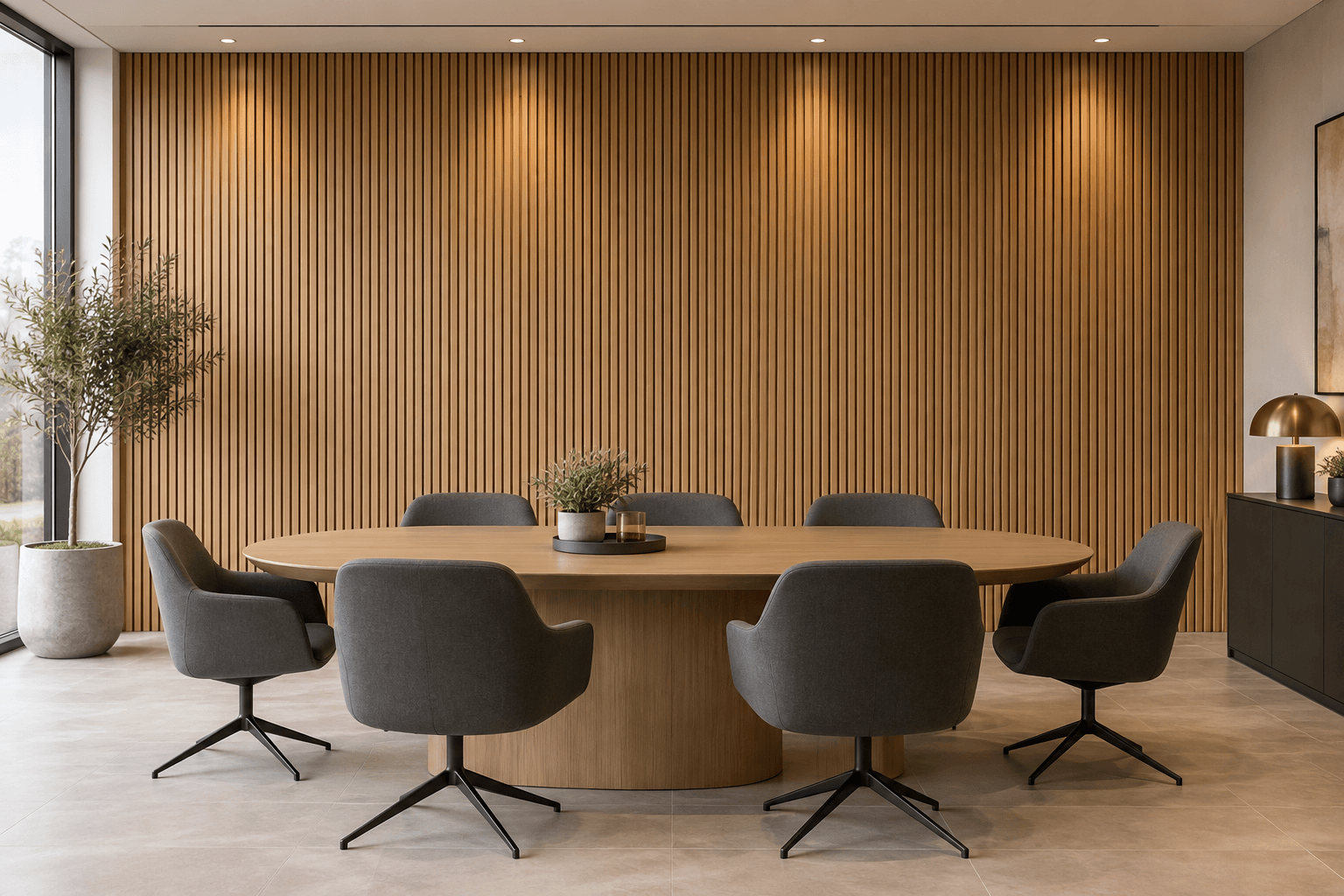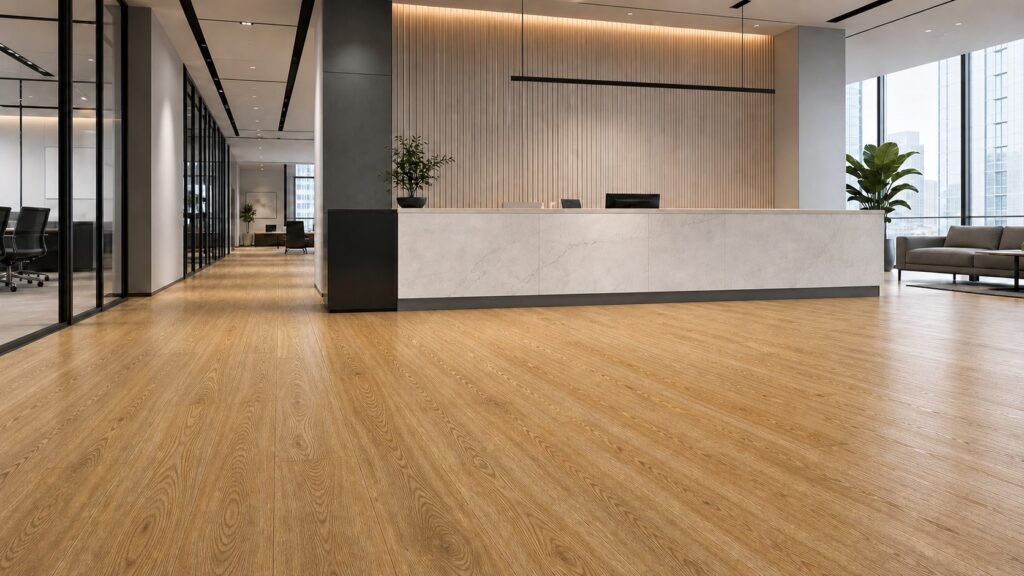
Direct Answer: Why Do Commercial Fit-Out Buyers Choose SPC Flooring?
Commercial fit-out buyers choose SPC flooring because it offers modern design, efficient installation, and practical cost control for offices, hotels, retail stores, apartments, clinics, and rental spaces. Moreover, importers and contractors can use SPC flooring to serve projects that need fast delivery, consistent appearance, and predictable installation performance.
However, B2B buyers should not compare SPC flooring only by square-meter price. Instead, they should review wear layer, total thickness, core density, click system, surface texture, attached underlayment, VOC-related documents, fire-related information, carton strength, container loading, MOQ, lead time, and warranty terms before confirming bulk orders.
What Is SPC Flooring in Commercial Fit-Out Sourcing?
SPC flooring, also known as stone plastic composite flooring or rigid core flooring, uses a dense core structure to support stable installation and strong visual design. In B2B markets, contractors and distributors often use SPC flooring for offices, retail stores, hotels, serviced apartments, rental housing, showrooms, and commercial renovation projects.
Additionally, SPC flooring gives importers a repeatable product category. Dealers can sell sample boards easily, contractors can explain installation benefits clearly, and project buyers can compare specifications before purchase. Therefore, SPC flooring works well for B2B channels that need both design value and practical project performance.
Witopdecor supplies decorative building materials for overseas B2B customers, including SPC flooring, WPC wall panels, UV marble sheets, bamboo charcoal panels, acoustic panels, and related interior materials. Consequently, buyers can combine flooring and wall panel products in one broader project sourcing plan.
Search Intent: What Do B2B Buyers Really Ask About SPC Flooring?
When a buyer searches for “SPC flooring supplier,” the real question usually goes beyond price. First, importers want to know whether the factory can support stable container supply. Additionally, contractors want to know whether the click system can reduce installation problems. Moreover, project buyers want to know whether documents, warranty terms, and surface durability can support commercial use.
Therefore, strong SPC flooring sourcing content should answer procurement questions directly. Buyers need to compare technical specifications, MOQ, lead time, packing details, container loading, sample approval, OEM/ODM packaging, and repeat order stability. As a result, the right supplier relationship can protect both margin and project timelines.
SPC Flooring Specification Checklist for Commercial Buyers
| Specification Area | What Buyers Should Check | Why It Matters |
|---|---|---|
| Total Thickness | 4mm, 5mm, 6mm, or market-specific options | Affects product feel, click strength, and price level |
| Wear Layer | Residential or commercial-grade options | Affects surface durability and customer expectations |
| Core Density | Board rigidity, cutting behavior, and weight | Affects installation confidence and freight cost |
| Click System | Locking strength, edge quality, and assembly feel | Reduces gaps, breakage, and site complaints |
| Surface Texture | Wood grain, stone look, matte, embossed, or EIR-style finish | Drives dealer sales and project design approval |
| Underlayment | IXPE, EVA, or no backing | Affects comfort, acoustic feel, carton size, and cost |
| Documents | VOC-related information, fire-related documents, warranty terms | Supports project review and market compliance |
| Packing | Carton strength, pallet plan, label design, loading quantity | Protects landed cost and reduces claims |
Why the Click System Deserves Special Attention
The click system can decide whether a commercial flooring project runs smoothly or becomes a problem. A weak click system may create gaps, broken edges, installation delays, and after-sales complaints. Therefore, buyers should test sample boards before they place a container order.
Additionally, contractors should check how easily boards lock together, how edges hold under pressure, and whether the floor stays flat during test installation. Importers can also ask suppliers for installation guidance, recommended subfloor conditions, and handling instructions. Consequently, a stronger click system can reduce warranty pressure and improve contractor confidence.
Wear Layer and Surface Durability
The wear layer affects how well SPC flooring handles daily traffic, cleaning, furniture movement, and commercial use. However, buyers should not choose a wear layer blindly. Instead, they should match the specification to the target market.
For example, a budget rental market may accept a lighter specification if price matters most. In contrast, offices, hotels, shops, and high-traffic apartments may require stronger wear-layer options. Moreover, importers should explain these differences clearly to dealers, because correct positioning reduces unrealistic customer expectations.
Surface texture also matters. A realistic wood grain or stone-look surface can improve showroom conversion. Additionally, matte and embossed textures may help reduce visible marks in busy commercial interiors.
Warranty Risk: What B2B Buyers Should Clarify Early
Warranty terms can protect both buyer and supplier when they remain clear and realistic. However, vague warranty language can create disputes. Therefore, importers should discuss warranty coverage, installation conditions, maintenance guidance, and claim handling before bulk orders.
Buyers should ask several practical questions. What does the warranty cover? What installation mistakes void the warranty? What cleaning methods does the supplier recommend? What documents should contractors keep after installation? Moreover, buyers should confirm whether local climate, subfloor moisture, or heavy rolling loads require special guidance.
This clarity helps distributors train dealers and contractors. As a result, they can reduce avoidable claims and protect long-term channel trust.
Container Loading and Landed Cost
SPC flooring is heavy, so container loading matters. A small difference in carton size, board thickness, backing option, or pallet method can change the landed cost per square meter. Therefore, importers should compare loading quantity before they compare final pricing.
Additionally, attached underlayment can increase product value, but it may also affect carton volume and container capacity. Buyers should calculate whether backing improves local selling price enough to justify the extra cost. Moreover, they should confirm carton weight, pallet options, label requirements, and mixed color loading plans before shipment.
A strong loading plan helps importers manage cash flow, warehouse space, and dealer delivery. Consequently, container efficiency can become a real profit factor, not only a logistics detail.
SPC Flooring vs. Other Commercial Flooring Materials
| Flooring Material | Main Advantage | Main B2B Concern | Best-Fit Scenario |
|---|---|---|---|
| SPC Flooring | Rigid core, modern designs, efficient installation | Buyers must verify click system, wear layer, documents, and packing | Offices, hotels, apartments, retail stores |
| Ceramic Tile | Strong hardness and familiar market demand | Slower installation, grout maintenance, higher labor pressure | Wet areas and traditional commercial spaces |
| Laminate Flooring | Popular wood-look option | Moisture sensitivity and edge swelling concerns | Dry residential and light commercial use |
| LVT Flooring | Flexible vinyl structure and design variety | Subfloor preparation and indentation risk | Light commercial and residential interiors |
| Engineered Wood | Natural material value | Higher cost and maintenance requirements | Premium residential and boutique spaces |
Therefore, SPC flooring fits many commercial fit-out projects that need design flexibility, faster installation, and controlled cost. However, buyers should still match the product to the actual traffic level, installation environment, and local customer expectations.
Compliance and Document Review
Commercial projects may require technical document review. Therefore, buyers should request available VOC-related information, fire-related documents, product specifications, warranty terms, and installation instructions. Additionally, importers should verify local regulations before promoting any flooring product for hotels, offices, schools, clinics, or public spaces.
However, buyers should avoid unsupported claims. Instead of saying a product suits every market, they should ask project owners which documents they need and then compare those requirements with supplier files. This responsible approach improves credibility and reduces approval delays.
How Importers Can Build a Strong SPC Flooring Program
A strong SPC flooring program starts with focused SKU planning. Importers can select several fast-moving colors, such as natural oak, warm walnut, light grey, beige wood, dark wood, and modern stone designs. Additionally, they can create a clear product ladder by thickness, wear layer, backing, and price level.
Next, buyers should prepare sample boards for dealers and contractors. Physical samples help customers evaluate texture, color, locking feel, and surface appearance. Moreover, sample boards make sales conversations easier because customers can compare options quickly.
Finally, importers can discuss OEM/ODM support with the factory. Private label cartons, custom color names, sample books, and project catalogs can strengthen local brand value. However, buyers should confirm MOQ, artwork requirements, lead time, and reorder policy before launching a private label program.
FAQ: SPC Flooring for B2B Buyers
1. Is SPC flooring suitable for commercial fit-out projects?
Yes, SPC flooring can suit many commercial fit-out projects, including offices, hotels, retail stores, serviced apartments, and showrooms. However, buyers should match thickness, wear layer, click system, and installation guidance to the traffic level and site conditions.
2. What should importers check before buying SPC flooring in bulk?
Importers should check total thickness, wear layer, core density, click system, surface texture, backing option, carton strength, loading quantity, MOQ, lead time, VOC-related documents, fire-related information, and warranty terms.
3. Why does the click system matter so much?
The click system affects installation speed, joint stability, and after-sales risk. Therefore, buyers should test sample boards, inspect edge quality, and confirm installation guidance before placing a large order.
4. Can SPC flooring support OEM or private label cooperation?
Yes, many B2B SPC flooring programs can support OEM or private label cooperation. Buyers can discuss branded cartons, color names, sample boards, project catalogs, and market-specific packaging with the supplier.
5. What documents should project buyers request?
Project buyers should request product specifications, VOC-related information, fire-related documents where required, warranty terms, maintenance guidance, and installation instructions. Additionally, they should verify local project requirements before final approval.
Conclusion: Source SPC Flooring With Project Risk and Channel Profit in Mind
SPC flooring can help importers, distributors, contractors, and project buyers serve commercial fit-out markets with modern design, efficient installation, and repeatable supply. However, successful sourcing requires more than choosing a low price or attractive color. Buyers should compare wear layer, total thickness, core density, click system, surface texture, underlayment, packing strength, container loading, documents, warranty terms, and repeat order support.
Therefore, a reliable factory relationship can improve project delivery, reduce claims, and protect channel profit. If you want to compare SPC flooring specifications, request sample boards, discuss container loading, develop private label packaging, or prepare a project quotation, contact Witopdecor for B2B sourcing support and wholesale cooperation.

James is a content creator and decorator with five years of experience designing home decor. In his daily life, james is constantly on the lookout for the latest, great examples of house design and further optimizes his solutions. Additionally, he writes articles related to outdoor design, interior design, and architectural decorating materials to help brands build more engaging relationships with their audiences.