Quick Answer: Can One Panel Specification Cover Every Bathroom Wall?
Do not approve SPC wall panels for an entire bathroom solely because the product description mentions moisture resistance. First, separate humid-air exposure, occasional splashes and direct shower spray. Then confirm the exact panel, joint system, backing and installation instructions for each location. A decorative finish does not automatically replace the waterproofing that the project designer requires behind or around it.
For an importer supplying hotels, this distinction turns a broad product request into a workable purchase order. A wholesale distributor can offer coordinated finishes while retaining different technical approval conditions for different walls. Meanwhile, the building contractor can price the actual interfaces rather than discover missing components during installation.
Create a Room-by-Room Exposure Schedule
Start project procurement with drawings that identify each wall face. A hotel bathroom may contain a vanity, an enclosed toilet area and a separate shower enclosure. However, the room name alone does not describe every surface’s exposure. Ask the project team to record expected use, cleaning methods and the position of water outlets for each location.
Next, distinguish routine conditions from unusual events. A toilet wall that normally experiences humid air may also receive spray during housekeeping. A vanity wall may encounter occasional splashes around the basin. Therefore, discuss actual operating practices with the hotel team instead of assigning categories from a photograph.
Use the schedule below as a purchasing aid. These descriptions do not replace local requirements or establish a universal technical classification.
| Location and exposure | Questions for product approval | Detail that the quotation should identify |
|---|---|---|
| Toilet wall with humid-air exposure | What humidity conditions and cleaning methods does the product documentation allow? | Approved backing, fixing method and perimeter finish |
| Vanity wall with occasional splashes | Does the proposed assembly suit this exposure and cleaning routine? | Basin interface, joints, outlet details and compatible sealants |
| Wall receiving direct shower spray | What evidence supports the complete assembly for this location? | Waterproofing design, approved joints and penetration details |
| Service-access location | How will maintenance staff open and reinstate the detail? | Access component, seal renewal and replacement responsibility |
In addition, record any unresolved location as pending approval. Do not let a shared decorative finish code imply that every wall has the same approved construction.
Assign the Backing and Waterproofing Responsibilities
Ask the decorative building materials supplier to identify the exact panel construction and approved backing conditions. Obtain the relevant technical specifications, including permitted fixing materials and preparation requirements. Then have the contractor assess the actual substrate before final pricing. Existing coatings, loose surfaces or unresolved moisture can change the preparation scope.
Separately, name the party responsible for the project’s waterproofing design and installation. Clarify where that scope starts and ends, who checks it before covering, and who records acceptance. This avoids an assumption that purchasing a decorative panel also purchases a complete wet-area system.
For context, Schluter’s shower-system guidance explains that tiled shower finishes work with a waterproofing assembly rather than providing the entire moisture-management solution themselves. That guidance concerns its tiled systems; it does not approve an SPC panel combination. Its useful procurement lesson is to identify the complete assembly and its interfaces.
Furthermore, confirm compatibility wherever products meet. A panel adhesive, membrane, backing and joint sealant may come from different suppliers. Obtain written guidance for the proposed combination rather than assuming that separate product descriptions establish compatibility.
Treat Joints, Penetrations and Edges as Separate Supply Items
A square-meter panel quantity does not capture every bathroom detail. Therefore, count internal corners, external corners, wall terminations, basin junctions, service openings and pipe penetrations. Then connect those quantities to the approved drawings and named components.
For each interface, ask who supplies the material and who installs it. Identify the approved sealant or trim, its preparation instructions and any required movement allowance. Avoid publishing a generic bead size or joint gap for every SPC wall panel; the selected system and project conditions determine the relevant detail.
Also, distinguish a decorative cover profile from a water-management component. An attractive trim can conceal an edge without proving that the underlying junction meets the design requirements. Require the supplier or designer to explain each component’s function so the purchasing team understands what it actually buys.
Finally, coordinate accessory loads and penetrations before panel installation. Mirrors, grab rails and dispensers may need dedicated support. Ask the responsible trades to agree fixing locations and sealing duties rather than leave those decisions to a later fitting visit.
Use the Mockup to Close Commercial Gaps
During sample evaluation, review the finish alongside the intended corner, termination and vanity details. Build a representative mockup with the approved backing and fixing method. Include a service penetration and a planned access point where the design requires them.
Then record appearance acceptance separately from technical checks. Inspect the finish under the actual bathroom lighting and review the joint alignment. Ask the project team to define any required system testing and acceptance records. A visually pleasing mockup cannot establish water-exposure suitability by itself.
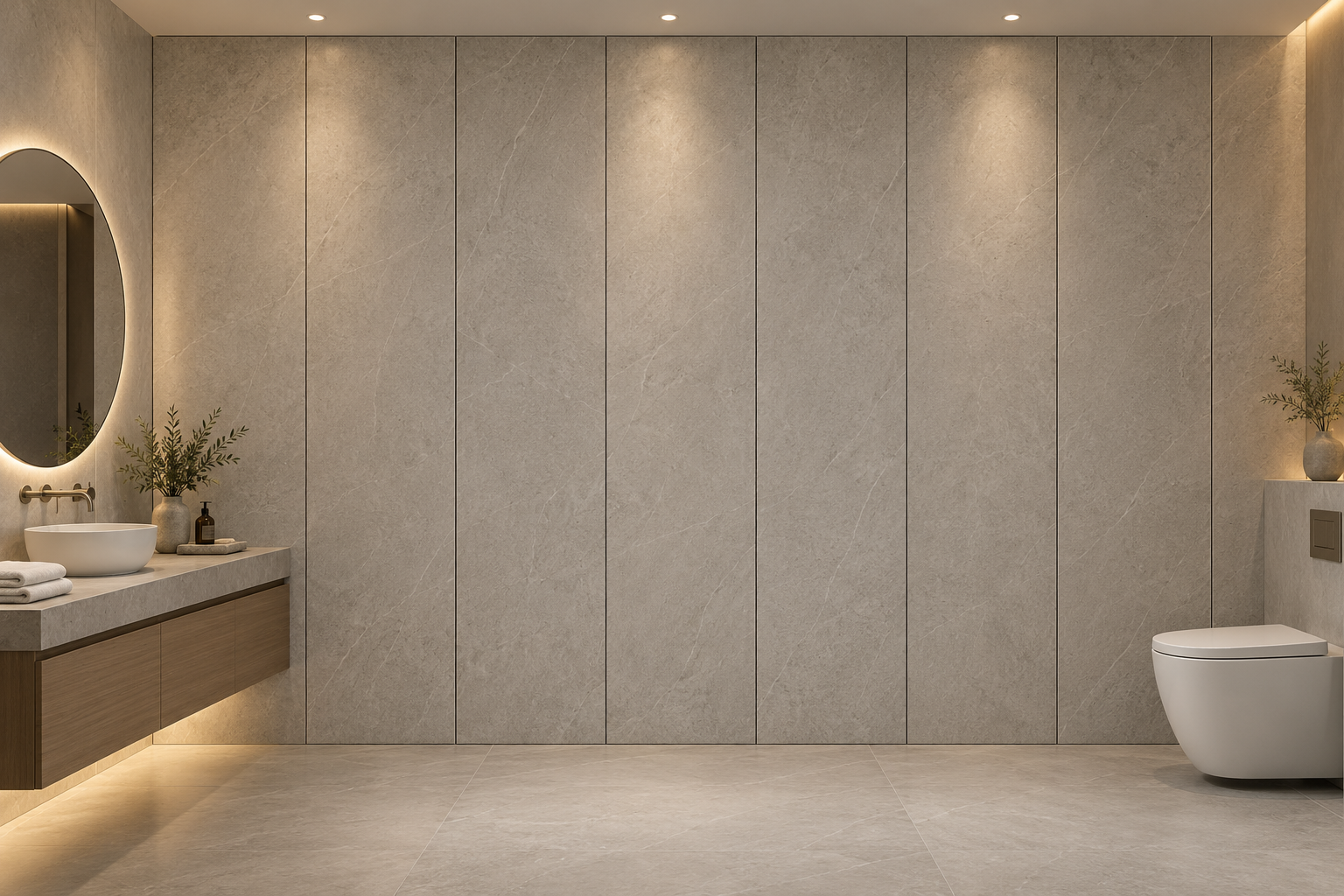
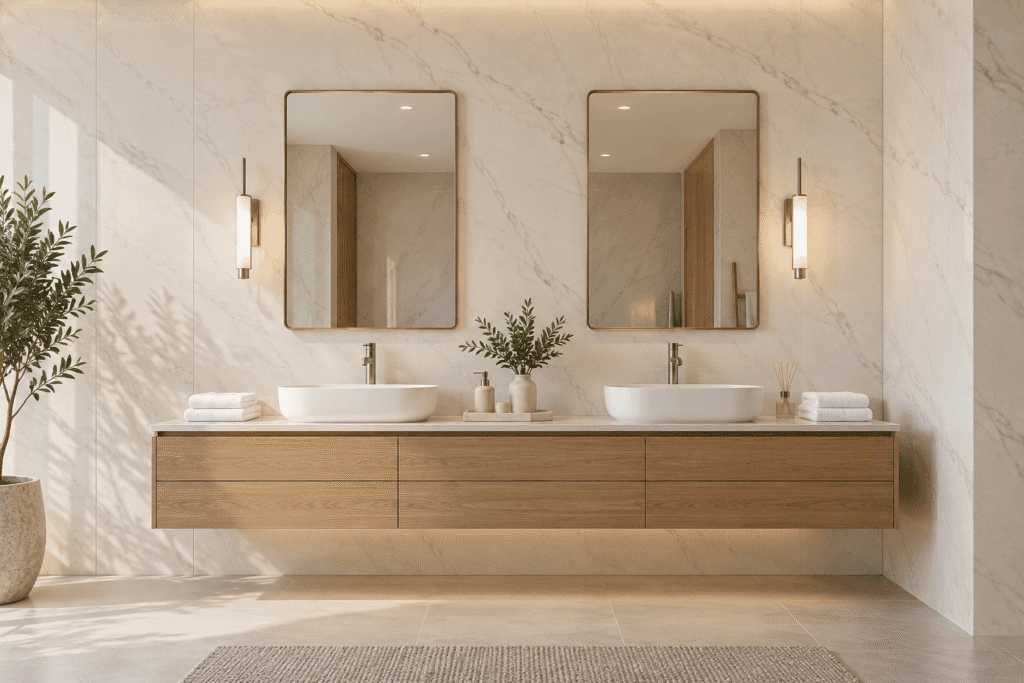
For example, a hotel may select pale stone-look walls around a dry vanity and a warmer neutral finish in its toilet area. The completed spaces can share a coordinated design while the purchasing schedule retains distinct exposure notes. This supports clear room planning without implying approval for direct shower use.
Compare Installed Cost and Maintenance Scope
Calculate installation cost from panels, substrate preparation, specified waterproofing, adhesives, trims, joint materials, labor and inspection. In addition, include curing or access restrictions that affect the hotel opening schedule. Compare competing offers against the same room quantities and detail schedule.
Next, estimate maintenance cost from the approved cleaning routine, access requirements and expected joint-inspection tasks. Ask how the team would replace a damaged panel and reinstate surrounding interfaces. Durability discussions should address the complete use conditions rather than rely on an unexplained service-life claim.
Moreover, ask housekeeping staff to review the proposed care instructions before handover. Record permitted products, cleaning equipment and any restrictions on prolonged contact with cleaning solutions. If the hotel’s routine conflicts with those instructions, resolve the mismatch before purchase. This connects the purchasing decision to daily operation and helps the owner budget for the correct care supplies and staff guidance.
Before ordering, buyers should verify test reports, VOC limits, fire-rating documents and warranty terms for the exact materials and destination. Confirm the required fire rating with the project team. Also clarify whether the warranty covers only replacement material or includes removal, labor and reinstatement.
Witop Decor’s SPC wall panel range provides a starting point for product selection. Request current technical data sheets and samples for the proposed SKU. For custom colors or OEM/ODM cooperation, agree approval stages before fixing the production schedule.
Finally, align MOQ and lead time across panels and accessories. Discuss container loading, finish identification and room-based quantities. Send the exposure schedule with your bulk order inquiry so the project quotation can identify included components, exclusions and outstanding approvals.
B2B Buyer FAQs
Are All SPC Wall Panels Suitable for Direct Shower Spray?
No universal approval follows from the product name. Confirm suitability for the exact panel and complete installation system. If evidence remains incomplete, keep that location outside the approved scope until the responsible project team resolves it.
Does the Panel Replace the Bathroom Waterproofing Layer?
Do not assume that it does. Ask the designer to identify the required water-management assembly and confirm the selected product’s role. Then allocate each component and inspection duty in the purchase documents.
Can We Use the Same Finish in a Toilet and a Vanity Area?
Potentially, if the selected product and assembly meet both locations’ requirements. However, retain separate exposure notes and interface details. A shared finish code should not erase differences in cleaning, splashing or penetrations.
What Should an Importer Request With Samples?
Request panel identification, installation instructions, technical data sheets and matching joint or edge components. In addition, share the room schedule so the supplier can identify unresolved suitability questions before the bulk quotation.
How Can a Distributor Reduce Missing-Accessory Costs?
Count details from approved drawings rather than estimating everything from wall area. List components, quantities, responsibility and exclusions. Then reconcile the final order with the contractor’s installation scope before confirming shipment.

James is a content creator and decorator with five years of experience designing home decor. In his daily life, james is constantly on the lookout for the latest, great examples of house design and further optimizes his solutions. Additionally, he writes articles related to outdoor design, interior design, and architectural decorating materials to help brands build more engaging relationships with their audiences.