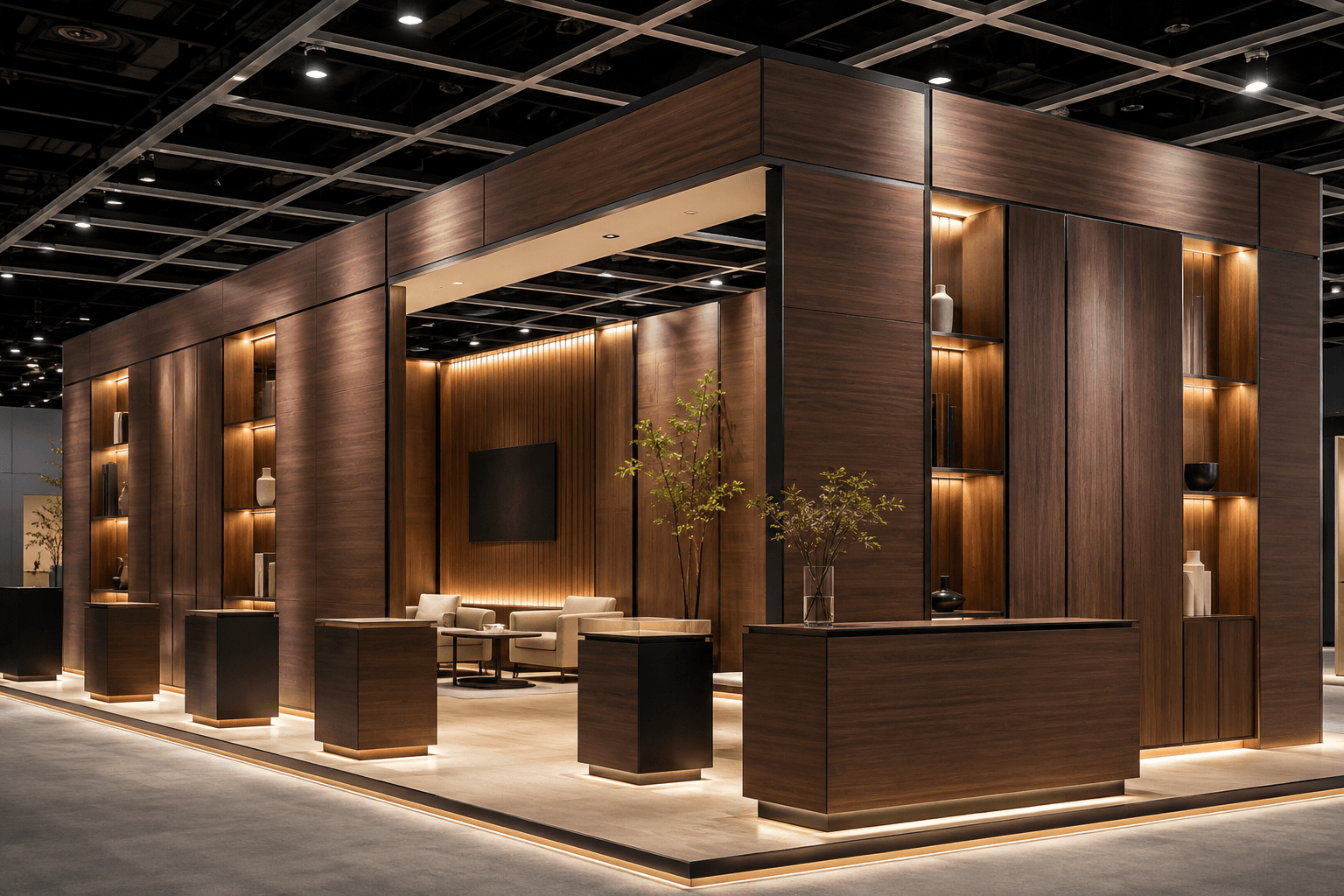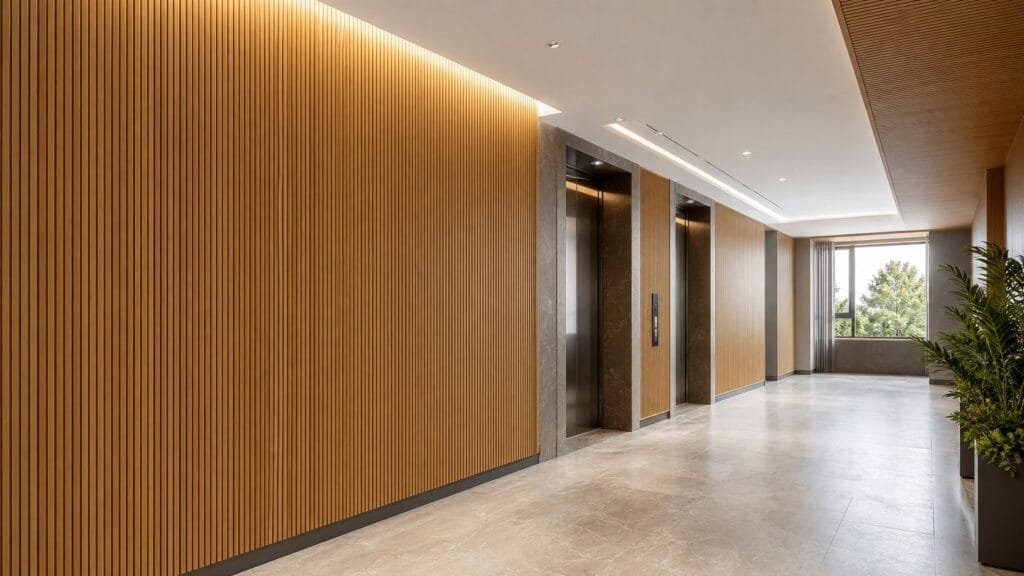
Direct Answer: Why Do Contractors and Importers Choose WPC Wall Panels?
Contractors and importers choose WPC wall panels because they help commercial projects achieve faster wall finishing, stable decorative results, and more predictable site coordination. Moreover, WPC wall panels give wholesalers, distributors, and project buyers a product category that can serve apartments, hotels, offices, retail interiors, corridors, ceilings, and renovation projects with repeatable demand.
However, B2B buyers should not evaluate WPC wall panels only by color or unit price. Instead, they should compare profile stability, panel thickness, density, surface finish, accessory matching, packing strength, MOQ, lead time, container loading, VOC-related information, fire-related documents where required, and supplier support before confirming a bulk order.
What Are WPC Wall Panels in B2B Project Supply?
WPC wall panels, also known as wood plastic composite wall panels, combine wood fiber and polymer materials to create decorative wall and ceiling cladding products. In B2B building material channels, contractors often use them for feature walls, hotel corridors, apartment interiors, reception areas, retail displays, office partitions, and ceiling decoration. Additionally, importers and wholesalers can position WPC wall panels as a practical alternative to traditional timber decoration, painted walls, MDF panels, and some PVC wall systems.
For B2B buyers, the real value sits in the full product system. A strong WPC wall panel program includes stable profiles, repeatable colors, matching trims, installation guidance, export packing, sample support, and clear reorder communication. Therefore, overseas buyers should treat WPC wall panels as a long-term supply category rather than a one-time decorative product.
Witopdecor supports overseas B2B customers with decorative building materials, including WPC wall panels, UV marble sheets, bamboo charcoal panels, acoustic panels, SPC flooring, and related interior products. Consequently, buyers can combine wall, floor, and decorative surface materials in one project sourcing plan.
Search Intent: What Do B2B Buyers Really Need to Know?
When buyers search for “WPC wall panels,” they usually want practical sourcing answers. First, importers want to know whether the factory can supply stable container orders. Additionally, distributors want to know whether the product line can support showroom displays, dealer sales, and repeat SKUs. Moreover, contractors want to know whether the panels can reduce installation time and lower project complaints.
Therefore, an effective sourcing decision should connect product design with commercial performance. Buyers need answers about thickness, width, profile tolerance, density, surface finish, accessory options, packing quality, MOQ, lead time, technical documents, and after-sales communication. As a result, the best supplier is not always the one with the lowest price; it is often the one that helps buyers protect margins and deliver projects reliably.
WPC Wall Panels vs. Traditional Wall Finishing Materials
| Material Option | Main B2B Advantage | Main Procurement Concern | Best-Fit Scenario |
|---|---|---|---|
| WPC Wall Panels | Decorative profiles, fast installation, broad project use | Buyers should verify density, profile tolerance, color consistency, and accessories | Hotels, apartments, offices, corridors, ceilings, commercial interiors |
| Painted Walls | Low material entry cost | More site labor, repainting, and maintenance | Budget interiors and simple walls |
| MDF Wall Panels | Good machining and custom shapes | Moisture sensitivity and finishing labor | Dry interior carpentry projects |
| Natural Wood Panels | Premium material perception | Higher cost, color variation, and maintenance | Luxury boutique projects |
| PVC Wall Panels | Lightweight and price-sensitive | Lower perceived value in some commercial markets | Budget renovation and fast decoration |
Consequently, WPC wall panels work well when a buyer needs a balance of design value, installation efficiency, manageable cost, and repeatable supply. In contrast, natural wood may suit premium zones, while painted walls may suit low-budget spaces that do not need strong decorative depth.
Key Specifications Contractors and Importers Should Compare
1. Profile Type and Dimensional Stability
Profile design affects both appearance and installation speed. Fluted panels, slat panels, flat panels, ceiling profiles, and trim-compatible profiles each serve different projects. Moreover, profile tolerance matters because a large wall area can reveal gaps, waves, or alignment problems quickly. Therefore, buyers should test physical samples and compare several pieces before they approve a bulk order.
2. Thickness, Width, and Density
Thickness and width influence product feel, carton size, container loading, and local price positioning. Density affects cutting behavior, screw holding, weight, and perceived quality. However, higher density may increase freight cost. Therefore, importers should match density and thickness to market expectations instead of choosing a specification blindly.
3. Surface Finish and Color Consistency
Surface finish drives dealer confidence. Wood grain, matte textures, embossed surfaces, dark luxury tones, and modern neutral colors can all serve different channels. Additionally, color consistency becomes critical for hotel, apartment, and office projects because contractors may install the same design across many rooms or corridors. Buyers should keep approved master samples and compare repeat orders against those samples.
4. Accessories and Installation System
Accessories can decide whether the product sells as a complete system or a loose panel. Matching trims, corners, clips, screws, end caps, and transition pieces help contractors finish projects faster. Moreover, accessories reduce improvised site solutions, which can lower complaint risk. Therefore, distributors should discuss accessory availability before they promote a new WPC wall panel collection.
5. Packing and Container Loading
Export packing protects profit. Weak cartons, poor corner protection, unclear labels, and inefficient mixed loading can increase damage and warehouse handling costs. Therefore, buyers should confirm carton structure, pieces per carton, gross weight, pallet options, moisture protection, labels, and container loading quantity before shipment.
Installation Efficiency and Project ROI
Contractors care about time, labor, and fewer site problems. WPC wall panels can improve project ROI when they reduce painting, sanding, repeated finishing, and cleanup work. Additionally, panels with matching accessories can help installers complete corners, edges, and transitions more consistently.
However, installation efficiency depends on product quality and site planning. If panels arrive with unstable profiles, damaged edges, or incomplete trims, contractors may lose the time advantage. Therefore, importers should evaluate total project cost, not only panel price. A slightly better product may create stronger ROI if it reduces waste, installation confusion, and after-sales complaints.
For distributors, ROI also includes inventory turnover, dealer margin, sample display cost, claim rate, and reorder speed. Moreover, a focused SKU range can improve cash flow. Buyers can start with several fast-moving wood tones, neutral colors, and premium accents before expanding into custom designs.
Compliance and Responsible Product Claims
B2B buyers should use careful language when they promote WPC wall panels. Some projects may require VOC-related information, fire-related documents, product specifications, material details, warranty terms, and installation guidance. However, requirements differ by country, building type, and project owner.
Therefore, buyers should request available documents from the supplier and verify local rules before using strong claims in marketing. For example, hotel corridors, public buildings, schools, or commercial offices may ask for specific fire-rating documents or emission information. As a result, responsible document review can protect importers, contractors, and end project owners.
How Importers Can Build a Strong WPC Wall Panel Program
A strong program begins with clear customer segmentation. If the buyer sells mainly to contractors, the product line should emphasize stable profiles, easy installation, trims, packing quality, and project documentation. If the buyer sells through dealers and showrooms, the line should include sample boards, attractive colors, clear product names, and private label packaging.
Additionally, importers should avoid starting with too many SKUs. A broad catalog may look impressive, but slow-moving inventory can reduce profit. Instead, a focused collection of popular wood tones, modern grey, warm beige, black accents, and matching accessories can support better turnover. Later, buyers can expand based on dealer feedback and repeat order data.
OEM/ODM support can also strengthen local market positioning. Buyers may request private label cartons, custom sample books, exclusive color names, or market-specific catalogs. However, they should confirm MOQ, artwork requirements, lead time, packaging cost, and reorder conditions before launching a private label program.
Supplier Evaluation Checklist for WPC Wall Panels
- Target buyer type: importer, wholesaler, distributor, contractor, dealer, or project procurement team
- Main application: hotel, apartment, office, retail store, corridor, ceiling, reception wall, or commercial renovation
- Profile type, width, thickness, density, weight, and dimensional tolerance
- Surface finish, color range, texture quality, and batch consistency
- Installation accessories, trims, clips, screws, corners, and technical guidance
- MOQ, lead time, payment terms, production schedule, and repeat order plan
- Export packing, carton strength, pallet options, labels, and container loading quantity
- Available VOC-related information, fire-related documents where required, warranty terms, and specifications
- OEM/ODM support, private label cartons, sample boards, and distributor support
- Inspection process, pre-shipment photos, and claim communication method
FAQ: WPC Wall Panels for B2B Buyers
1. Are WPC wall panels suitable for apartment and hotel projects?
Yes, WPC wall panels can suit apartment and hotel projects because they offer decorative profiles, efficient installation, and repeatable design effects. However, contractors should confirm wall conditions, installation methods, accessories, and required project documents before use.
2. What should importers check before buying WPC wall panels in bulk?
Importers should check profile stability, thickness, density, surface finish, color consistency, accessory matching, packing strength, MOQ, lead time, loading quantity, warranty terms, and available technical documents.
3. Why do accessories matter for WPC wall panel projects?
Accessories help contractors finish corners, edges, joints, and transitions more professionally. Moreover, a complete accessory system helps distributors sell a wall solution instead of only selling panels.
4. Can WPC wall panels support OEM or private label cooperation?
Yes, many WPC wall panel programs can support OEM or private label cooperation. Buyers can discuss branded cartons, sample books, exclusive colors, custom labels, MOQ, artwork requirements, and reorder terms with the factory.
5. What documents should project buyers request?
Project buyers should request product specifications, VOC-related information, fire-related documents where required, warranty terms, installation guidance, and packing details. Additionally, they should verify local project requirements before final approval.
Conclusion: Source WPC Wall Panels With Installation and Supply Control in Mind
WPC wall panels can help B2B importers, wholesalers, contractors, and project buyers serve apartment, hotel, office, and commercial renovation markets with strong decorative value and efficient installation. However, successful sourcing requires more than choosing attractive colors. Buyers should compare profile stability, thickness, density, surface finish, accessories, packing, documents, MOQ, lead time, and repeat supply capability.
Therefore, a reliable factory relationship can protect project schedules, reduce claims, and improve channel profit. If you want to compare WPC wall panel specifications, request sample kits, discuss container loading, develop private label packaging, or prepare a project quotation, contact Witopdecor for B2B sourcing support and wholesale cooperation.

James is a content creator and decorator with five years of experience designing home decor. In his daily life, james is constantly on the lookout for the latest, great examples of house design and further optimizes his solutions. Additionally, he writes articles related to outdoor design, interior design, and architectural decorating materials to help brands build more engaging relationships with their audiences.