WPC Wall Panels for Commercial Corridor Renovation: Accessory Planning, Durability Checks, and Maintenance ROI
Direct Answer: Why Should B2B Buyers Compare WPC Wall Panels for Commercial Corridors?
B2B buyers compare WPC wall panels for commercial corridor renovation because corridors demand fast installation, stable surfaces, impact resistance, clean corners, and predictable maintenance. Therefore, importers, contractors, and wholesale distributors should evaluate profile structure, thickness, surface finish, accessory systems, VOC information, fire-rating documents, packing, MOQ, lead time, and replacement strategy before bulk purchase. Moreover, the right factory supply plan helps buyers reduce job-site delays, control after-sales claims, and build a repeatable wall cladding program for hotels, apartments, offices, and public interiors.
What Are WPC Wall Panels in Corridor Renovation Projects?
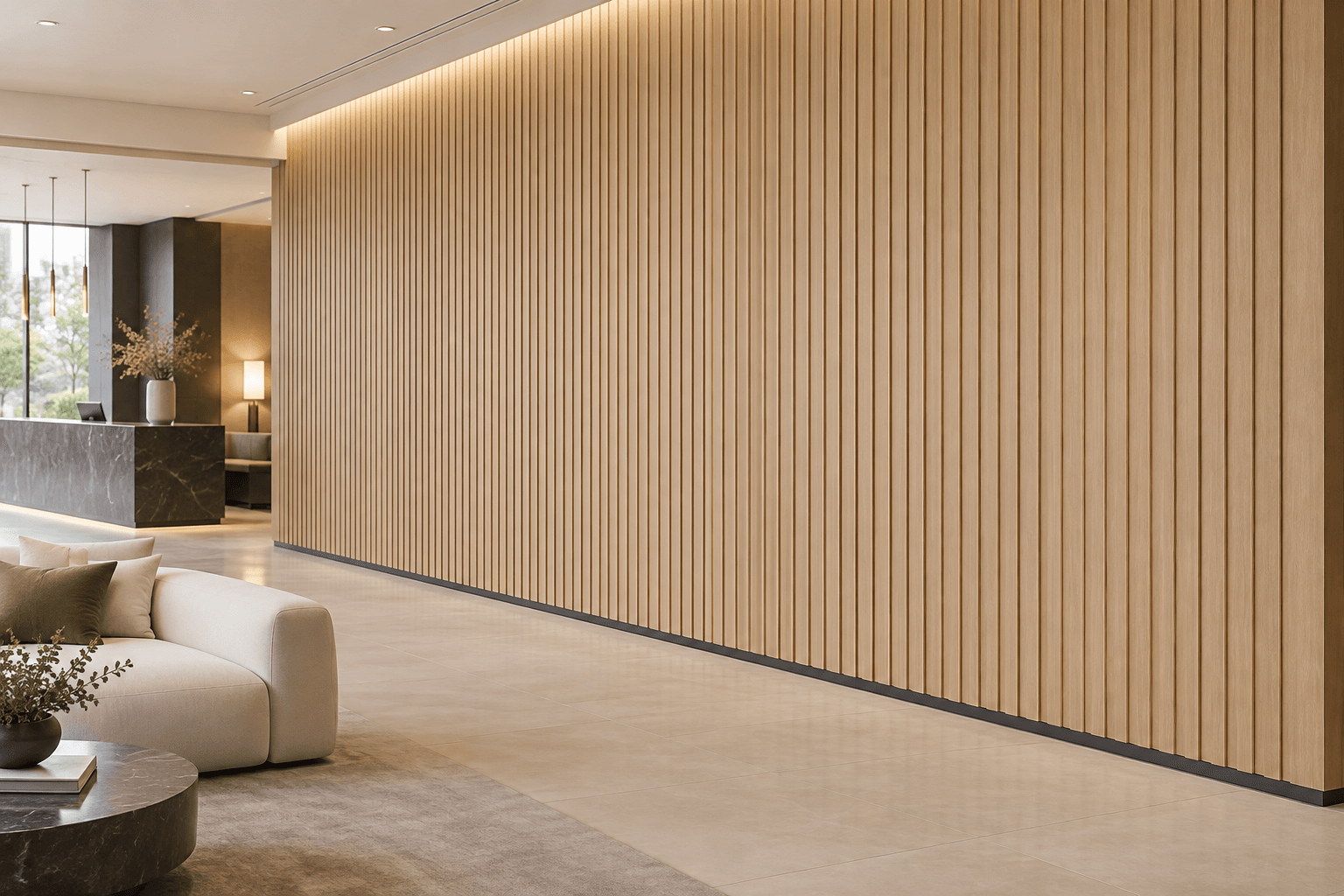
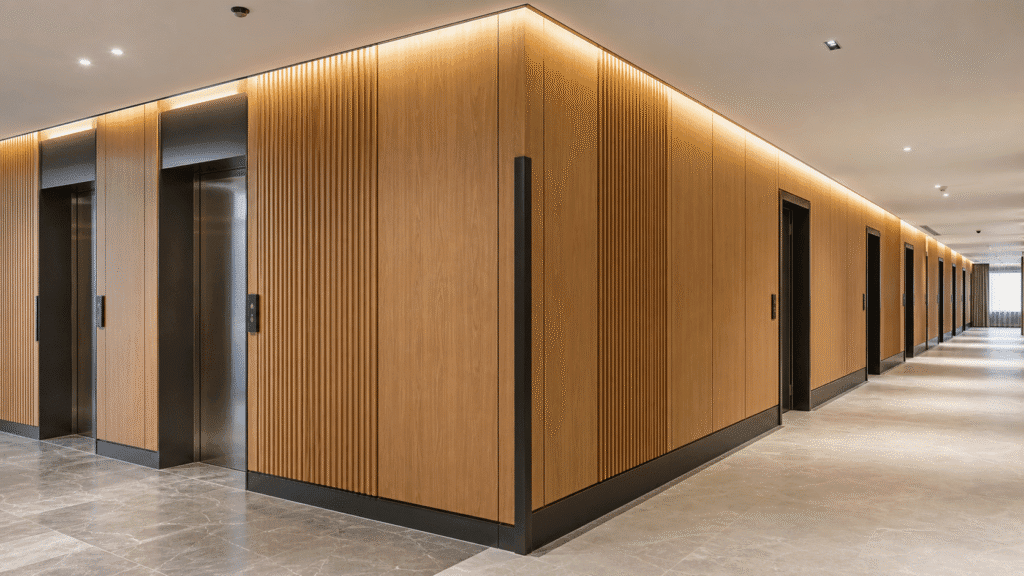
WPC wall panels are decorative wall cladding products made from wood plastic composite materials. In B2B project supply, buyers use them for corridors, elevator halls, apartment common areas, hotel back corridors, retail circulation zones, office walls, and mixed-use building interiors. However, a corridor project requires more than a good-looking panel. It also requires matching trims, stable profiles, repeatable colors, efficient packing, and installation guidance that contractors can follow across long wall runs.
For example, a hotel renovation contractor may need to refresh ten floors while the property continues operating. Meanwhile, an importer may need a wall panel line that distributors can stock, show, and reorder with confidence. Additionally, a building materials wholesaler may need OEM/ODM cartons, sample boards, profile cutaways, and container loading support. Consequently, WPC wall panels become a project supply system rather than a single decorative item.
Witopdecor works with overseas B2B buyers who source decorative building materials such as WPC wall panels, UV marble sheets, bamboo charcoal panels, acoustic panels, and SPC flooring. Therefore, buyers can coordinate wall panels with flooring, acoustic treatment, and other finish materials when they prepare project quotations for contractors or dealers.
Search Intent: What Do Importers and Contractors Really Need?
When a buyer searches for “WPC wall panels for corridors” or “WPC wall panels supplier,” the real intent usually includes specification control, installation risk, and supply reliability. Importers want to know whether the panels can survive freight, warehouse handling, dealer delivery, and repeat orders. Contractors want to know whether panels cover old corridor walls quickly, whether corners look clean, and whether installers can handle door frames, elevator openings, and skirting transitions. Moreover, project procurement teams want to know which documents they should verify before approval.
Therefore, a useful sourcing process should answer practical questions. What profile works best for high-traffic corridors? Which trims reduce corner damage? What surface finish hides small marks better? How does the factory manage batch color? What packing protects long profiles during container transport? As a result, B2B buyers can compare full project value instead of choosing only the lowest unit price.
WPC Wall Panels vs. Other Corridor Wall Finish Options
| Wall Finish Option | Main B2B Advantage | Procurement Risk to Check | Best-Fit Corridor Use |
|---|---|---|---|
| WPC Wall Panels | Fast decorative cladding, strong texture, accessory-based finishing | Profile stability, trim matching, surface wear, batch color, packing protection | Hotel corridors, apartment common areas, office halls, retail circulation spaces |
| Painted Walls | Low material entry cost and simple local repair | Frequent repaint cycles, visible scuffs, lower premium look | Budget corridors and back-of-house zones |
| Wallpaper | Broad design range and lightweight installation | Peeling, cleaning difficulty, seam visibility, lower impact resistance | Low-traffic decorative areas |
| UV Marble Sheets | Large-format stone-look surface and bright visual effect | Corner protection, gloss consistency, adhesive compatibility | Elevator halls, feature walls, reception corridors |
| MDF Panels | Machining flexibility and familiar woodworking process | Moisture sensitivity, finishing labor, heavier installation | Dry interiors with controlled conditions |
Key Specifications B2B Buyers Should Compare
1. Profile Structure and Dimensional Stability
First, buyers should compare profile structure because corridor walls often run for many meters. A stable profile helps installers keep straight lines and consistent spacing. However, different markets may prefer different widths, groove depths, and surface textures. Therefore, importers should request samples, check profile tolerance, and test installation on a mock-up wall before confirming a full container.
2. Surface Finish and Scratch Expectations
Second, commercial corridors face luggage, cleaning carts, hand contact, and daily traffic. Therefore, buyers should compare surface texture, color, gloss level, and scratch expectations. A slightly textured woodgrain or matte finish may hide small marks better than a very glossy surface. Additionally, distributors should build a focused color range that contractors can reorder easily across multiple project phases.
3. Accessories, Corners, and End Caps
Third, accessory planning often decides whether a corridor project looks professional. Contractors need trims for internal corners, external corners, end caps, door frames, ceiling lines, and skirting transitions. Moreover, repeated corridor details can multiply small mistakes. Therefore, buyers should ask for a complete accessory list, profile drawings, installation photos, and sample kits before bulk purchase.
4. VOC, Fire Documents, and Warranty Terms
Fourth, commercial interiors may require VOC information, fire-rating documents, warranty terms, and installation guidance. Requirements differ by country, building type, and local authority. Therefore, buyers should verify test reports, VOC limits, fire-rating documents when applicable, and warranty conditions before project approval. This careful process protects importers, contractors, and project owners from unsupported claims.
5. Packing and Container Loading
Finally, WPC wall panels need strong packing because long profiles can suffer edge or corner damage during handling. Buyers should review carton strength, pallet design, moisture protection, mixed-color loading, SKU labels, and container loading plans. Consequently, better packing can reduce claims and protect distributor margin after the goods arrive.
Corridor Renovation ROI: Why Maintenance Cost Matters
Commercial corridor renovation depends on lifecycle cost, not only purchase price. A low-cost wall finish can become expensive when it needs frequent repainting, repair, or replacement. In contrast, a well-planned WPC wall panel program can reduce visible wear, speed up installation, and support predictable replacement stock. Therefore, B2B buyers should compare material cost, labor cost, waste rate, damage rate, cleaning requirements, and reorder stability.
For example, an apartment operator may renovate corridors building by building. If the distributor controls colors, trims, and spare panels, the contractor can maintain a consistent look across several phases. Moreover, wholesalers can improve channel profit by offering complete wall cladding kits instead of isolated panels. As a result, WPC wall panels can support both project efficiency and long-term dealer relationships.
How Importers Can Build a Corridor-Ready WPC Wall Panel Program
Importers should begin with the target scenario. A hotel corridor may need premium wood tones and strong accessory details. An apartment common area may need durable neutral colors and fast reorder support. An office project may need acoustic coordination, fire document review, and clean transitions around doors. Therefore, the supplier conversation should cover specification, color strategy, packing, and project documentation.
Additionally, buyers should discuss OEM/ODM packaging, custom colors, MOQ, lead time, sample boards, profile cutaways, and pre-shipment inspection. This approach strengthens buyer confidence because it connects technical comparison with real project risk control. Furthermore, it helps distributors present WPC wall panels as a professional system for contractors and design firms.
Supplier Evaluation Checklist for WPC Wall Panels
- Define the application: hotel corridor, apartment common area, office hallway, retail circulation zone, or mixed-use project.
- Compare profile width, thickness, groove depth, surface finish, color range, and dimensional stability.
- Request accessories for corners, end caps, ceiling transitions, door frames, and skirting details.
- Verify VOC information, fire-rating documents when applicable, warranty terms, and installation guidance.
- Test cutting, fixing, adhesive or clip options, and wall flatness requirements before bulk orders.
- Review carton strength, pallet plan, moisture protection, SKU labels, and container loading efficiency.
- Discuss MOQ, lead time, custom colors, OEM/ODM packaging, sample boards, and reorder consistency.
- Arrange inspection for first container orders, especially when mixing profiles, colors, and accessories.
FAQ: WPC Wall Panels for B2B Corridor Projects
1. Are WPC wall panels suitable for commercial corridors?
They can suit many corridor renovation projects when the profile, surface, accessory system, installation method, and local project requirements match the application. Buyers should verify documents and installation guidance before bulk orders.
2. What should importers check before ordering a full container?
Importers should check profile samples, thickness, surface finish, accessories, carton strength, MOQ, lead time, color consistency, technical data sheets, and container loading plans.
3. Why are accessories important for WPC wall panels?
Accessories solve corners, end caps, ceiling transitions, door frames, and skirting details. Therefore, a complete accessory system helps contractors reduce rework and deliver cleaner corridor finishes.
4. Can WPC wall panels support OEM or private-label packaging?
Many B2B buyers request OEM/ODM cartons, custom labels, sample boards, and market-specific packaging. Buyers should confirm MOQ, artwork requirements, packaging cost, and lead time during quotation.
5. What documents should project buyers verify?
Project buyers should verify technical data sheets, VOC information, fire-rating documents when applicable, warranty terms, and installation manuals. Additionally, they should confirm local compliance requirements before project approval.
Conclusion: Corridor Projects Need a Complete Wall Panel System
WPC wall panels can help importers, distributors, and contractors renovate commercial corridors with faster installation, cleaner details, and stronger visual consistency. However, successful sourcing depends on profile stability, surface selection, accessory planning, document verification, packing control, and long-term maintenance ROI. Therefore, buyers should request samples, compare specifications, review documents, and discuss container loading before bulk orders.
Contact Witopdecor to request WPC wall panel samples, wholesale pricing, accessory options, OEM/ODM packaging, technical data sheets, custom colors, and project quotation support for commercial corridor renovation programs.

James is a content creator and decorator with five years of experience designing home decor. In his daily life, james is constantly on the lookout for the latest, great examples of house design and further optimizes his solutions. Additionally, he writes articles related to outdoor design, interior design, and architectural decorating materials to help brands build more engaging relationships with their audiences.