Quick Answer: Can a Reflective Decorative Panel Replace a Mirror?
Do not assume that mirror-look bamboo charcoal panels can replace a functional glass mirror. First define whether the project needs a reflective decorative wall or an accurate viewing surface for customers. Then compare the actual samples for reflection quality, installed appearance, maintenance and relevant safety requirements. A mirror-like finish describes a visual effect; it does not establish optical quality or equivalent performance.
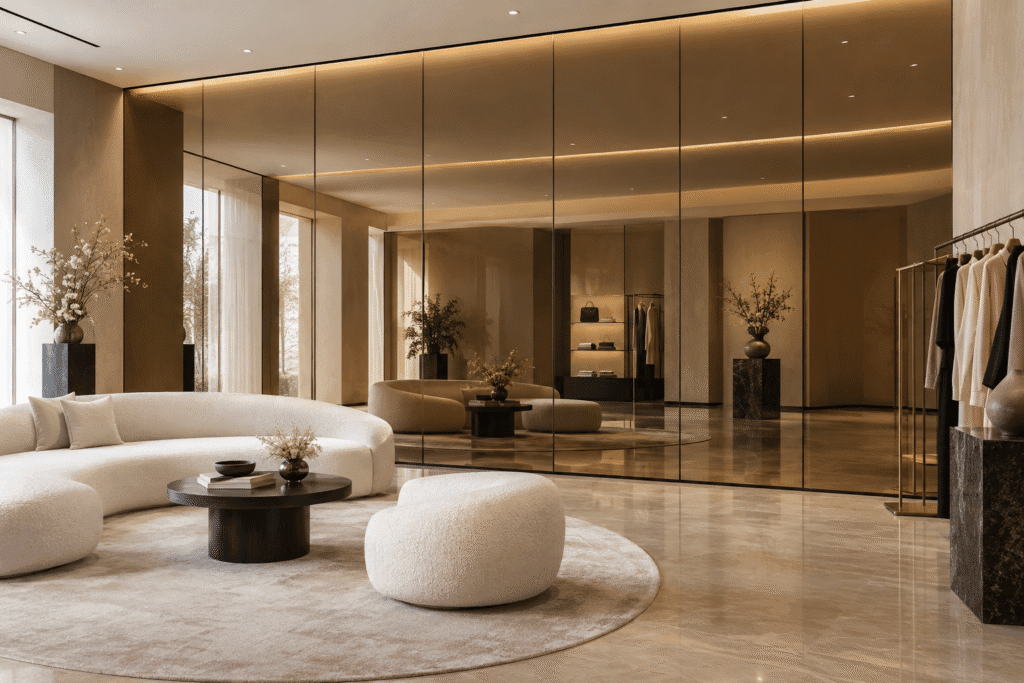
This distinction matters in fashion boutiques, jewelry showrooms and premium retail lounges. Designers may want reflected light and visual depth across a wall while customers need a separate mirror for dressing or product evaluation. Therefore, the importer, wholesale distributor and building contractor should give these functions different specification lines before project procurement requests prices.
Identify What the Supplier Actually Offers
Bamboo charcoal panels form a commercial decorative-material category with different substrates and surface finishes. Request the exact core, facing, adhesive layers, thickness, finish code and intended use. Moreover, ask what the supplier means by mirror, metallic, gloss or reflective. Those words may describe different appearances across catalogs.
Witopdecor lists a mirror-series bamboo charcoal wall panel for interior decoration. That listing supports a product inquiry, but it does not by itself establish suitability as a customer viewing mirror. Obtain current technical specifications and a representative sample for the proposed use.
Ask the supplier to state whether the offered finish aims for clear reflection, a tinted decorative reflection or a more diffuse metallic effect. Do not promise the customer a particular visual result before reviewing the actual product. Likewise, do not infer air-purifying properties, acoustic absorption or a particular environmental certification from the category name.
Compare Functions Instead of Generic Material Labels
Start with a schedule that distinguishes decorative wall bays from functional mirrors. Consequently, each bidder can price the intended requirement without making an unspoken substitution. Keep the decorative panel proposal separate from the glass specialist’s mirror specification and installation scope.
| Decision dimension | Mirror-look decorative panel inquiry | Functional glass mirror inquiry |
|---|---|---|
| Primary role | Reflected light and decorative appearance | Intended customer viewing task |
| Reflection acceptance | Approved sample and full-size wall appearance | Required viewing quality and relevant specification |
| Supporting surface | Panel manufacturer’s flatness and fixing requirements | Mirror supplier’s backing and mounting requirements |
| Safety review | Exact panel assembly and intended location | Appropriate glass, backing and location requirements |
| Cleaning | Facing-specific approved method | Mirror-specific approved method |
| Replacement | Finish continuity and matching wall bay | Size, edge detail and viewing requirement |
Neither column guarantees a universal advantage in weight, impact behavior, installation cost or durability. Obtain the actual product data and a complete quotation. A claim about another reflective composite material does not prove the performance of the bamboo charcoal panel under consideration.
Evaluate Reflection at the Intended Viewing Distance
A small hand sample cannot represent a large reflective wall. Request a trial bay large enough to include a joint, an edge and the proposed backing arrangement. Additionally, reproduce the main lighting direction and the customer’s likely viewing distance. Keep the sample reference and installation details with the approval record.
View recognizable straight features, such as door frames or shelf edges, in the reflection. Move through the normal approach route and inspect whether the reflected image changes in an unacceptable way. Agree what counts as acceptable for a decorative surface before ordering. This screening procedure records project preferences; it does not assign a laboratory optical grade.
If customers will use the surface for dressing, makeup or detailed product evaluation, give that task an explicit acceptance requirement. Ask the appropriate supplier or specialist to confirm the proposed mirror solution. However, do not silently reclassify a decorative finish as a functional mirror because it produces an attractive reflection from one angle.
Coordinate Flatness, Joints and Lighting
Reflective finishes deserve a full wall review because the final appearance depends on the installed assembly. Ask the panel supplier for allowable substrate conditions, fixing details and joint requirements. Next, have the building contractor demonstrate those details in the trial bay. Do not invent a universal adhesive pattern or substrate tolerance.
Review the wall from the retail entrance, seating area and main circulation path. A joint behind a display may remain unobtrusive until the store moves that display. Therefore, document visible joint positions on the elevation instead of relying on temporary styling to conceal them. Coordinate adjacent trims and terminations as part of the approved composition.
Lighting can strengthen the decorative effect while also making surface differences more noticeable. Test the actual lighting concept and review sightlines for distracting reflections. Moreover, keep the designer’s approval separate from any supplier guarantee; a rendering represents an appearance intention, not measured installed performance.
Protect the Finish Throughout Its Operating Life
Ask for facing-specific care instructions, including approved cleaning materials and limitations. Confirm how staff should remove protective film, when they should inspect the finished face and which handling precautions the supplier requires. A generic glass-cleaning routine may not suit a decorative film or coated surface.
Additionally, examine likely contact zones near handbags, display fixtures and movable seating. Evaluate a representative sample using an agreed method when scratch appearance matters. Record what the evaluation covers, and avoid describing the finish as scratchproof or shatterproof without relevant evidence for the exact product and claim.
Plan access for local replacement. The operator should know whether replacing one bay requires removing a trim, shelf or adjacent panel. Include the time to move merchandise and protect surrounding finishes in the maintenance cost estimate. A low sheet price does not capture the full cost of a visible repair during trading hours.
Separate Compliance Evidence from Decorative Approval
Buyers should verify test reports, VOC limits, fire-rating documents and warranty terms for the offered product and intended assembly. Confirm the report’s product identification and mounting conditions. Furthermore, ask the project team to review location-specific requirements for reflective surfaces and any separate functional glass mirror.
Do not transfer a glass supplier’s documentation to a decorative composite panel, or vice versa. The components, failure modes and installation methods differ by product. Ask qualified project reviewers to resolve applicable requirements rather than treating the phrase mirror finish as a compliance classification.
Environmental claims need equally clear boundaries. Request the evidence behind statements about material content or emissions, and distinguish the panel from adhesives and other installation products. Keep the claim wording aligned with the supporting document so the distributor can repeat it accurately in its own market.
Price the Complete Decorative Bay
Compare panel quantities, usable coverage, backing preparation, trims, protection, handling and installation cost. Then consider sample evaluation, maintenance access, spare material and replacement lead time. Use the actual quotation to compare alternatives; do not apply an assumed percentage saving against glass.
For bulk purchasing, confirm MOQ by finish, custom colors, batch identification and container loading protection. Moreover, ask whether the supplier can maintain the approved visual finish across phased orders. Keep a reference sample and discuss reorder availability before the distributor builds a showroom around a single decorative effect.
The purchase order should state the accepted role in plain language, such as reflective decorative wall cladding for specified retail bays. If the project also requires functional mirrors, list their supplier, specifications and responsibility separately. That clarity helps a decorative building materials supplier quote the correct scope and reduces disputes after installation.
B2B Buyer FAQ
Does mirror-look mean an optically accurate mirror?
No. Verify the intended function and review the actual sample. Decorative reflection and customer viewing quality need separate acceptance decisions.
Can buyers approve this finish from catalog photographs?
Use photographs to shortlist options, then review physical samples and a representative installed bay. Camera angles and lighting cannot establish the completed wall’s appearance from every viewpoint.
Are these panels automatically safer than glass?
Do not make that assumption. Compare product-specific evidence, installation details and location requirements. Ask the relevant project specialists to review each proposed assembly.
What should distributors include in product descriptions?
Describe the verified finish, intended decorative use, care requirements and available technical evidence. Avoid unsupported claims about optical performance, fire rating or environmental benefits.
How much spare material should the order include?
Base the quantity on visible repair bays, cutting requirements, damage exposure and future availability. Agree the calculation with the contractor rather than applying one percentage to every project.
Request Samples with a Clear Use Description
Send Witop Decor the retail elevations, reflection concept, intended viewing distances and quantities. Request samples, technical data sheets and a project quotation for the specific decorative finish. For wholesale supply, bulk order inquiry or OEM/ODM cooperation, confirm application wording, finish continuity, packing and lead time before approving the commercial program.

James is a content creator and decorator with five years of experience designing home decor. In his daily life, james is constantly on the lookout for the latest, great examples of house design and further optimizes his solutions. Additionally, he writes articles related to outdoor design, interior design, and architectural decorating materials to help brands build more engaging relationships with their audiences.