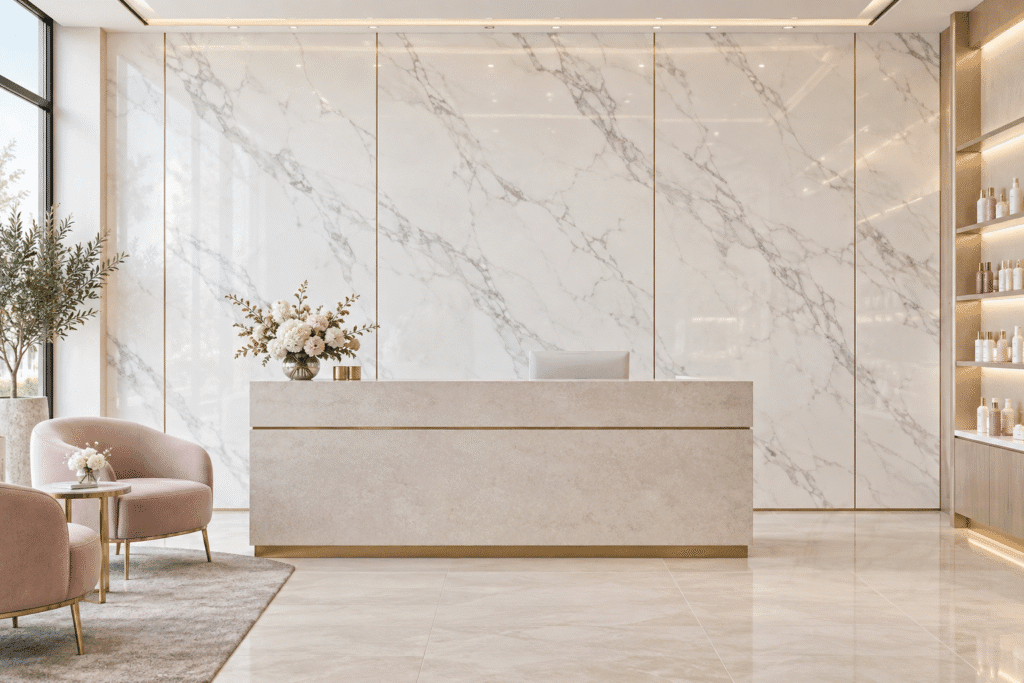
Direct Answer: Where Should Buyers Specify UV Marble Sheets?
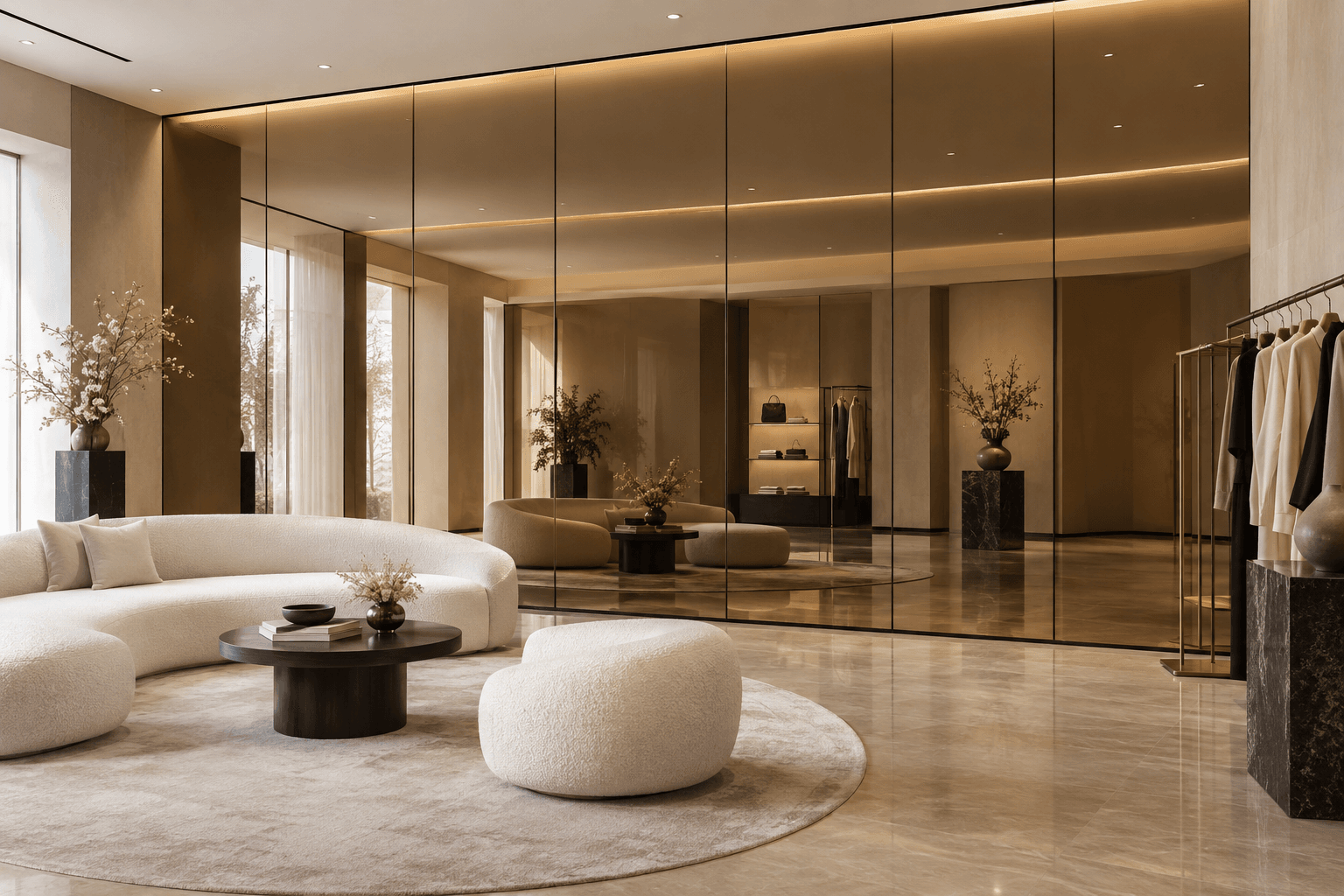
Use UV marble sheets as a candidate finish for decorative reception walls, product-display backdrops and other approved interior zones. However, assess any area near cosmetics testers, hair-color preparation, solvents, repeated splashing or heated equipment separately. The product name alone does not establish chemical resistance, hygiene suitability or heat tolerance. Confirm the exact finish, exposure conditions and supporting evidence before project procurement approves an application.
A beauty retailer may want one continuous marble-look design across its storefront, consultation area and service rooms. Nevertheless, those spaces can expose the wall to very different substances. The importer and building contractor should define the functional boundary of each finish before ordering quantities. Otherwise, visual continuity can hide a specification gap.
Start with Activities, Not a Generic Room Label
Walk through the operator’s intended activities with the designer. Identify where staff display sealed products, demonstrate cosmetics, mix preparations, wash equipment and store cleaners. Moreover, ask how the operator handles spills and how long a mark might remain before staff notice it. A reception backdrop and a working splash zone should not inherit the same approval automatically.
Mark these activities on an elevation. Include nearby shelves, counter heights, movable displays and likely hand-contact areas. For example, a decorative panel behind sealed bottles may face different exposure after a retailer converts that bay into a live tester station. Record who must review that operational change.
UV marble sheets belong to Witopdecor’s decorative wall panel offering. Treat a catalog listing as a starting point for product identification. Request the actual technical data sheets, construction details and care guidance for the proposed SKU instead of extending broad marketing language to a demanding work area.
Use an Exposure Matrix to Control the Specification
A useful matrix connects the visible design to the likely substance, contact duration and required evidence. Consequently, the team can preserve the overall design concept while choosing an appropriate assembly for each location. The table below outlines purchasing questions; it does not approve any listed exposure.
| Interior zone | Exposure to investigate | Evidence or decision before ordering |
|---|---|---|
| Reception feature wall | Hand marks and routine cleaning | Approved finish and care method |
| Sealed-product display | Shelf contact and occasional handling | Edge detail and cleaning access |
| Cosmetics tester bay | Pigmented products and remover contact | Agreed substance-specific sample screening |
| Hair-color preparation area | Dyes, developer and repeated spills | Written suitability or another finish selection |
| Wash area | Recurring moisture and wet joints | Complete assembly assessment |
| Near heated equipment | Surface temperature and clearance | Manufacturer limits and project review |
Next, classify unresolved areas as pending. Avoid converting a missing test report into an assumed pass because the sheet has a glossy surface. A buyer can request a different finish or exclude a particular location while continuing the decorative portions of the order.
Ask Better Questions About Chemical Resistance
The phrase chemical resistant lacks useful purchasing detail on its own. Ask which substance the supplier evaluated, at what concentration, for how long and with which assessment method. Additionally, confirm the exact face finish, production reference and condition of the specimen. A result for another coating or product family may not address your proposed material. Assess durability against the actual exposure rather than a generic category claim.
Separate three questions: whether a substance leaves a visible stain, whether removal changes the gloss or color, and whether the exposure affects the surface or edge integrity. A sample can look acceptable immediately after wiping yet show a different result after drying. Therefore, agree the observation period and acceptance criteria before anyone starts screening.
Do not conduct casual trials with hazardous mixtures. Ask a competent laboratory or qualified project specialist to design any necessary chemical evaluation, following the substance supplier’s safety instructions. Simple supplier-approved screening can support selection, but it cannot replace a required test method or certify an entire service environment.
Make Sample Evaluation Specific to the Operator
Request a representative finished sample and retain an untouched control. Give each specimen a code that links it to the finish, batch and proposed wall zone. Record the operator’s actual product names and planned care method. Moreover, keep the cleaning-product list under revision control so later changes trigger a compatibility review.
Ask the supplier and operator to agree the screening protocol in writing. Capture the contact conditions, removal method, inspection lighting and pass criteria. Inspect the face and any representative joint or edge separately. If the cleaner removes the mark but visibly changes the finish, record that outcome clearly instead of calling the trial successful.
Include repeated routine cleaning in the evaluation plan when it matters to the project. However, do not translate a limited number of wiping cycles into an unsupported service-life claim. Record what the trial demonstrated and which longer-term questions still require evidence. This distinction helps a wholesale distributor explain the product honestly to downstream contractors.
Design the Boundary Between Decorative and Working Areas
Place the transition where the operator can recognize and maintain it. A counter edge, vertical trim or change in wall bay can create a clear boundary. Additionally, coordinate shelf supports, penetrations and adjoining materials so the installation does not leave an unplanned exposed edge in the highest-contact location.
The building contractor should confirm the substrate, adhesive, movement allowances and joint system with the relevant manufacturers. Surface approval does not establish that the whole wall resists recurring moisture. Likewise, the word UV describes the product category or finish terminology; it does not automatically approve exterior exposure or proximity to hot appliances.
Specify shelves and equipment supports independently of decorative cladding unless the approved design explicitly provides otherwise. Keep cleaners and movable equipment from becoming unreviewed contact sources. Consequently, the final operations manual should explain where the decorative finish starts and where another system takes responsibility.
Compare Installed Cost with the Cost of an Exposure Mistake
Consider material, freight, installation cost, protection, trims and sample evaluation in the initial budget. Then estimate maintenance cost and the operational effect of a damaged wall bay. In a small retail unit, moving a display or closing a consultation station may cost more than the replacement sheet itself.
Use scenarios rather than invented failure rates. Compare a decorative-only allocation with a broader allocation that requires additional evidence, detailing or a different product. Ask who would handle removal, matching material, disposal and reinstatement if the operator changed the cleaning regime. This makes the commercial decision reviewable without claiming a guaranteed ROI.
Put the Zone Map into the Bulk Purchase Order
Link each quantity to a zone code, approved finish and elevation revision. Confirm MOQ by pattern, lead time for custom colors, replacement availability, protective packing and container loading. Moreover, decide how spare sheets will support visible repairs; a matching name alone does not ensure matching appearance across future production.
Buyers should verify test reports, VOC limits, fire-rating documents and warranty terms for the exact assembly and destination requirements. Confirm the stated fire rating without inferring it from thickness or gloss. Ask the decorative building materials supplier to distinguish available evidence from pending questions, and keep written exclusions in the project file.
B2B Buyer FAQ
Can UV marble sheets go behind a cosmetics tester counter?
Only after the project team reviews the actual exposure and the supplier confirms suitability for the selected finish. Pigments, removers and cleaning products need specific evaluation.
Does a glossy finish prove stain resistance?
No. Appearance does not replace product-specific evidence. Request the test conditions and compare them with the proposed use before extending approval.
Can the same panel cover reception and preparation areas?
Possibly, but each zone needs its own review. A shared visual brief does not make the operating conditions identical. Use another system where the evidence does not support the application.
What should the importer request with samples?
Request construction details, finish identification, technical specifications, care instructions and relevant reports. Include the exposure map and proposed cleaners so sample evaluation answers real project questions.
How should distributors protect channel margin?
Quote the approved application, detailing and support requirements clearly. Accurate scope reduces avoidable disputes and helps the distributor price sampling, technical review and replacement support responsibly.
Request a Zone-Based Supply Proposal
Send Witop Decor your beauty retail elevations, exposure map, quantities and preferred marble effect. Request samples and a project quotation covering decorative zones, finish options, packing and lead time. For a bulk order inquiry or OEM/ODM cooperation, agree the product information and application boundaries before the distributor launches the range.

James is a content creator and decorator with five years of experience designing home decor. In his daily life, james is constantly on the lookout for the latest, great examples of house design and further optimizes his solutions. Additionally, he writes articles related to outdoor design, interior design, and architectural decorating materials to help brands build more engaging relationships with their audiences.