Quick Answer: Do Scratch and Abrasion Results Answer the Same Question?
No. Scratch evaluation examines surface damage from a defined scratching action, while abrasion evaluation examines wear under a specified rubbing process. A result from one does not automatically establish the other. When buying bamboo charcoal wall panels, identify the complete surface construction and match the evaluation to likely wall contact. Ask the laboratory to confirm method suitability, and agree acceptance criteria for the intended finish. The product-family name alone establishes neither property.
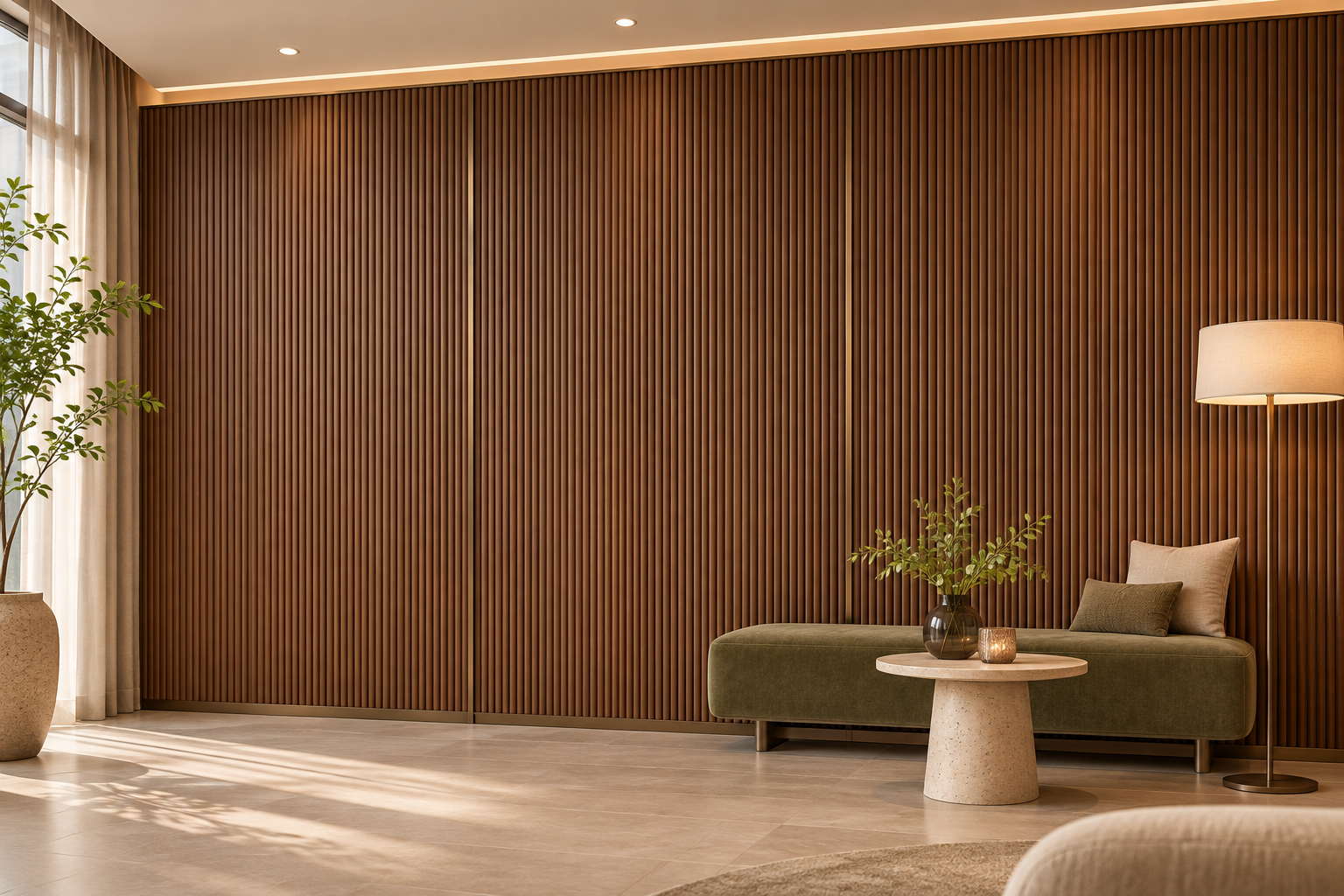
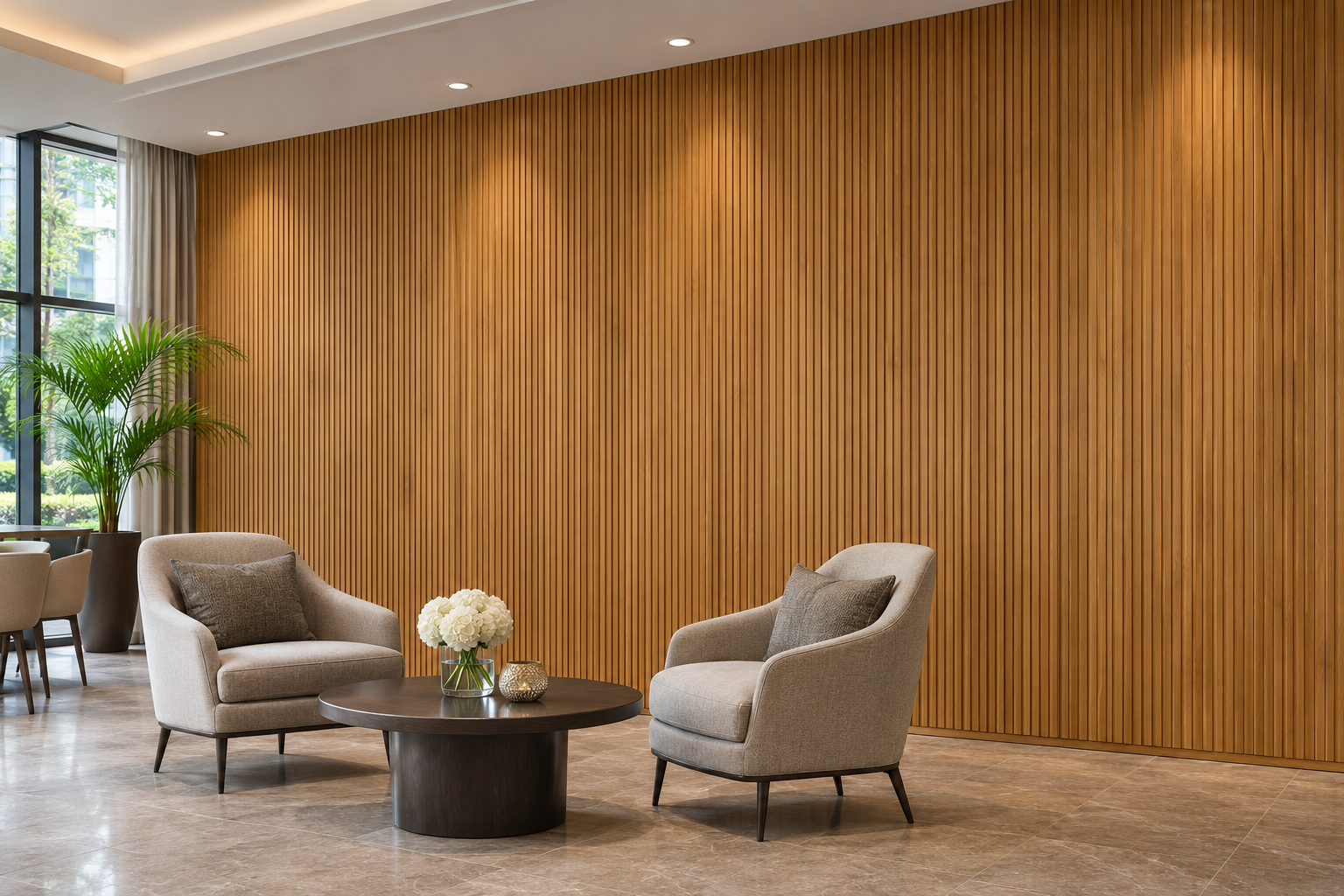
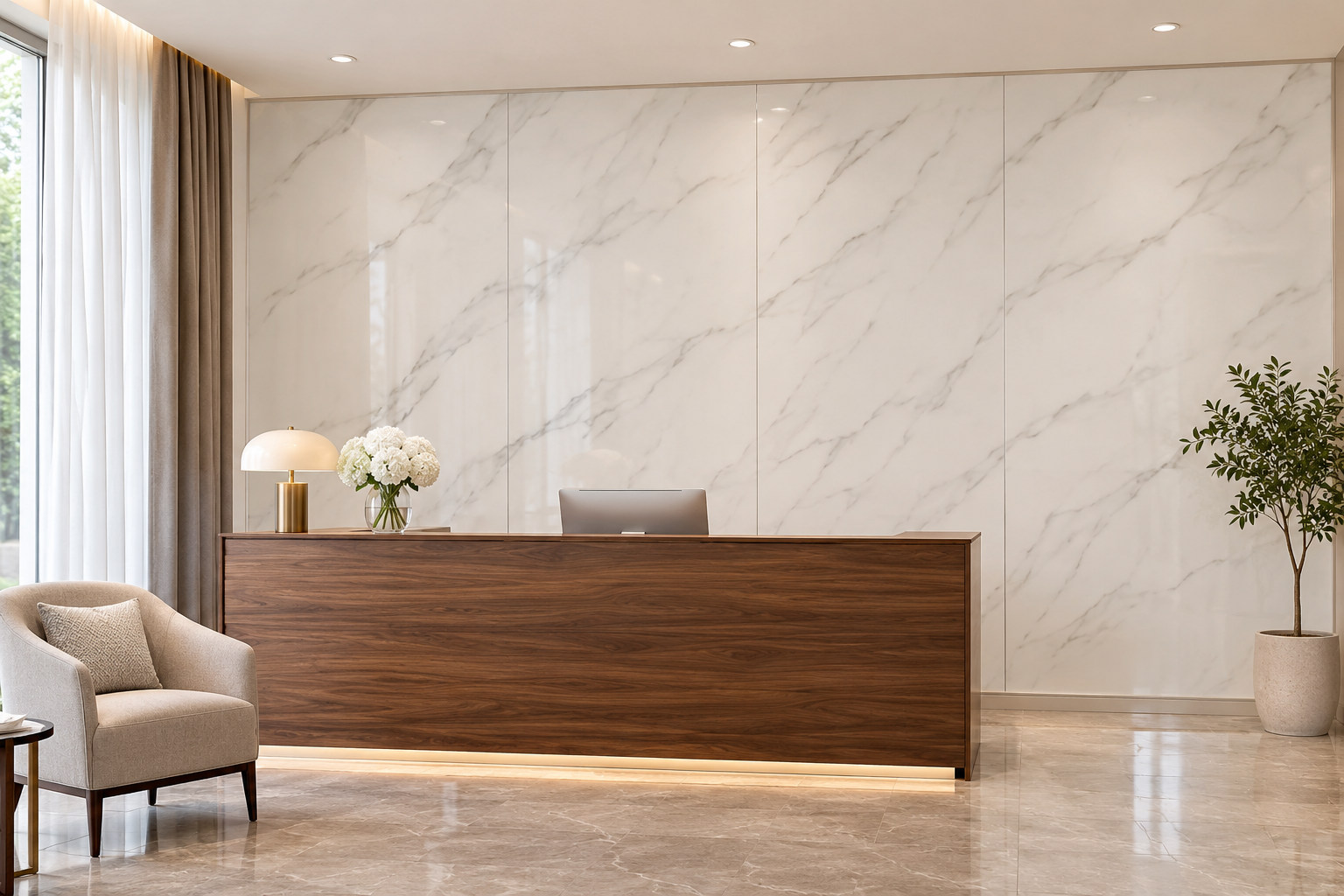
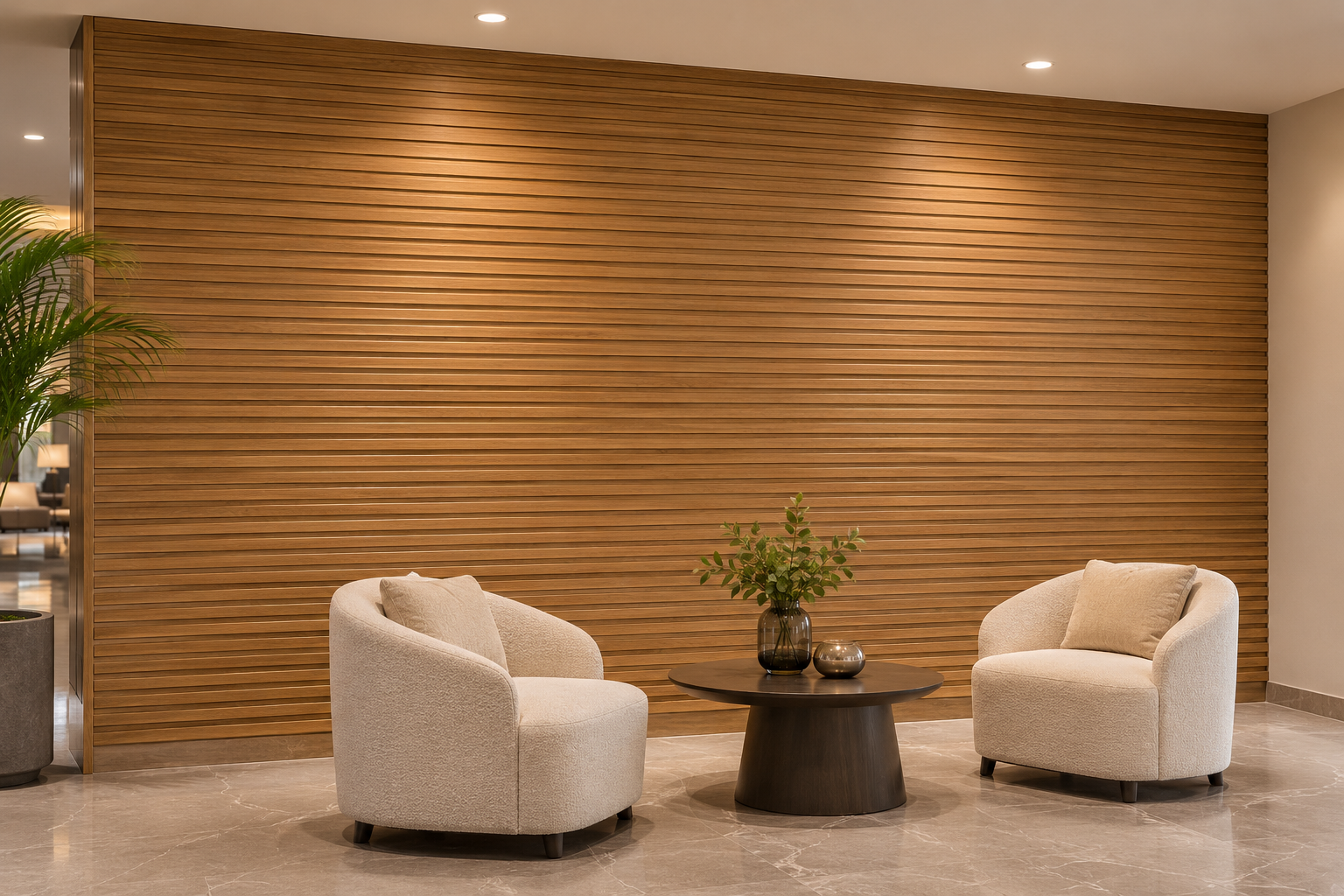
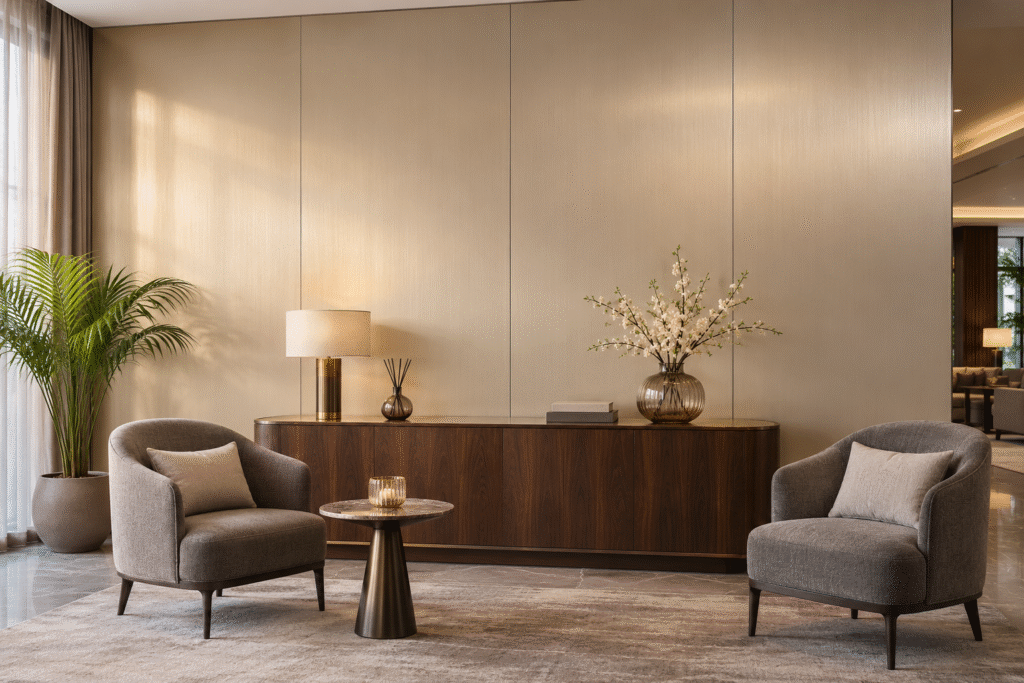
Consider a furnished hotel business lounge with broad champagne metal-look wall panels beside seating. Alternatively, picture an office reception with warm-gray fabric-look flat panels behind guest chairs. Both designs use bamboo charcoal wall panels as the visual subject, yet their contact patterns and appearance expectations may differ. Therefore, project procurement should connect each wall zone to specific evidence before approving a bulk order.
Identify the Facing and Its Support
Ask the decorative building materials supplier to describe the core, decorative facing, bond layers and any protective topcoat. Also record finish code, surface texture, thickness and production reference. A metal-look face does not necessarily mean solid metal, and a fabric-look pattern does not establish textile construction. Obtain the actual material description before selecting a test.
Next, compare the proposed board with the specimen in each report. A coating on a rigid metal test panel differs from that coating in a supplied multilayer board. Ask the technical reviewer to explain what the result supports and whether the backing affects its relevance. Likewise, evidence for one facing should not silently extend to another film, texture or coating revision.
Map Contact Events in the Completed Space
Start with the furniture layout and circulation routes. In the hotel lounge, review where bags, chair backs and cleaning routines may contact the wall. In the reception area, examine the space behind visitor seating and beside the desk. These observations help the building contractor and operator describe the exposure that the finish may encounter.
However, avoid grouping every mark under the word scratch. A localized scrape, repeated rubbing and a dent describe different concerns. Also distinguish removable transfer marks from permanent surface change. Write down the contact event and the appearance problem the buyer wants to assess; this gives the reviewer a clearer brief than a general request for a durable panel.
| Purchasing concern | Evaluation question | Boundary to preserve |
|---|---|---|
| Localized scraping | How does the selected face respond to a defined scratch action? | Do not infer repeated-wear performance |
| Repeated rubbing | What change occurs under the agreed abrasion conditions? | Do not infer resistance to every sharp contact |
| Visible surface marks | Which observations remain after approved cleaning? | Separate removable marks from permanent damage |
| Dents or edge damage | What evidence addresses the relevant impact or support concern? | Surface wear results do not answer this automatically |
| Changed facing or topcoat | Does existing evidence cover the revised construction? | Preserve specimen-to-product traceability |
Check the Method’s Scope Before Requesting a Number
ASTM D4060 addresses abrasion of organic coatings on a flat, rigid support using a Taber apparatus. That scope does not automatically cover every decorative film or multilayer panel. Ask the laboratory whether the method fits the proposed specimen and question. ASTM D4060 scope.
ASTM D7027 describes instrumented scratch evaluation of polymeric surfaces under controlled laboratory conditions. It serves a different evaluation purpose. Again, the laboratory should confirm applicability to the actual facing and construction. These examples identify methodological distinctions; they do not establish that any Witop product has undergone either test. ASTM D7027 scope.
Moreover, request the method designation and edition in the report. If a laboratory adapts a procedure for an unusual surface, ask it to document the modification and explain the limits of comparison. Do not present an adapted demonstration as equivalent to an unmodified standard test without technical justification.
Compare the Conditions and the Reported Endpoint
For an abrasion report, request the abrasive medium or wheel, applied load, cycle count and assessment endpoint. For a scratch report, ask about contact geometry, loading procedure and the damage criterion. Also check specimen preparation and conditioning. The complete report should allow the reviewer to understand what the laboratory actually evaluated.
Then distinguish the test setting from the result. A stated cycle count alone does not describe the observed surface change. Likewise, a scratch load needs its associated criterion and specimen identity. Ask the reviewer whether two submissions share a meaningful comparison basis before ranking suppliers. Avoid converting a laboratory number into a guaranteed service life for a busy commercial interior.
Agree Appearance Acceptance with the Project Team
During sample evaluation, review the finish under the planned lighting and from realistic viewing positions. For example, use the hotel lounge’s side lighting when considering the champagne surface and the reception’s broader daylight for the fabric-look face. Ask the designer to define which appearance changes matter and how the team should record them.
Separately, let the technical reviewer specify the appropriate controlled evaluation and acceptance criteria. There is no purchasing shortcut in applying one universal pass threshold to every surface and contact scenario. Retain identified reference samples and the agreed review conditions. Also keep informal handling demonstrations distinct from laboratory evidence so sales presentations cannot replace the approved basis of acceptance.
Include Repair Consequences in the Cost Review
An importer should compare the initial price with the practical consequences of replacing a visible panel. Ask about access, matching trims, adjacent furniture and the likely area of disruption. Moreover, discuss whether the operator can replace one module without disturbing a larger finished wall. Treat these as project-specific questions rather than promises of easy repair.
A wholesale distributor can use this information to explain installation cost and maintenance cost alongside the evidence package. Also review finish continuity and spare-stock identification. Strong durability claims need relevant support, while a sensible layout and an accessible repair plan address different parts of the owner’s long-term purchasing decision.
Preserve the Approved Construction Through Supply
Include the accepted finish reference and technical specifications in the quotation and order acknowledgement. Confirm MOQ, lead time and any custom colors separately. For OEM/ODM cooperation, identify who must review a changed facing, coating or substrate before production. Likewise, keep SKU identity visible in packing records and container loading plans for mixed-finish shipments.
Buyers should verify test reports, VOC limits, fire-rating documents and warranty terms for the supplied construction and intended use. A scratch or abrasion result does not establish fire rating, emissions compliance or every aspect of suitability. Therefore, request the evidence relevant to each requirement and keep unresolved items visible before the commercial team releases the order.
B2B Buyer FAQs
Does a high abrasion result prove scratch resistance?
No. Ask which contact process the method evaluates and what outcome the report records. A favorable wear result does not automatically describe damage from a different scratching action or contact geometry.
Can we accept a report for the coating alone?
Ask the technical reviewer to assess its relevance to the supplied facing and backing. Also identify any missing evidence for the actual board construction. Do not extend a coating result to the complete panel without justification.
Are metal-look bamboo charcoal wall panels always more durable?
Appearance alone cannot establish that conclusion. Request the material description, relevant results and use limitations for the exact finish. Compare the proposed surfaces against the contact scenarios in the project brief.
Should every finish meet the same numerical threshold?
The project team should define appropriate criteria with its technical adviser. First establish suitable methods and comparable conditions. Then consider the intended application and appearance expectations rather than copy an unrelated supplier’s number.
What belongs in a useful bulk order inquiry?
Provide the application, wall zones, dimensions, finish preferences, quantities and destination. Also describe likely contact and cleaning routines. Request samples, technical data sheets and relevant evidence for the proposed construction.
Keep Each Evidence Requirement Separate
Use the construction and weight comparison to identify the board before reviewing surface results. Record the approved appearance with the color and lighting approval. Also review emissions and VOC claim evidence separately; surface-wear evidence does not answer that requirement.
Request a Quotation with the Finish Evidence Attached
Share your commercial wall concept with Witop Decor and request a project quotation for the selected bamboo charcoal wall panels. Include the contact scenarios and evidence requirements alongside the design brief. Confirm sample approval, supply references and agreed warranty terms before placing the order so the purchasing team can connect the finished appearance with a clearly documented specification.

James is a content creator and decorator with five years of experience designing home decor. In his daily life, james is constantly on the lookout for the latest, great examples of house design and further optimizes his solutions. Additionally, he writes articles related to outdoor design, interior design, and architectural decorating materials to help brands build more engaging relationships with their audiences.