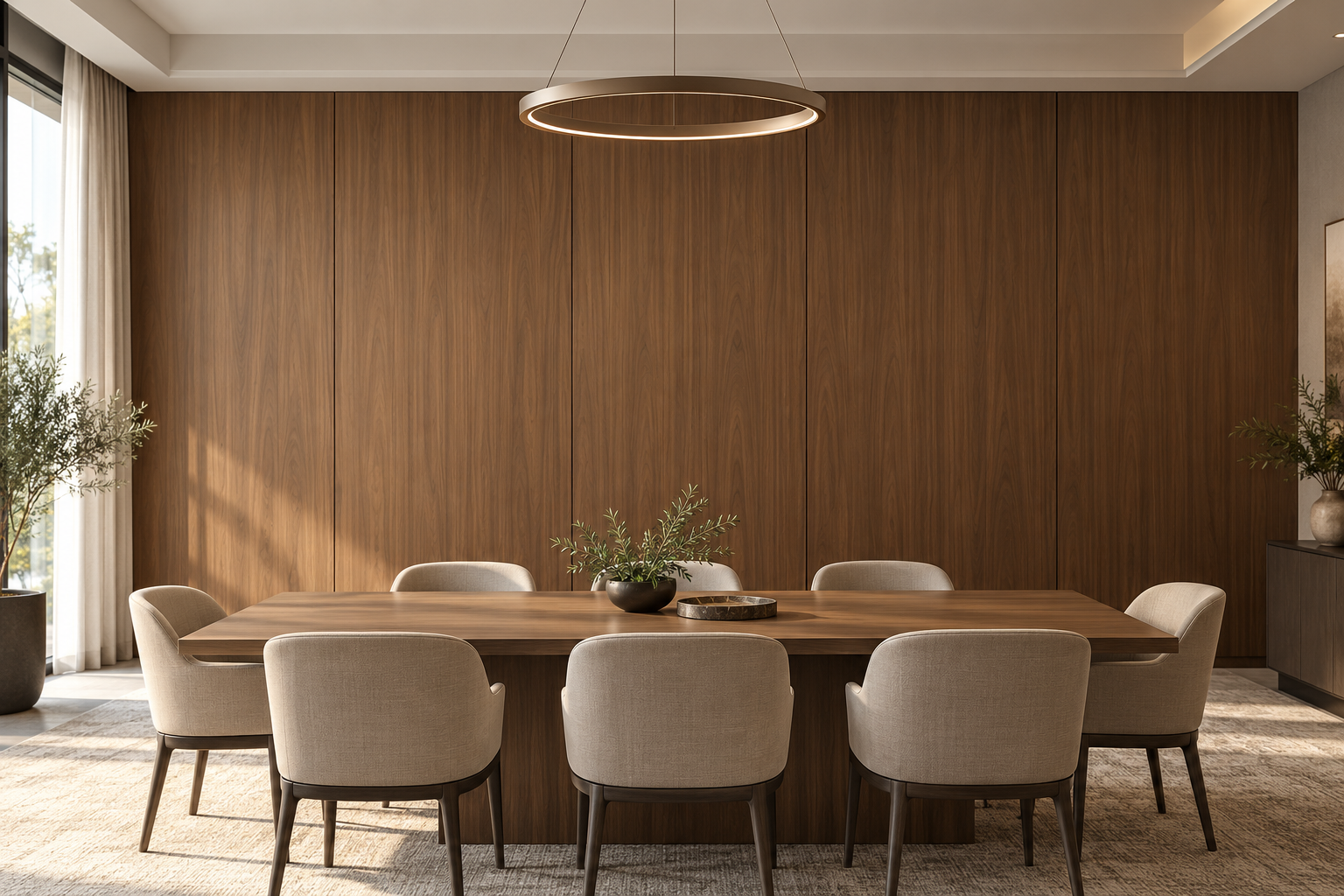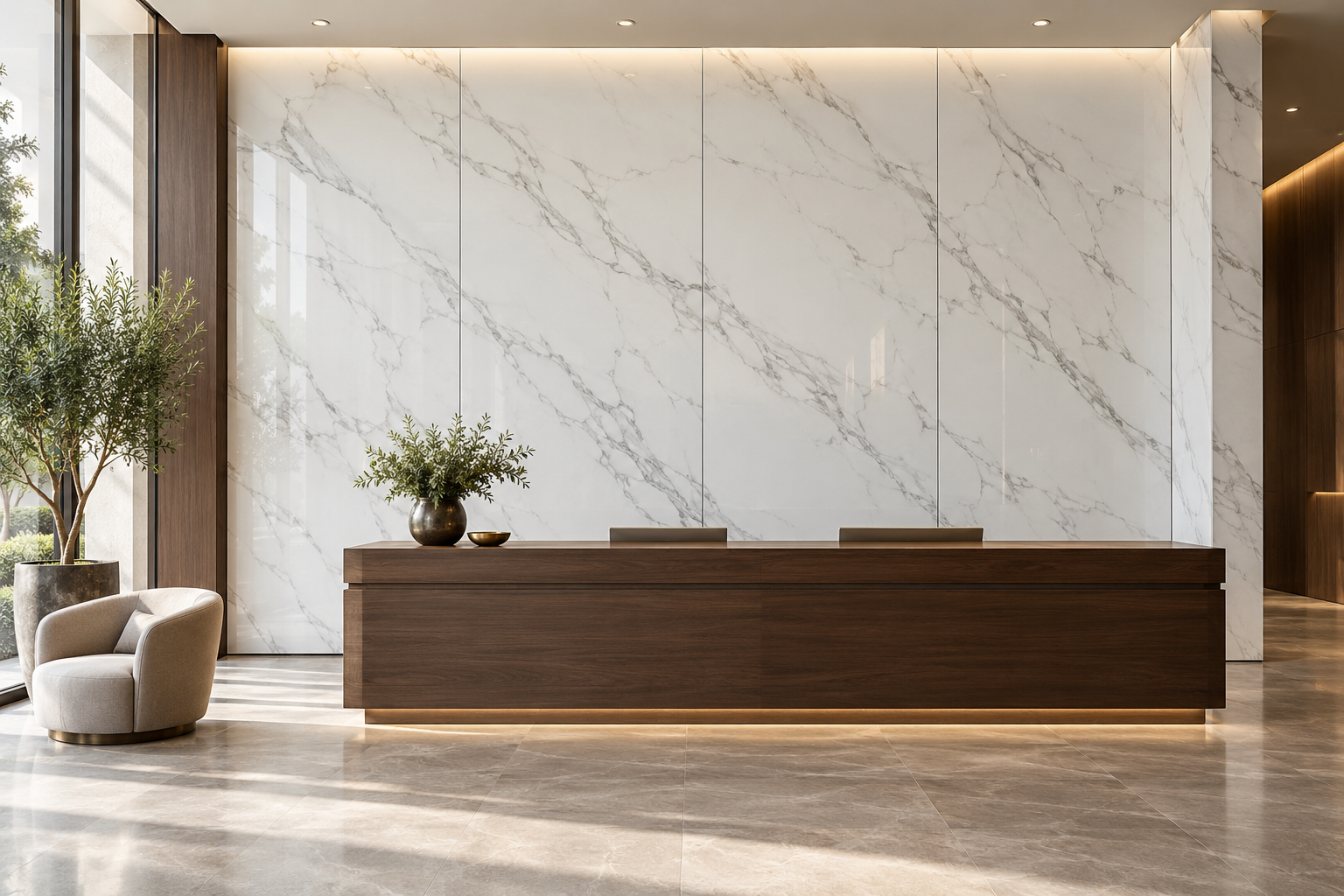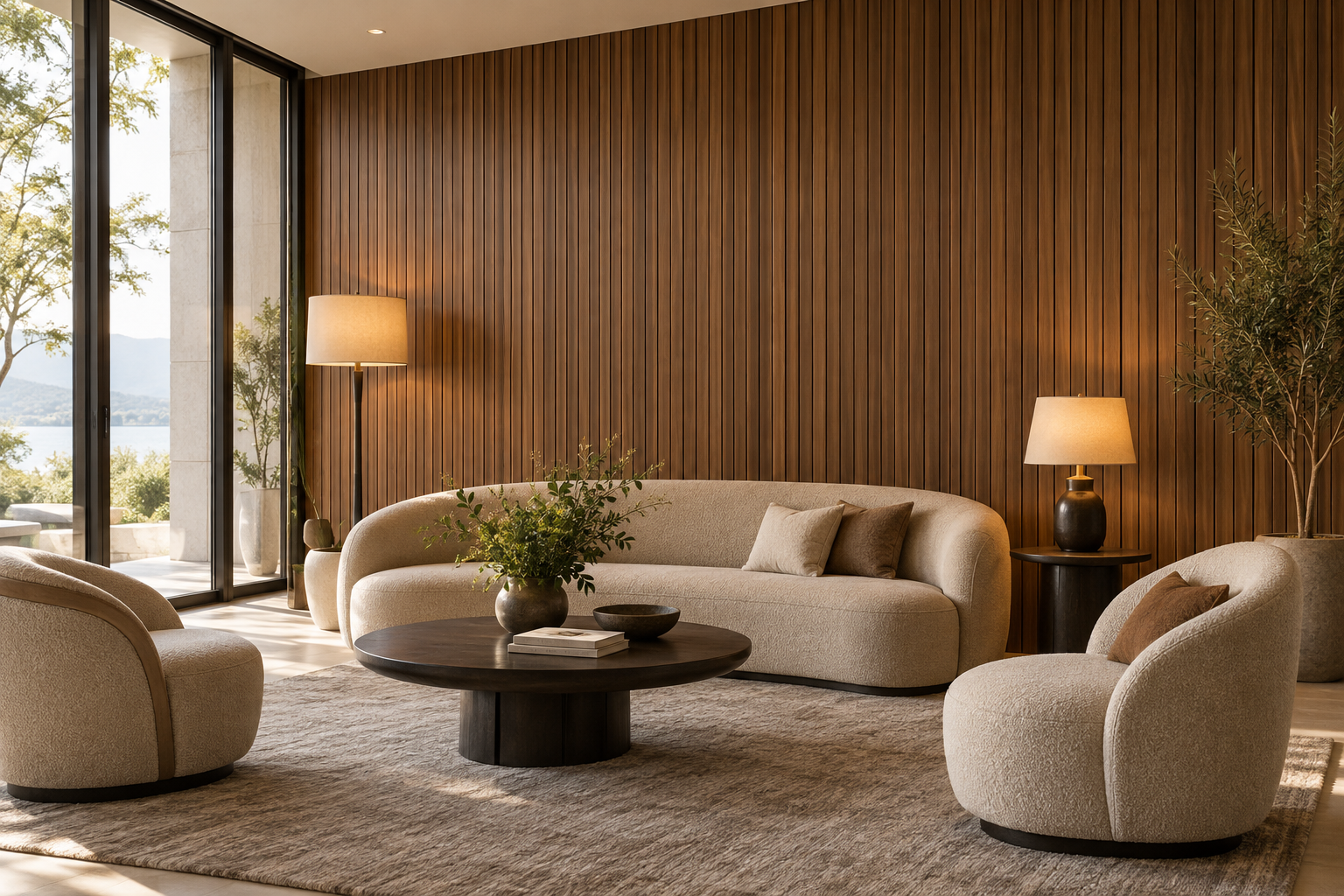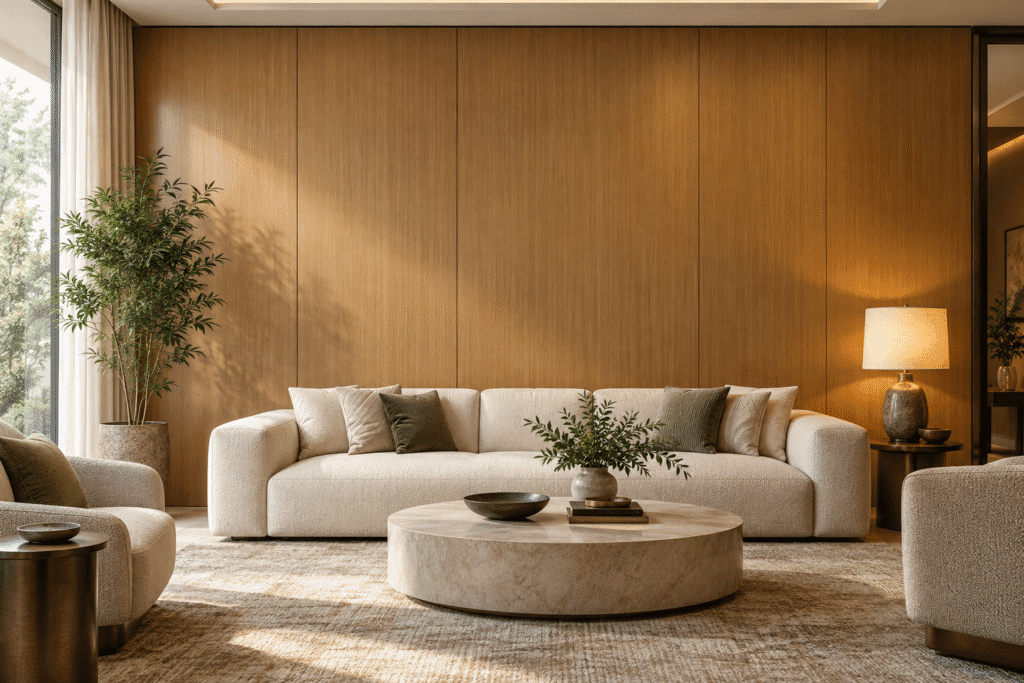
A hotel suite lounge may combine daylight, ceiling lighting and decorative lamps. Its wood-look wall can therefore appear different throughout the day. For an importer or building contractor, the commercial problem starts when the approved sample and the finished room use different viewing conditions. A late argument about “the wrong brown” can delay handover without identifying a product defect.
Consequently, project procurement should define how buyers will judge bamboo charcoal wall panels before ordering. A useful approval record connects the physical finish, relevant lighting scenes, viewing positions and decision authority. It also separates appearance acceptance from technical performance.
Quick Answer: How Should Buyers Approve the Finish?
Approve a retained physical sample against representative production material under an agreed reference light and the hotel’s intended lighting scenes. Record the finish code, grain direction, gloss description and acceptable appearance range. Then assess an installed mockup separately for flatness and reflections. Assign responsibility for finish changes, lighting substitutions and substrate corrections before bulk purchase.
Separate Color Difference from Lighting-Dependent Appearance
First, compare the reference sample and candidate panel side by side under the same light, with matching orientation. A difference that persists under agreed conditions requires investigation. However, a wall appearing warmer when the hotel switches on its lamps does not, by itself, prove a manufacturing mismatch.
Color specialists use defined illuminants for evaluation, including checks for metamerism: two samples may match under one lighting condition but differ under another. Therefore, one favorable viewing scene cannot establish a match everywhere. See X-Rite’s explanation of illuminants.
For the purchase agreement, name the scenes that matter. For example, a suite lounge might require approval under daytime ambient light and its evening hospitality setting. Do not promise identical appearance under every possible lamp. Instead, agree what constitutes an acceptable relationship between the wall, adjacent joinery and approved reference.
Build a Comparison Schedule Buyers Can Repeat
Use the following schedule during sample evaluation. These are suggested purchasing controls, not universal product tolerances.
| Evaluation item | Record before purchase | Decision it supports |
|---|---|---|
| Reference finish | Product code, sample identity, date and grain orientation | Which physical material governs approval |
| Lighting scenes | Reference setup and actual fixture models with settings | Whether both parties compare the same conditions |
| Color relationship | Agreed sample range and adjacent finishes | Whether variation falls inside the approved appearance |
| Gloss appearance | Viewing positions and reflection examples | Whether sheen matches the intended room design |
| Wall flatness | Mockup substrate and agreed inspection conditions | Whether geometry contributes to visible distortion |
| Change authority | Named approver and written change procedure | Who can accept a substitution or commission rework |
Additionally, retain matching sample sets with the buyer and supplier. Label them identically and protect their surfaces during storage. Otherwise, parties may dispute two different references while assuming they share one standard.
Evaluate Gloss Without Confusing It with Flatness
Color approval alone leaves a gap. A finish may meet the agreed shade yet produce reflections that the designer dislikes. Therefore, examine the chosen surface from normal lounge seating and circulation positions, using the proposed lamps and wall lighting.
Next, inspect a representative full-size mockup. Light that runs close across a wall can emphasize surface irregularity. Record that grazing-light observation separately from ordinary room viewing. An extreme inspection angle should become an acceptance condition only when both parties agree that it represents the design or contractual inspection method.
Also separate panel surface appearance from the installed wall geometry. Ask the contractor to document substrate readiness and the supplier’s fixing requirements. If a reflection looks distorted, investigate the panel, supporting surface and installation together. Do not automatically assign every visible wave to the decorative finish.
If the team wants numerical color or gloss limits, obtain a suitable measurement method and written supplier agreement. Define instrument settings, sample orientation and sampling locations. A number without a repeatable method creates apparent precision while leaving the dispute unresolved.
Turn a Mockup Approval into a Purchasing Decision
A wholesale distributor may support several hotels that choose the same named wood finish. Nevertheless, each hotel can use different lighting and adjoining materials. Keep the product reference consistent, but attach the project’s appearance approval to its own room specification.
Before approval, ask the decorative building materials supplier for current technical specifications and available finish samples. Witop Decor lists a bamboo charcoal wall panel option with a wood-grain appearance. Use that page to start a finish inquiry; confirm the exact construction and current options directly.
Then record the release decision in the purchase order. Include the approved sample references, quantity by finish, MOQ, lead time and change cutoff. For custom colors or OEM/ODM cooperation, clarify whether the supplier needs a new development sample and another approval round. Reserve time for that decision before committing the hotel opening schedule.
Allocate Rework Costs Before a Disagreement
For example, suppose the mockup passes under the selected lamps, but the operator later substitutes a different fixture. If the wall then looks different, compare the revised scene with the approval record before requesting replacement panels. Conversely, when delivered material falls outside the agreed reference range under the approved conditions, follow the documented nonconformity process.
Agree who investigates, who authorizes a remedy and who pays each cost category. Include replacement material, freight, removal, disposal, installation cost and reasonable access expenses. Confirm warranty terms rather than assuming that a material warranty covers labor or hotel downtime.
Furthermore, keep batch identity and replacement stock linked to the finish approval. Discuss container loading and protective packing so references and project material remain traceable. A future replacement should undergo comparison before the team commits to changing an entire visible wall.
Keep Appearance and Performance Approvals Separate
A pleasing mockup does not establish durability, fire rating or VOC compliance. Buyers should verify test reports, VOC limits, fire-rating documents and warranty terms for the exact product and intended market. Likewise, request care instructions and evaluate proposed cleaning products before estimating maintenance cost. Avoid treating a finish photograph as technical evidence.
B2B Buyer FAQs
Can we approve bamboo charcoal wall panels from photographs?
Use photographs for discussion and record keeping. However, approve color and gloss with physical samples and agreed viewing conditions. Camera settings, displays and room lighting can change the appearance shown in an image.
Must every lighting scene produce an identical color?
No universal appearance guarantee applies. Instead, identify the important hotel scenes and agree acceptable results in each. If two finishes must coordinate, compare them together under those scenes before release.
Who should sign the finish approval?
Name one authorized approver in the project record, while collecting input from design, procurement and construction. Also identify who can approve later changes so a site conversation does not silently replace the purchase specification.
Should a grazing-light observation automatically reject the wall?
Use the agreed inspection conditions and investigate the cause. A demanding lighting angle can reveal geometry that differs from normal room viewing. Therefore, decide its acceptance role during mockup review, before installation and payment disputes arise.
What should a bulk order inquiry include?
Send the finish references, project lighting scenes, quantities, destination, required schedule and approval responsibility. Request samples and technical data sheets from Witopdecor, then ask for a project quotation that identifies finish-development steps and any outstanding approval conditions.

James is a content creator and decorator with five years of experience designing home decor. In his daily life, james is constantly on the lookout for the latest, great examples of house design and further optimizes his solutions. Additionally, he writes articles related to outdoor design, interior design, and architectural decorating materials to help brands build more engaging relationships with their audiences.