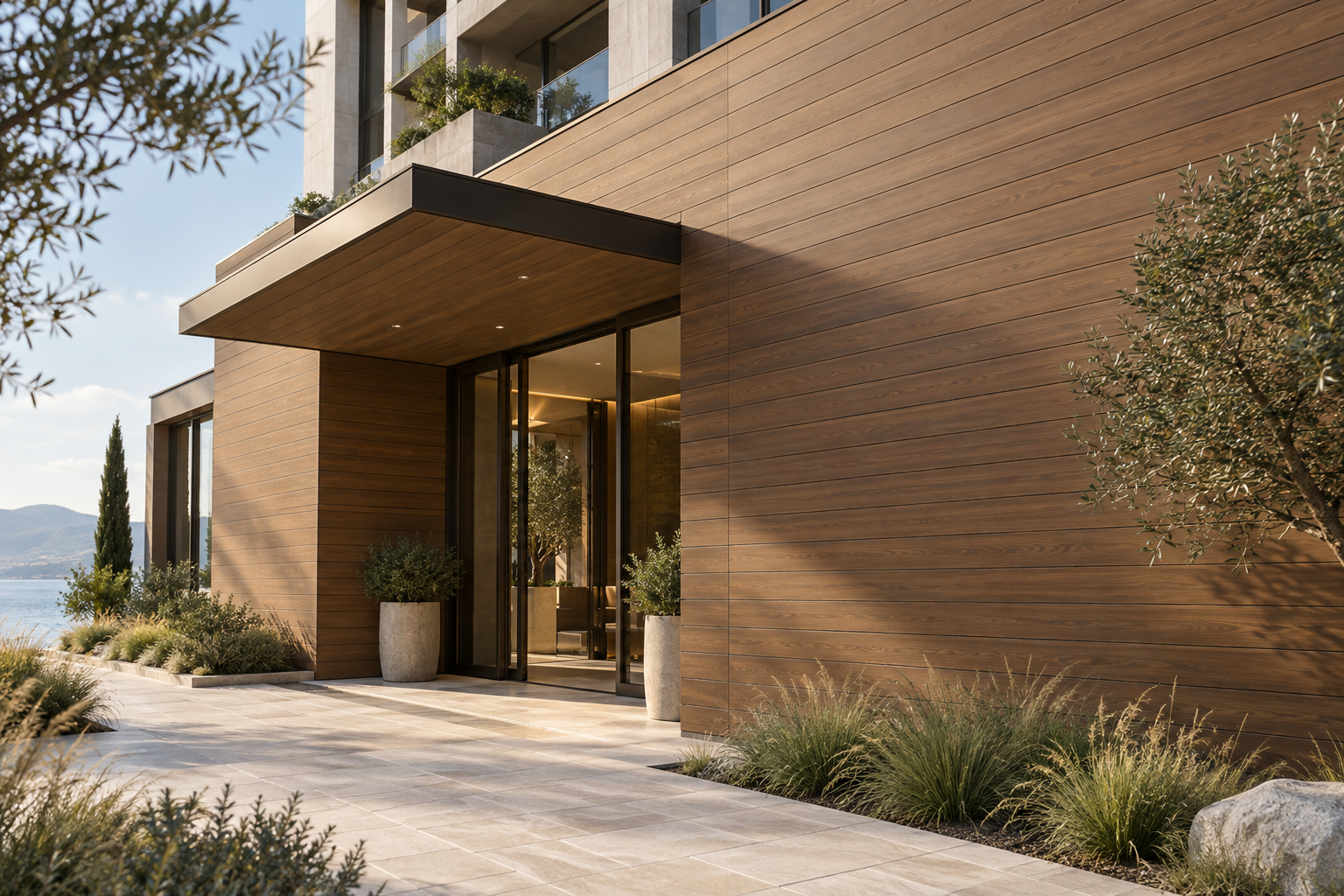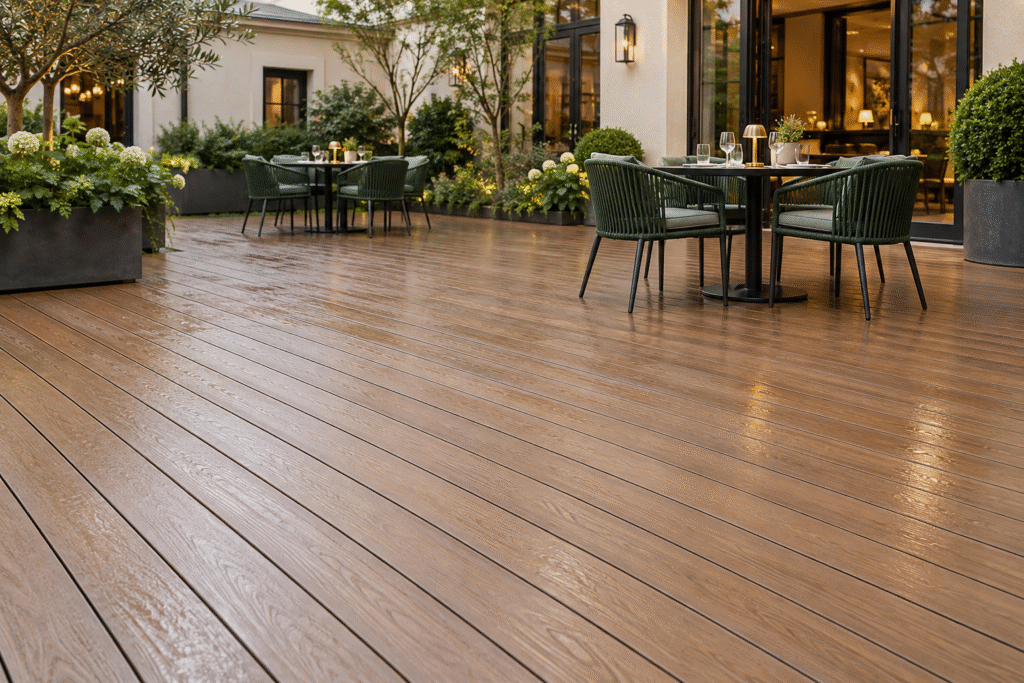
A restaurant terrace connects dining tables, entrance doors and service routes across one finished deck. However, those areas can encounter different conditions during the same evening. Rain may reach an open edge, while a spilled drink affects a sheltered table. For an importer, buying WPC decking therefore requires more than selecting an attractive groove pattern and accepting an unexplained slip rating.
A wholesale distributor also needs a precise way to explain the offered product. The useful commercial question concerns whether the available evidence addresses the proposed terrace use, and which operating assumptions the buyer must resolve before approval.
Quick Answer: How Should Buyers Compare Wet Slip Resistance?
Compare the exact proposed decking surface through a documented test method, specimen identity and stated conditions. Ask a competent reviewer to assess relevance to the terrace’s use, including wet exposure, contamination and pedestrian movement. Then connect material selection to the drainage and cleaning plan. Grooves, woodgrain texture and a favorable photograph do not prove slip resistance, and one laboratory result cannot establish safe performance throughout every season.
Write the Terrace Use Brief Before Requesting Results
First, describe how the restaurant will use the deck. Identify the entrance, dining area and service route, together with any change in level or transition to another material. Ask the operator which areas remain open during rain and when staff normally clear tables or clean the surface.
Next, record plausible conditions without pretending that every location faces the same exposure. A finished courtyard terrace beside planted borders may need a different operating review from an uncovered dining deck beside an outdoor bar. Treat these as project scenarios, not evidence that a particular decking finish meets the requirements.
Also, distinguish the expected footwear and activity. Guests may wear ordinary outdoor shoes, while staff may follow an employer’s footwear policy. A project that includes barefoot circulation needs its own assessment. Avoid transferring an approval from one use description to another merely because the board color matches.
Read the Test Conditions Behind the Headline Rating
Request the complete report rather than a cropped certificate image. Check the laboratory, report reference, test method and edition, specimen description and test condition. Then ask the reviewer to confirm whether the submitted evidence supports the intended decision under applicable local requirements.
HSE’s guidance on assessing flooring slip resistance explains that profiled surfaces may require testing in different directions and that a competent person should operate and interpret the equipment. It also distinguishes assessment for shod and barefoot use. Consequently, a grooved profile needs a suitable evaluation plan; the groove’s appearance alone cannot settle the question.
Similarly, keep dry results, water-wet results and results involving other contaminants distinct. Identify the method’s footwear or slider conditions and the direction relative to the profile. Do not convert numbers between different methods or treat unrelated classification labels as interchangeable without competent technical justification.
Compare Offers Through a Shared Evidence Schedule
Use the same evidence request for every shortlisted SKU. This lets the purchasing team identify unanswered questions before price comparisons create an apparent winner. The following schedule organizes the commercial review; it does not prescribe a testing standard or a universal pass value.
| Comparison item | Supplier submission | Buyer decision |
|---|---|---|
| Product identity | SKU, construction, finish and relevant surface description | Does the report cover this proposed board? |
| Test reference | Complete report and stated method | Can the technical reviewer interpret the result? |
| Test conditions | Conditioning and relevant exposure details | Does the evidence address the intended use? |
| Surface orientation | Tested face and direction where applicable | Does the proposed layout need further assessment? |
| Operating assumptions | Agreed cleaning and terrace use brief | Can the operator support those assumptions? |
| Change control | Proposed substitutions or surface treatments | Must the project obtain another approval? |
For example, imagine two offers for the same restaurant terrace. One includes a complete report for an identified surface; the other supplies only a generic claim. The second offer has an evidence gap, even if its price looks attractive. However, the first offer still needs a project-specific technical review before acceptance.
During sample evaluation, retain the agreed surface reference and note which documents support it. Ask the decorative building materials supplier to identify the proposed finish accurately in the project quotation. This helps project procurement prevent a visually similar substitution from silently replacing the reviewed product.
Make Cleaning and Drainage Part of the Purchase Decision
Bring the restaurant operator into the review before selecting the final board. Agree who handles spills, how staff restrict access during cleaning, and when the surface can return to service. Also, ask for product-specific instructions covering the proposed cleaning products and equipment.
HSE’s cleaning guidance explains that cleaning can remove contamination while also introducing wet-floor hazards. It recommends an effective method appropriate to the surface and attention to access while floors dry. Therefore, a generic promise of easy maintenance does not replace a usable operating plan.
Next, ask the design team and building contractor to confirm the approved drainage arrangement and installation details. Do not substitute an invented universal gap or slope for the specified system. Identify who checks the completed work and resolves areas that fail the project’s drainage requirements.
Compare installation cost against that complete agreed scope. Likewise, calculate maintenance cost from the operator’s actual method and resources, rather than an unsupported annual savings percentage. Include access for routine care in the layout review before fixed furniture or planters make important areas difficult to reach.
Preserve the Decision Through Ordering and Handover
Record the accepted SKU, supporting documents, remaining conditions and approval responsibility before releasing a bulk order. Keep durability, loading and fire performance separate from the slip assessment. Evidence for one characteristic does not establish the others.
Buyers should verify test reports, applicable VOC limits, fire-rating documents and warranty terms. Confirm the required fire rating and other technical specifications with the responsible project team. Apply VOC requirements where the product, treatment or destination requires them; an outdoor application does not automatically carry an indoor emissions classification.
Finally, send Witop Decor a bulk order inquiry with the terrace plan, quantities and use brief. Request samples and technical data sheets, and discuss MOQ, lead time and container loading. Raise custom colors and OEM/ODM cooperation early so the quotation can identify any additional approval steps. Keep the agreed documentation available to the operator after handover.
B2B Buyer FAQs
Do Grooves Guarantee Better Wet Slip Resistance?
No. Compare relevant evidence for the actual surface. A decorative profile or photograph cannot replace assessment of the proposed product and use conditions.
Can We Approve an Outdoor Terrace From a Dry Result?
Ask the technical reviewer for evidence relevant to anticipated wet exposure. A dry result alone does not answer a question about water-wet use.
Should Every Direction Receive the Same Result?
Do not assume so for a profiled surface. Ask the testing specialist to explain the assessed directions and whether the proposed arrangement requires further work.
Does a Laboratory Result Cover the Entire Service Life?
No single result establishes every future condition. Agree how the operator will review the surface in use and respond to changes or concerns.
What Changes Should Reopen the Approval?
A different finish, surface treatment, proposed use or cleaning method can affect the original decision. Document the change and seek the relevant review before acceptance.

James is a content creator and decorator with five years of experience designing home decor. In his daily life, james is constantly on the lookout for the latest, great examples of house design and further optimizes his solutions. Additionally, he writes articles related to outdoor design, interior design, and architectural decorating materials to help brands build more engaging relationships with their audiences.