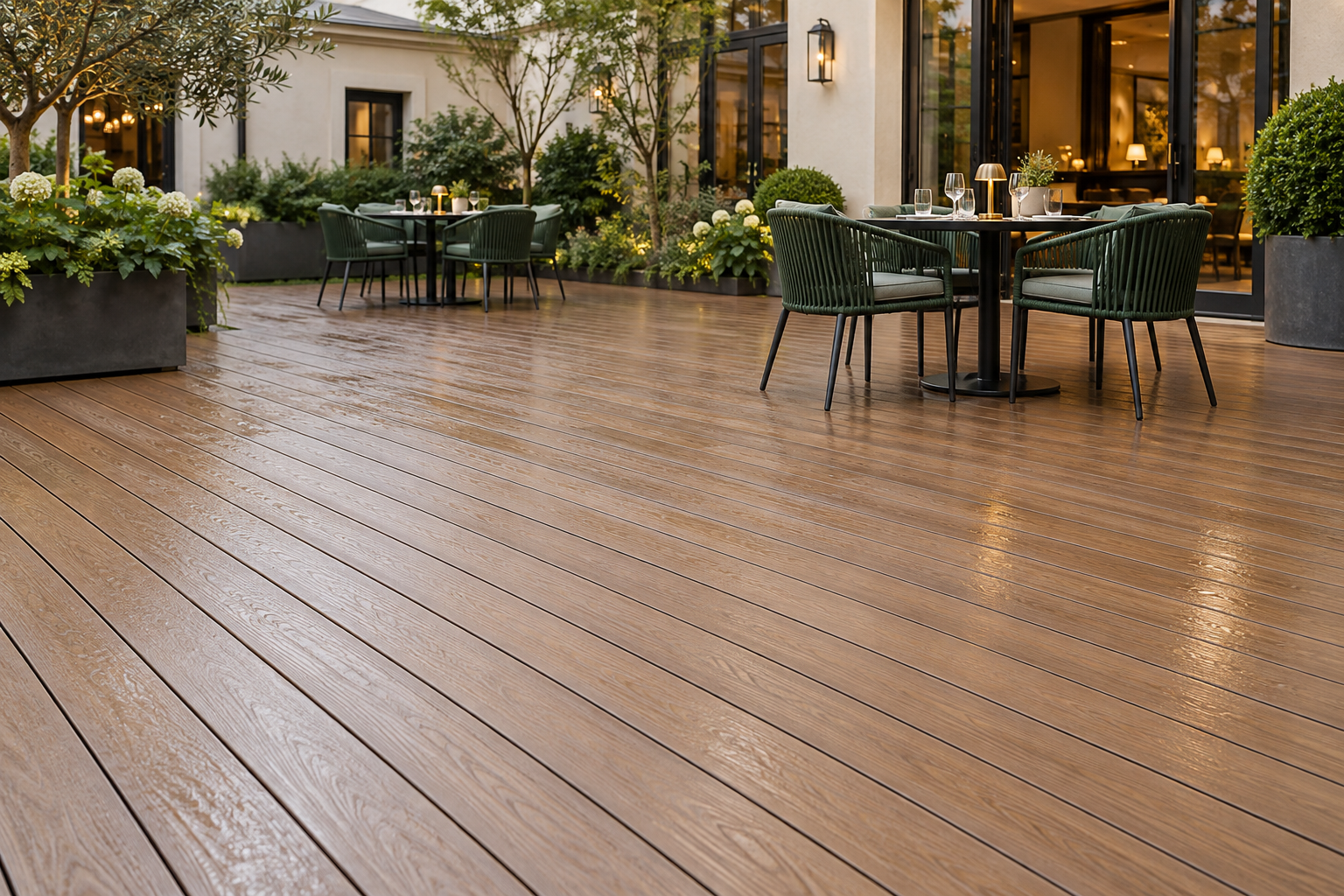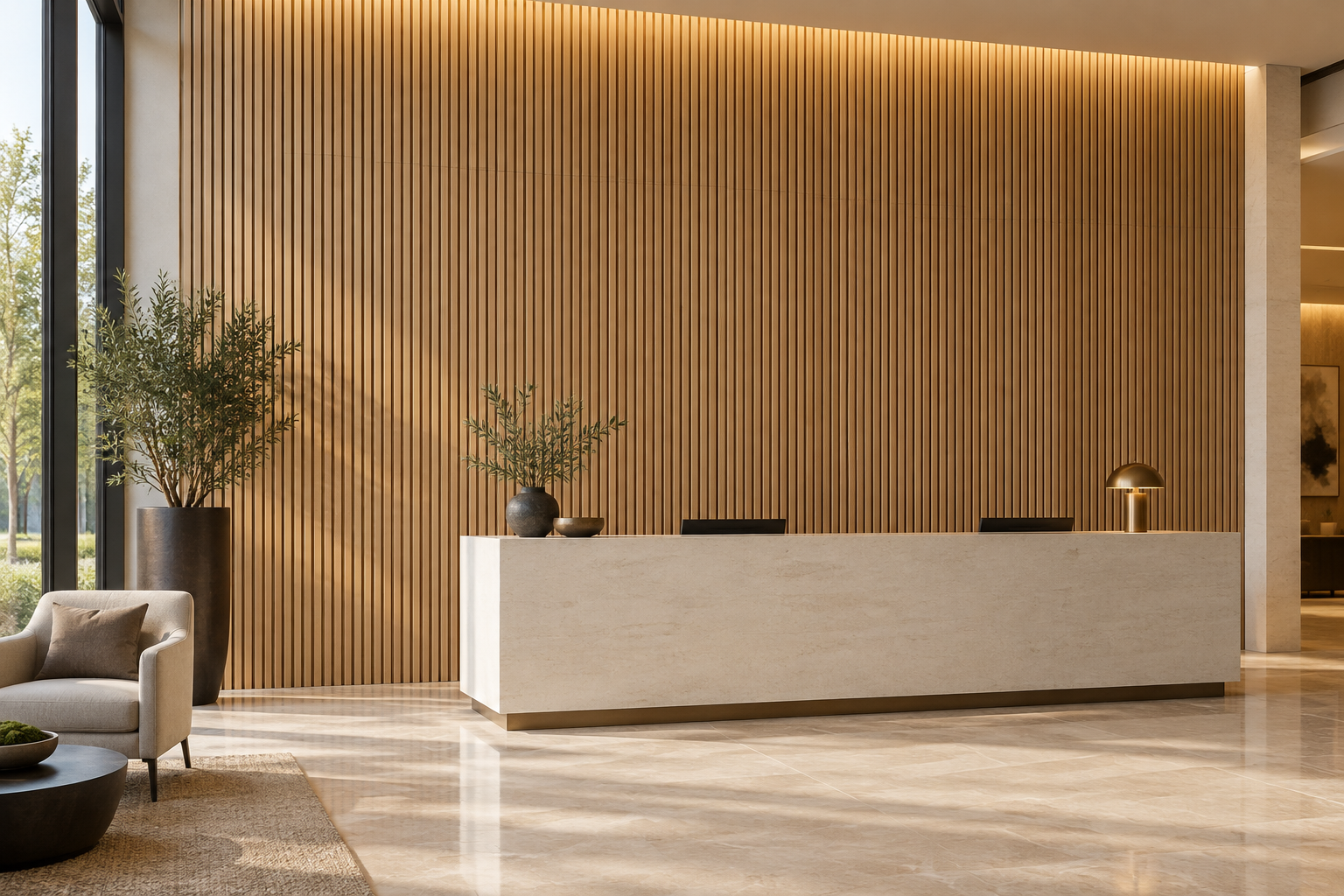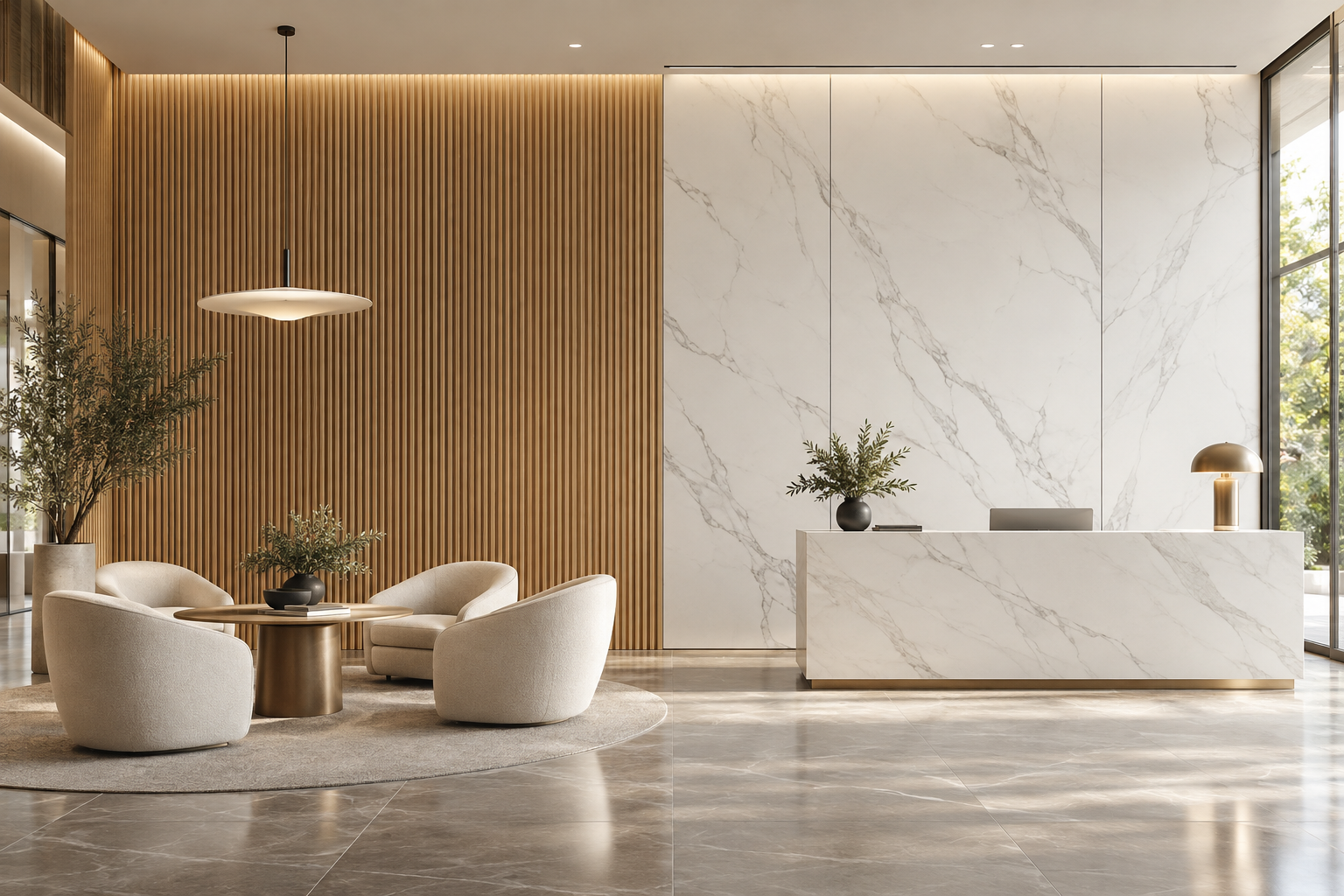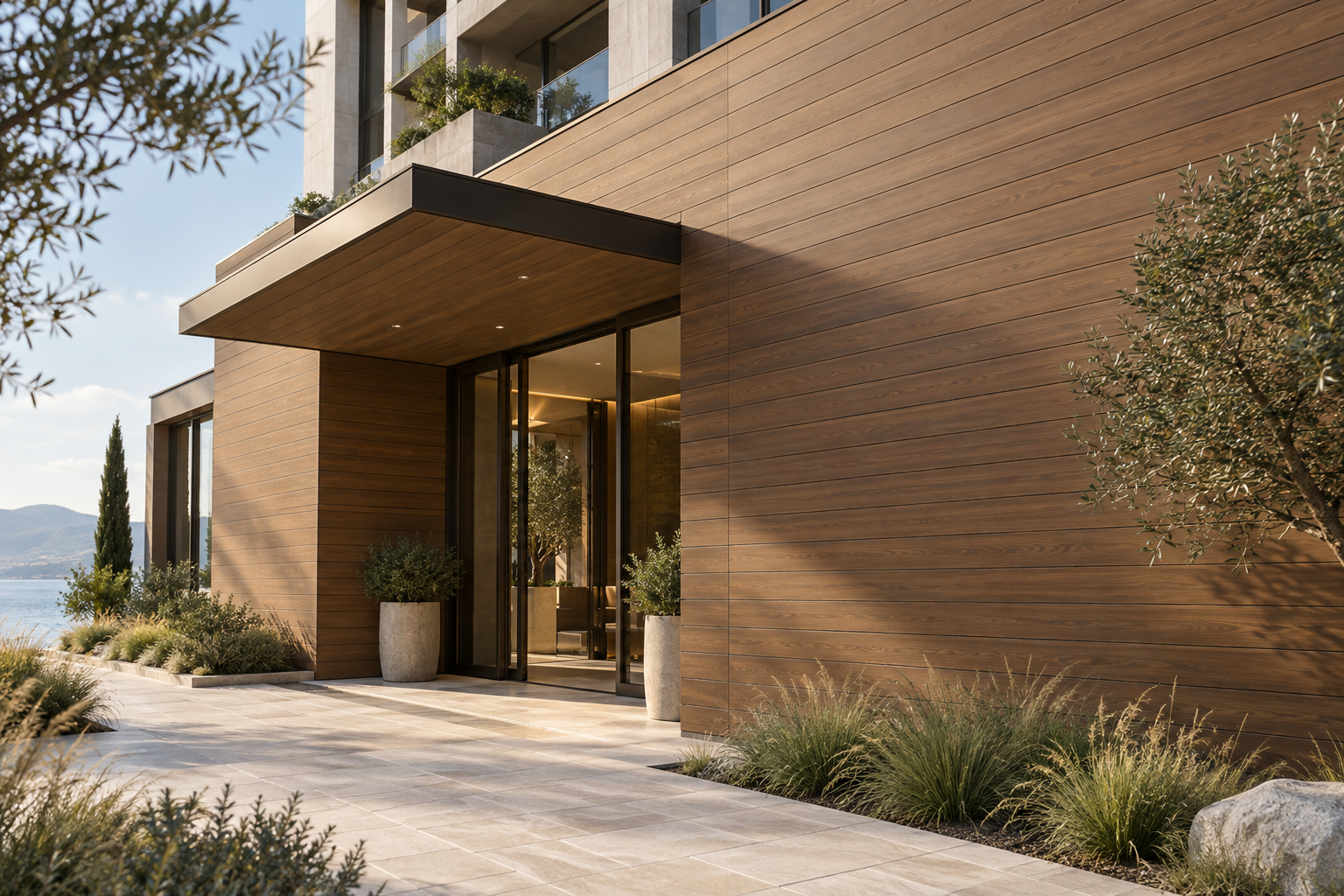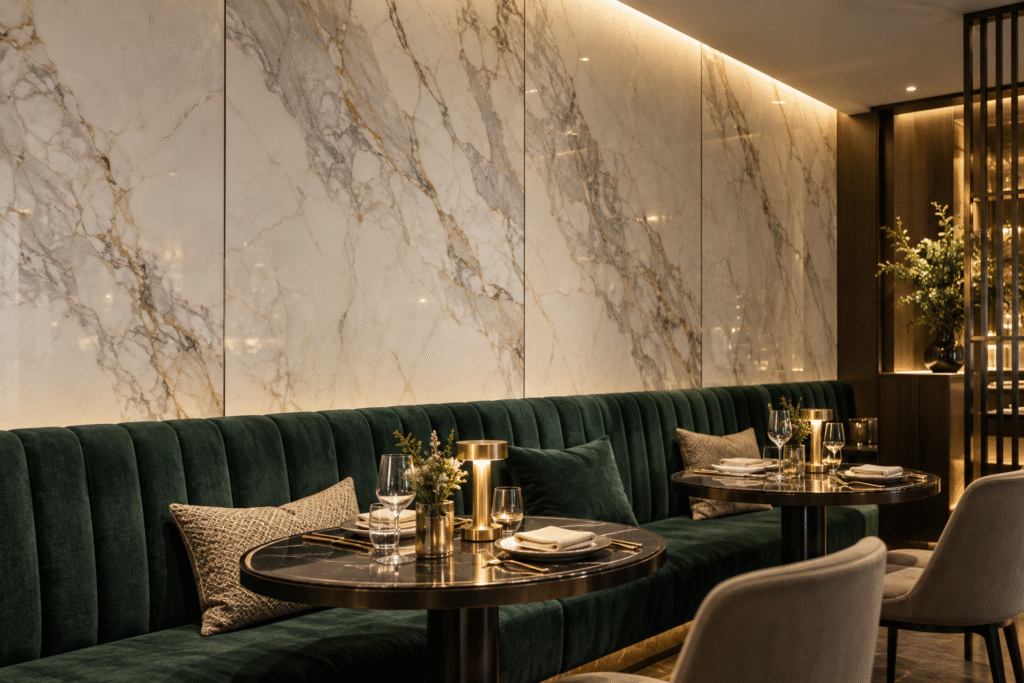
A hotel breakfast room can combine a marble-look guest seating wall with food service equipment elsewhere in the space. The visual scheme may look continuous, but each wall location needs its own application decision. Therefore, an importer should separate ordinary decorative wall areas from locations near heat-producing equipment before requesting a single material quotation.
UV marble sheets also carry the name PVC marble sheets. Neither name establishes a service temperature, a permissible distance from an appliance or a fire classification. For a wholesale distributor, understanding these distinctions helps prevent an approved decorative finish from entering an unreviewed application during project changes.
Quick Answer: Can a Fire Rating Confirm Suitability Near Heat?
No. Review normal service conditions and fire performance as separate questions. A fire classification describes performance within a defined test and classification scope; it does not provide an appliance clearance or routine operating limit. Obtain product-specific instructions, the equipment manufacturer’s requirements and the responsible project review before including a location near a heat source in the approved supply scope.
Understand What the UV Description Actually Tells You
First, ask the decorative building materials supplier to identify the sheet construction, decorative layer, surface coating and backing. Where the product uses a UV-cured coating, UV describes the curing process. It does not mean the entire sheet can tolerate every hot environment.
RadTech explains UV curing as a process that uses ultraviolet light to polymerize a formulated material, which can include a coating or adhesive. That process description cannot establish the finished panel assembly’s allowable service conditions. Consequently, request the actual product’s technical specifications instead of inferring a temperature limit from its name or glossy appearance.
Also, separate the face finish from the complete installation. The board, adhesive, supporting wall, joints and trims each need an appropriate documented role. A favorable property of one component does not automatically approve every combination.
Map Heat Exposure Before Finalizing the Finish Schedule
Begin with an elevation drawing that identifies the decorative wall and nearby equipment. Ask the operator which equipment will occupy the space and whether future replacements might change its position or operating conditions. Then obtain the relevant installation instructions rather than relying on a conceptual rendering.
In a breakfast room, guest seating walls and equipment-adjacent areas should appear as separate review locations. Record possible exposure from equipment surfaces, discharged air, steam or radiant sources wherever these apply. Do not assume that the room’s average air temperature represents every local surface condition.
Next, assign unresolved locations to the responsible designer and technical reviewer. They should determine what information or assessment the project needs. A decorative sample beside an appliance does not establish suitability, and an improvised onsite heat test cannot replace documented application approval.
| Purchasing question | Evidence to request | What it cannot establish alone |
|---|---|---|
| How does the surface cure? | Product construction and coating description | Safe service temperature |
| Which conditions suit normal use? | Written application limits for the identified system | Fire classification |
| What does the fire evidence cover? | Complete report and classification scope | Appliance clearance |
| Can the fixing system tolerate this location? | Panel and attachment compatibility instructions | Approval for a different equipment layout |
| Can staff maintain the finish? | Permitted cleaning and inspection instructions | Unrestricted use of steam or heat |
Read the Fire Evidence for Its Actual Purpose
For example, the official UL 723 scope describes comparative surface burning behavior through flame spread and smoke measurements. It also distinguishes this evaluation from other fire performance questions. This explains why buyers must identify the method behind a reported fire rating instead of treating that label as a complete application approval.
However, the appropriate evidence depends on the project and destination. Ask the responsible reviewer which documentation applies. Match the report’s product identity, construction and mounting details to the proposed supply; resolve any mismatch before relying on the result.
Buyers should verify test reports, VOC limits, fire-rating documents and warranty terms. Review relevant adhesives and other components as part of the submission. In addition, avoid describing a sheet as noncombustible, universally heat resistant or suitable beside cooking equipment without specific supporting evidence and project acceptance.
Quote the Approved Decorative Area Separately
Once the review defines the application, separate confirmed decorative wall quantities from unresolved equipment-adjacent areas. Keep that distinction in the project quotation and purchase order. Otherwise, a contractor may treat spare sheets as permission to extend the finish beyond its approved boundary.
Common sheet sizes include 1220 x 2440 mm and 1220 x 2900 mm. These are common options rather than the only sizes. Choose a format through the approved wall layout, then confirm actual dimensions, joint treatment and usable coverage with the supplier. A taller sheet may change the joint arrangement without changing its permitted heat exposure.
During sample evaluation, review veining, surface appearance and edge details under the proposed lighting. Keep this visual approval separate from the application decision. Similarly, assess durability through relevant product evidence and maintenance requirements rather than a small sample’s first impression.
For repeated hotel layouts, record approvals by room type and wall reference. Check whether each location actually uses the same equipment and construction before copying the specification. Then flag variations for review, so a standard purchasing package remains useful without concealing differences between individual rooms.
Control Equipment Changes and Handover Costs
Project procurement should retain the approved equipment references and wall boundaries with the finish schedule. If the operator later adds a warming unit or relocates an appliance, reopen the affected application review. The original decorative approval cannot answer a new exposure question automatically.
For the building contractor, installation cost should include the agreed substrate preparation, attachment and transitions to other finishes. Maintenance cost should reflect the permitted cleaning process and access for inspection or replacement. Also, identify who handles any adjoining finish where the approved decorative area ends.
Finally, send Witop Decor a bulk order inquiry with elevations, finish references and confirmed application boundaries. Request samples and technical data sheets, then discuss MOQ, lead time and container loading for the approved quantities. Include custom colors or OEM/ODM cooperation requirements early so the quotation records the exact proposed supply.
B2B Buyer FAQs
Does a UV-cured face make the whole panel heat resistant?
No. The curing process does not establish the complete assembly’s service limits. Obtain written instructions for the identified sheet and proposed attachment system.
Can a fire report replace an equipment clearance requirement?
No. They answer different questions. Review equipment instructions and the wall material’s intended use alongside the project’s required fire evidence.
What if the supplier does not provide a service temperature?
Keep the heat-exposed application unresolved. Ask for specific written guidance and let the responsible project reviewer determine the next step before ordering for that area.
Can a breakfast-room approval cover a commercial kitchen?
Do not assume so. Compare the actual exposure, cleaning demands and applicable project requirements. Obtain a separate application decision wherever those conditions differ.
What should happen when the hotel changes its equipment?
Review the affected wall location before accepting the change. Record the revised equipment, exposure assessment and approval decision with the handover documents.

James is a content creator and decorator with five years of experience designing home decor. In his daily life, james is constantly on the lookout for the latest, great examples of house design and further optimizes his solutions. Additionally, he writes articles related to outdoor design, interior design, and architectural decorating materials to help brands build more engaging relationships with their audiences.