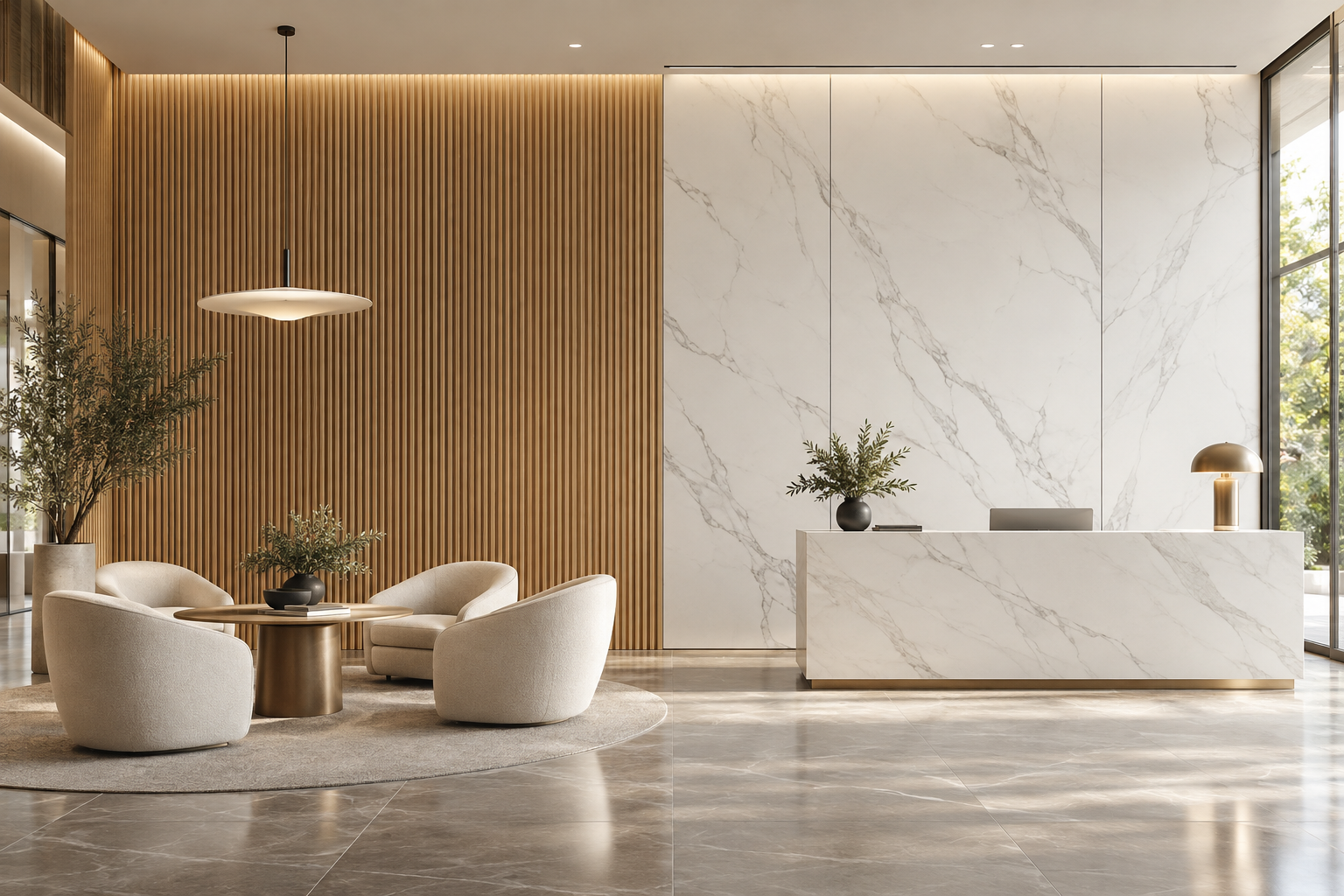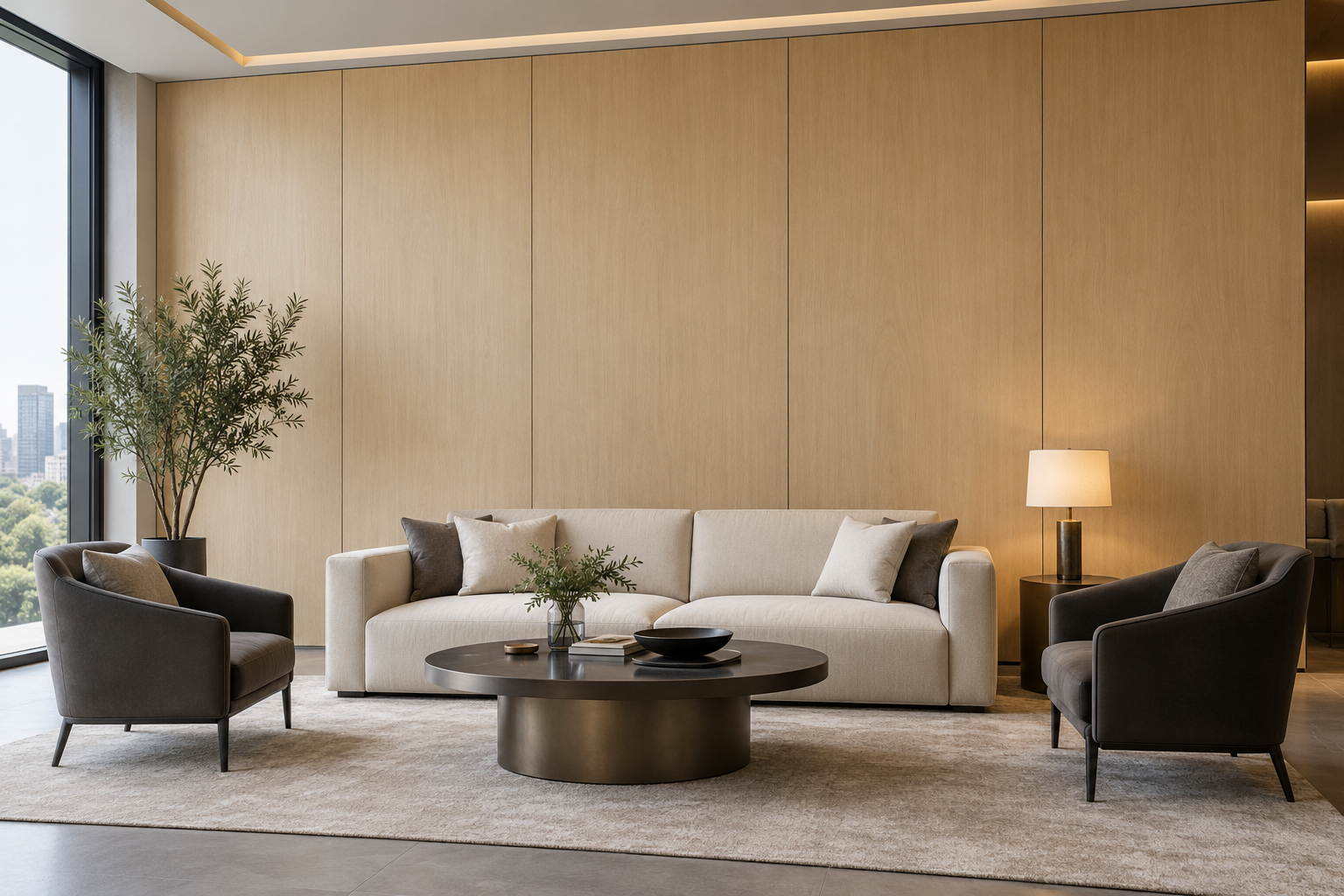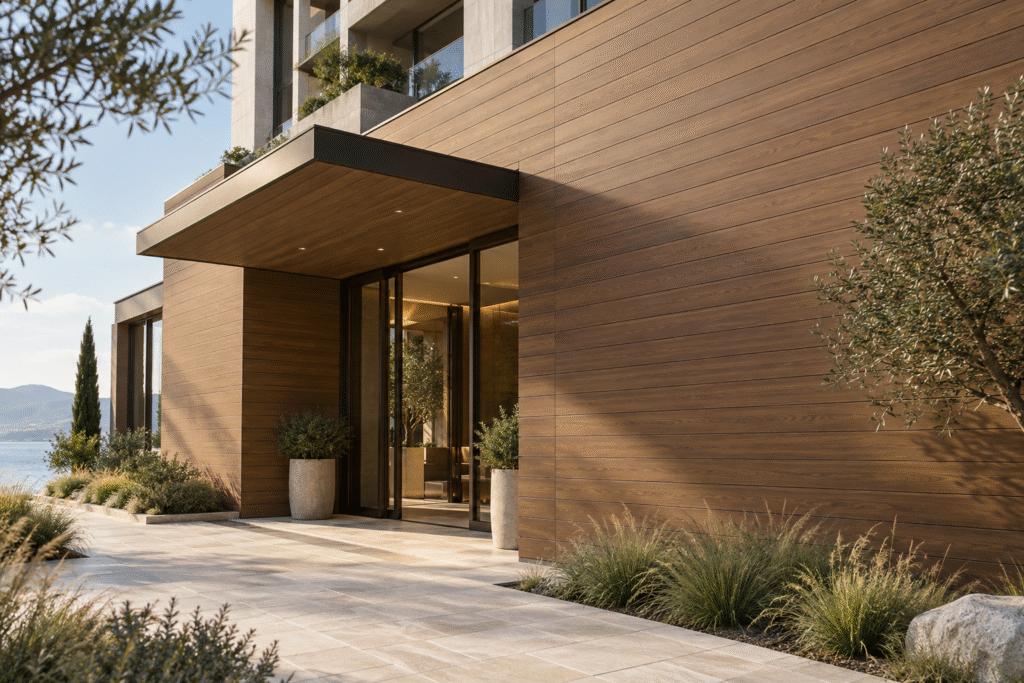
A hotel entrance can combine a sunny street elevation with a sheltered courtyard wall. Both may use the same outdoor WPC wall panels, yet a purchasing document that says only “match approved brown” leaves important questions unanswered. Which reference controls initial delivery? How will the owner assess later appearance changes? What happens when a replacement board meets an older wall?
For an importer or wholesale distributor, a clear acceptance plan turns these questions into purchasing decisions. It connects product identity, exposure conditions and review criteria without promising that every exterior surface will retain an identical appearance forever.
Quick Answer: How Should Buyers Approve Facade Color?
Approve an identified product and reference sample, then define separate checks for initial supply and appearance after exposure. Record elevation, orientation, shelter and review timing. Where the project uses instrumental color measurements, agree the method, reference and acceptance criteria before ordering. Keep laboratory weathering evidence within its stated scope; do not convert test hours into a guaranteed number of service years.
Outdoor WPC wall cladding is another name for this exterior product category. However, indoor WPC wall panels need their own application assessment and cannot automatically substitute for an exterior specification.
Separate Delivery Matching From Weathering Review
First, identify the selected profile, finish, color code and construction in the technical specifications. Link the sample to a dated approval record and the order reference. Ask the decorative building materials supplier how it identifies production batches and proposed substitutions.
Next, establish two different review questions. Initial acceptance asks whether incoming material matches the approved supply specification. Weathering review asks how the identified surface changes under recorded exposure conditions. A comparison between a new shipment and an older facade cannot answer the first question on its own.
Moreover, retain a control sample under agreed storage conditions and record its identity, protection and handling. Also, retain baseline photographs and any approved measurements. Do not assume that a reference remains unchanged indefinitely: document damage, contamination or storage changes and agree how to replace an unsuitable control.
Map Exposure by Elevation
Use the building elevations to identify review zones rather than treating the facade as one uniform location. Record orientation, overhangs, recesses and nearby obstructions. Then note relevant moisture exposure and cleaning arrangements. These records describe the project context; they do not establish a universal prediction for a particular compass direction.
For example, a hypothetical completed boutique hotel could feature warm woodgrain cladding around its entrance and along a planted courtyard. The entrance canopy creates a sheltered area, while another wall remains open to the weather. Keep both zones in the review plan instead of using one favorable photograph to represent the entire building.
In addition, set review dates or intervals with the owner and responsible technical adviser. Record the actual observation date, surface condition and recent relevant conditions at each visit. If landscaping or a new canopy changes exposure, update the record so later comparisons remain understandable.
Define a Repeatable Appearance Comparison
Agree viewing conditions, sample placement and the condition of the surface before conducting sample evaluation. A wet, dusty board and a clean, dry control can create an unhelpful comparison. Therefore, follow the permitted cleaning procedure and document the preparation before judging the appearance.
If the project requires a numerical color difference, specify the calculation method and measurement setup with a qualified reviewer. Include instrument geometry, measurement locations and the reference used. Ask how the method handles a textured or deliberately varied woodgrain finish; one convenient reading may not represent its appearance.
ASTM D2244 places the agreed color tolerance and calculation procedure within the buyer-seller specification process. It also recognizes that gloss, texture and other appearance factors influence commercial acceptance. Consequently, a bare “Delta E” number needs its method and context; this article does not assign a universal passing value.
| Review stage | Reference and record | Decision to document |
|---|---|---|
| Initial sample approval | Identified finish, control and agreed viewing method | Approved supply appearance |
| Incoming material | Batch identity and retained supply reference | Acceptance or clarification before use |
| Exposed facade review | Baseline, elevation and exposure record | Assessment against agreed weathering criteria |
| Proposed replacement | New material beside the existing review zone | Acceptable repair appearance and extent |
| Product substitution | Changed construction, finish or formulation | Evidence and approval required again |
Read Weathering Evidence Without Creating a Lifetime Claim
Request the complete report and match its specimen description to the proposed material. Then review the exposure method, light source, moisture and temperature cycles, duration, measured properties and reported observations. Ask the technical reviewer to resolve any difference between the tested specimen and the ordered finish.
Q-Lab’s weathering guidance explains why no simple general relationship converts accelerated laboratory exposure into outdoor service time. It identifies the variability of real exposure and the need for outdoor evidence when developing correlations. Accordingly, use a report for its documented comparison or acceptance purpose, not as a shortcut to an invented service-life promise.
Furthermore, keep color retention separate from other aspects of durability. A color result does not establish fixing performance, fire behavior or suitability for every facade design. Ask for evidence relevant to each requirement rather than allowing one favorable test to carry the entire specification.
Plan Replacement Appearance and Commercial Responsibilities
Discuss future repairs before finalizing project procurement. A stored spare and an exposed wall may develop different appearance histories. Therefore, holding spare material can support product continuity without guaranteeing an invisible repair. Agree who reviews a replacement sample and who approves the repair area before the building contractor orders additional material.
Compare installation cost and maintenance cost using that agreed scope. Include relevant access, permitted cleaning and appearance review tasks, while keeping hypothetical repair allowances separate from promised savings. Identify which party retains the records after handover and how the owner submits a concern.
Before purchase, buyers should verify test reports, applicable VOC limits, fire-rating documents and warranty terms. Confirm the required fire rating with the project team. Apply VOC requirements where the product, coating, project or destination requires them; an outdoor application does not automatically share an indoor emissions specification.
Finally, send Witop Decor a bulk order inquiry with quantities, elevation drawings and finish preferences. Request samples and technical data sheets, and discuss MOQ, lead time and container loading. For custom colors or OEM/ODM cooperation, agree the reference and evidence requirements early. A project quotation can then identify the proposed product and the approvals still outstanding.
B2B Buyer FAQs
Does “Colorfast” Mean the Facade Will Never Change?
No. Ask the supplier to define the claim, supporting method and conditions. Avoid turning a qualified result into an unrestricted promise that the surface will never fade or change.
Can One Elevation Represent the Whole Building?
Only if the responsible reviewer accepts that sampling approach. Otherwise, record the relevant exposure zones separately and explain which locations each observation represents.
Is a Digital Photograph a Complete Color Reference?
No. Use photographs as supporting records with consistent capture conditions. Keep the identified physical reference and any agreed measurement process central to the acceptance decision.
Will Spare Boards Always Match an Older Wall?
Do not assume so. Storage and facade exposure can produce different histories. Review a proposed replacement against the relevant wall area before approving the repair.
What Should Trigger Another Technical Review?
A changed finish, construction, formulation or exposure assumption can affect the original decision. Record the change, identify affected evidence and obtain approval before accepting the substitution.

James is a content creator and decorator with five years of experience designing home decor. In his daily life, james is constantly on the lookout for the latest, great examples of house design and further optimizes his solutions. Additionally, he writes articles related to outdoor design, interior design, and architectural decorating materials to help brands build more engaging relationships with their audiences.