Table of Contents
ToggleQuick Answer: Can Low Emissions Establish Air-Cleaning Performance?
No. An emissions assessment concerns substances released by the tested product under defined conditions. A removal assessment asks whether an identified material reduces an identified compound under an appropriate test arrangement. Neither the bamboo charcoal name nor a low-emissions result establishes that second function. Keep odor, specific-compound reduction and general air-purification wording separate, and obtain a technical review before making any such claim.
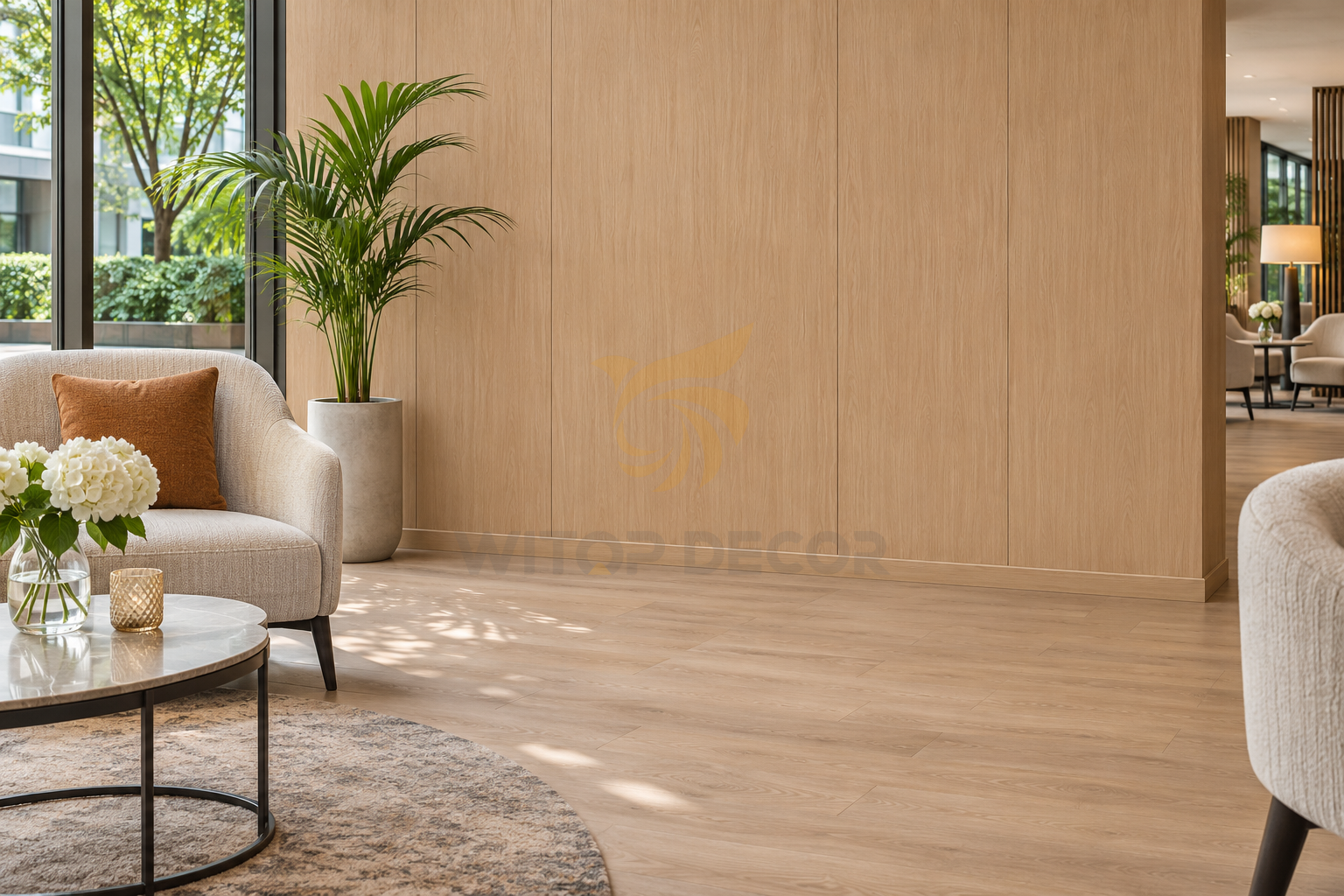
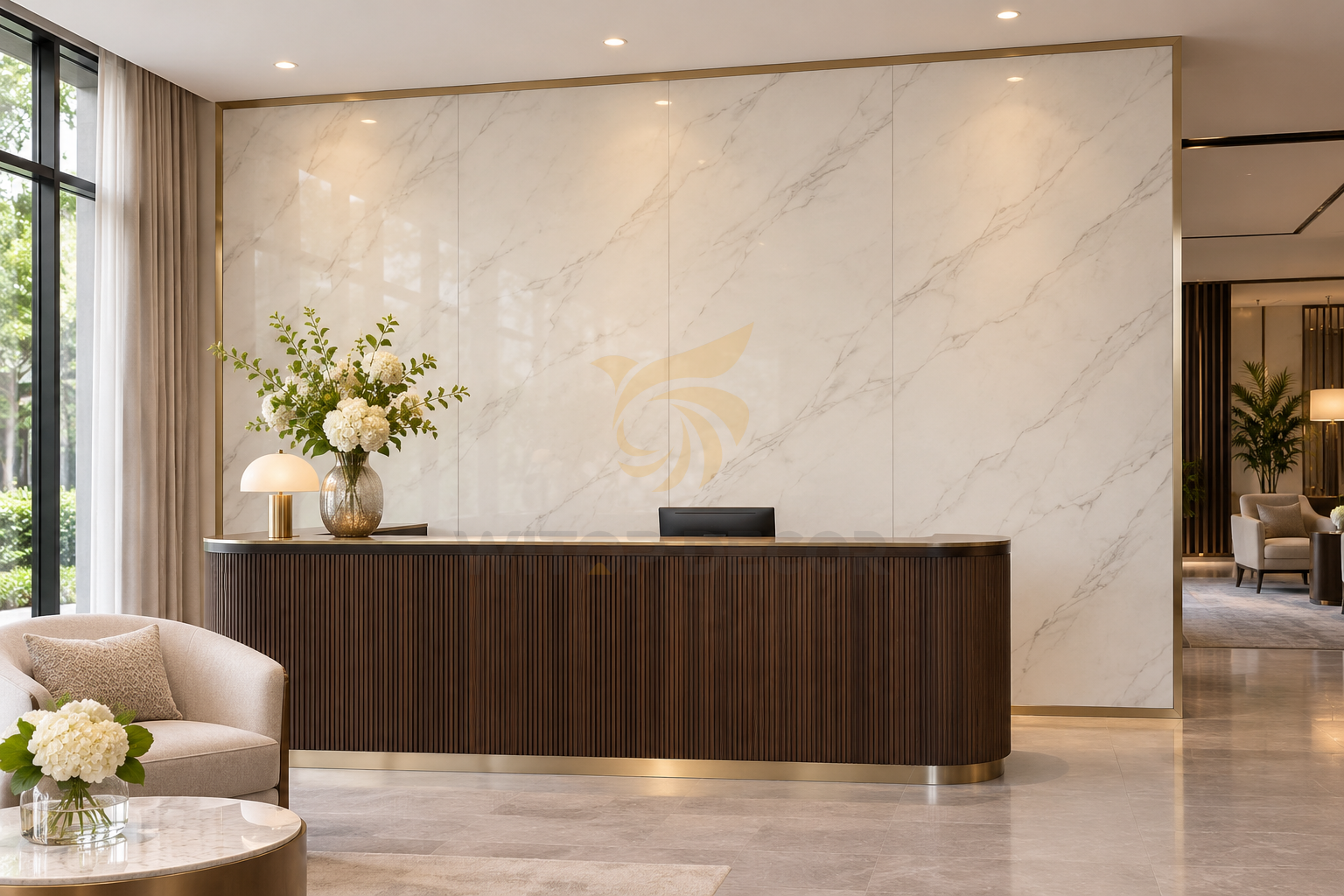
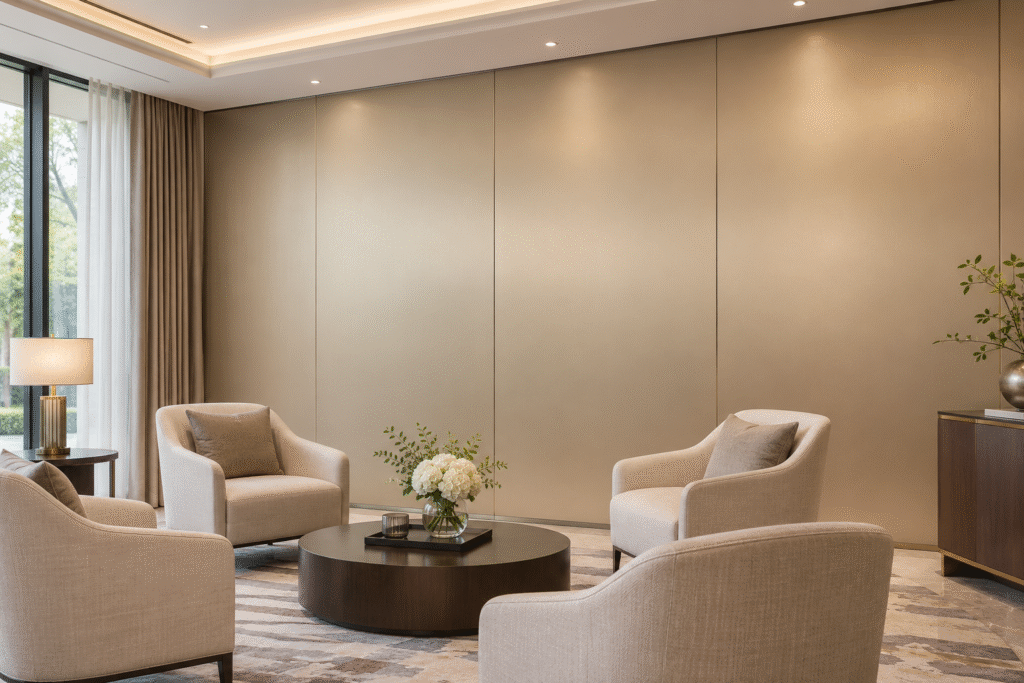
AI-generated application illustration; not an actual customer project, an approved installation detail or evidence of product performance.
An importer receives a decorative wall quotation with a low-emissions document and a promise that the panels remove unwanted compounds from room air. The two statements may sound related, but they ask different technical questions. Therefore, project procurement should review a removal claim separately before adding it to a hotel specification or distributor catalogue.
This distinction matters when a wholesale distributor sells bamboo charcoal wall panels under a private label. The product name identifies a decorative category; it does not establish charcoal content, adsorption capacity or room-air performance. Ask what the supplier actually claims, then request evidence that answers that claim for the offered finished product.
Turn Broad Marketing Language Into an Answerable Question
Start with the exact proposed wording. Does the supplier claim odor reduction, removal of a named VOC, or a general improvement in room air? Ask it to identify the target substance and measurable result. A statement such as removes pollution gives the laboratory and buyer no defined performance question.
Next, identify the proposed application and the scope of the promise. A decorative wall in a furnished hotel meeting lounge differs from a claim about the entire occupied hotel. Likewise, an office reception concept can illustrate appearance without demonstrating pollutant removal. Do not let an attractive room image quietly expand the technical claim beyond the tested material and conditions.
Understand What the Emissions Document Actually Supports
UL Solutions’ GREENGUARD explanation describes testing against chemical-emissions limits. That supports an emissions-related inquiry; it does not establish pollutant-removal performance for the offered bamboo charcoal wall panels. No certification for Witopdecor or any particular panel follows from this example. Verify the actual product’s documents independently.
Keep the emissions record in the procurement file, but do not place it in the removal-evidence field simply because both documents mention VOC. Also, avoid describing an emissions result as zero emissions unless the relevant evidence supports that exact wording. The purpose here is to keep each document attached to the question it answers.
Before accepting an emissions submission, check whether the VOC evidence covers the exact ordered panel and finish. That identity review remains necessary even when the proposed sale makes no pollutant-removal claim.
Request a Reduction Test That Fits the Target Claim
The official ISO 16000-24:2018 scope addresses laboratory evaluation of VOC concentration reduction by sorptive building materials. It distinguishes an area-related reduction rate from a capacity-related measure relevant to maintaining performance. This illustrates a different assessment objective from chemical-emissions testing. It does not prove that a particular bamboo charcoal panel performs that function.
Ask a qualified laboratory or project reviewer which method suits the named compound, finished product and intended statement. Do not select a method merely because its title contains indoor air. Request the applicable method and edition, the reported result and a clear explanation of its limitations. This article does not prescribe one test for every removal or odor claim.
Examine the Offered Finished Surface
Ask whether the test specimen represents the complete supplied panel, including its decorative face, backing and relevant construction. A result for a raw ingredient or an exposed core needs an explanation of its relevance to the finished offer. The buyer should not invent that connection or assume that an attractive surface leaves every underlying material equally available to room air.
Common formats include 1220 x 2440 mm and 1220 x 2900 mm. These are common sizes, not the only options or a promise of availability. Record the actual panel and finish reference used in the review. Moreover, ask the supplier to explain whether changes to a decorative layer, construction or treatment affect the evidence and approved wording.
For visual planning, a hotel meeting lounge might use a champagne metal-look wall, while an office reception might use a light fabric-look surface. Confirm the proposed finish’s availability and construction. These design choices illustrate decor only; they provide no evidence of air-cleaning performance.
| Review dimension | Question for the submission | Decision to record |
|---|---|---|
| Claimed function | Which compound or odor does the statement address? | Defined claim rather than a general promise |
| Product identity | Does the specimen represent the offered finished panel? | Accepted match or clarification required |
| Test arrangement | What exposure and comparison conditions apply? | Limits of the reported result |
| Reported performance | Does the evidence address rate, capacity or another result? | Wording supported by that result |
| Application scope | Does the statement concern a specimen, material area or room? | Boundary of permitted use |
| Product changes | Which variations require another review? | Written change-control responsibility |
Read Conditions Before Repeating a Percentage
A removal percentage without its test context offers little purchasing clarity. Request the target compound, exposure arrangement, observation period and reference comparison in the complete report. Ask the technical reviewer how those details affect interpretation rather than copying the largest percentage into the quotation. Keep the report identifier beside any accepted performance statement.
Also, distinguish an observed result at a stated time from a promise of indefinite performance. Ask whether the evidence supports a duration, capacity or maintenance condition, and obtain the supplier’s stated limits. Do not convert a short evaluation into a lifetime claim. Likewise, a result for one named compound does not establish removal of every VOC or every source of room odor.
Keep the Commercial Decision Reviewable
If adequate removal evidence remains unavailable, keep the procurement decision within the supported decorative specification. The buyer can assess finish, dimensions and relevant technical specifications without adding an unsupported air-cleaning function. If the project’s brief requires a defined reduction performance, leave that requirement open for qualified review rather than treating the product name as acceptance.
For a building contractor, installation cost should follow the actual wall system and accepted material requirements. Estimate maintenance cost from the approved care instructions. Do not subtract an imagined air-treatment saving from either figure, or promise operational savings without evidence. Review durability through the appropriate product documents instead of assigning it from a separate chemical test.
Control the Claim Through Quotation and Reorders
Put the approved wording and evidence references in the commercial record. Ask the decorative building materials supplier to notify the buyer before a relevant construction or finish change. For custom colors and OEM/ODM cooperation, clarify who reviews the variation and updates sales literature. This also helps distributors avoid repeating an old claim after the underlying offer changes.
Buyers should verify test reports, VOC limits, fire-rating documents and warranty terms for the exact supply. Confirm the required fire rating independently from any removal claim. Then discuss MOQ, lead time and container loading against the approved specification. Send Witop Decor the application, finish references, quantities and document requirements to request samples, technical data sheets and a project quotation.
B2B Buyer FAQs
Does the word charcoal prove that a panel removes odors?
No. Ask for a defined claim and relevant finished-product evidence. The decorative category name does not identify a measured odor-reduction result or establish which compounds the panel affects.
Can an emissions certificate replace a reduction report?
No. Review each document against its assessment objective. A result about substances emitted by a product does not answer whether that product removes substances introduced into surrounding air.
Does an ingredient test approve the supplied decorative panel?
Request a traceable technical explanation of its relevance. The reviewer needs to understand the finished construction and exposed surface before accepting a connection between an ingredient result and the commercial offer.
Should buyers approve a claim through a sample smell check?
Use sample evaluation for appearance and ordinary handling observations. A sensory impression does not establish quantified VOC reduction, emissions compliance or a general room-air performance claim.
What belongs in a bulk order inquiry?
Identify the decorative application, proposed finish, destination and quantities. State any required chemical-performance claim separately, including its acceptance reviewer, so the supplier can distinguish available evidence from unresolved requirements.

James is a content creator and decorator with five years of experience designing home decor. In his daily life, james is constantly on the lookout for the latest, great examples of house design and further optimizes his solutions. Additionally, he writes articles related to outdoor design, interior design, and architectural decorating materials to help brands build more engaging relationships with their audiences.