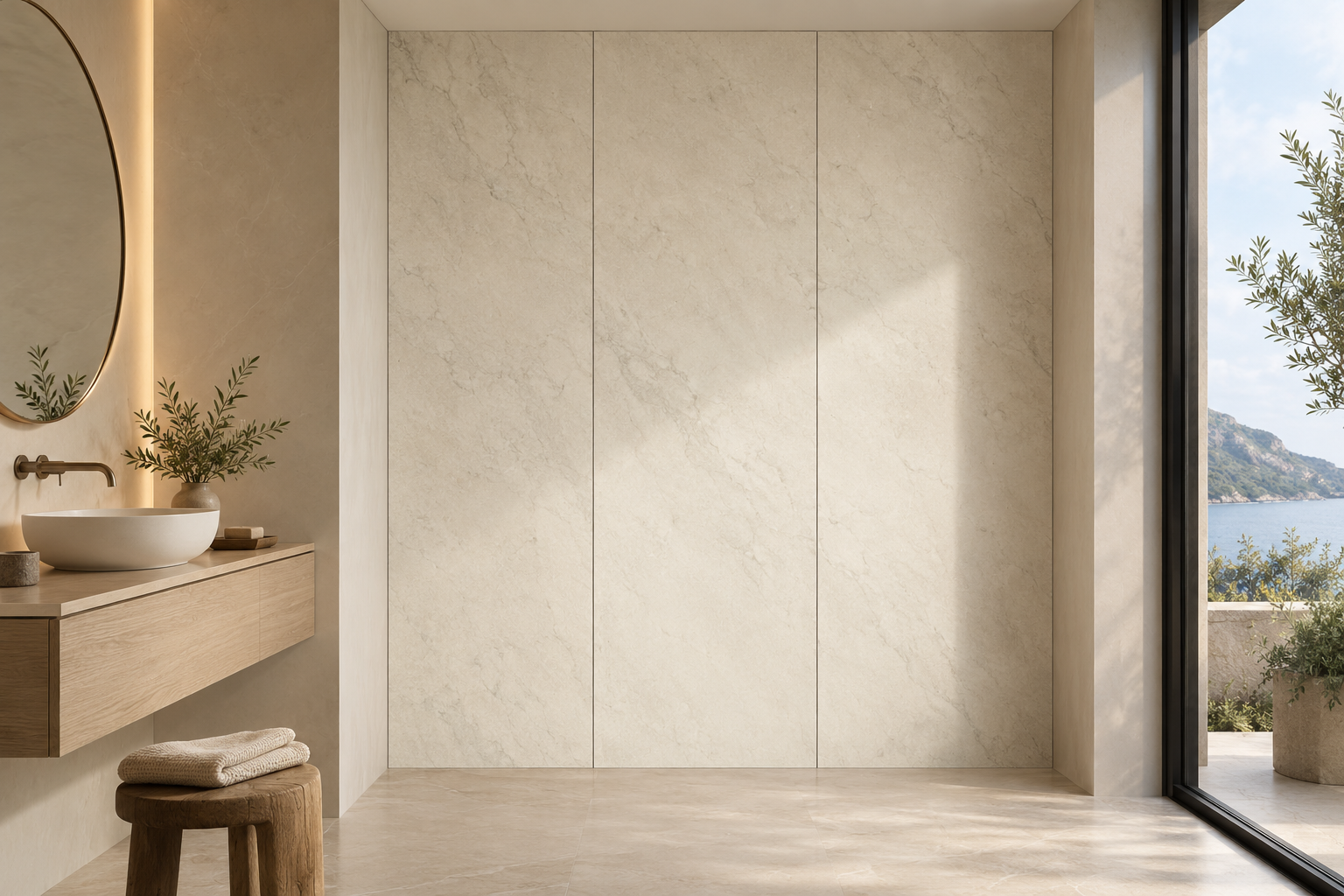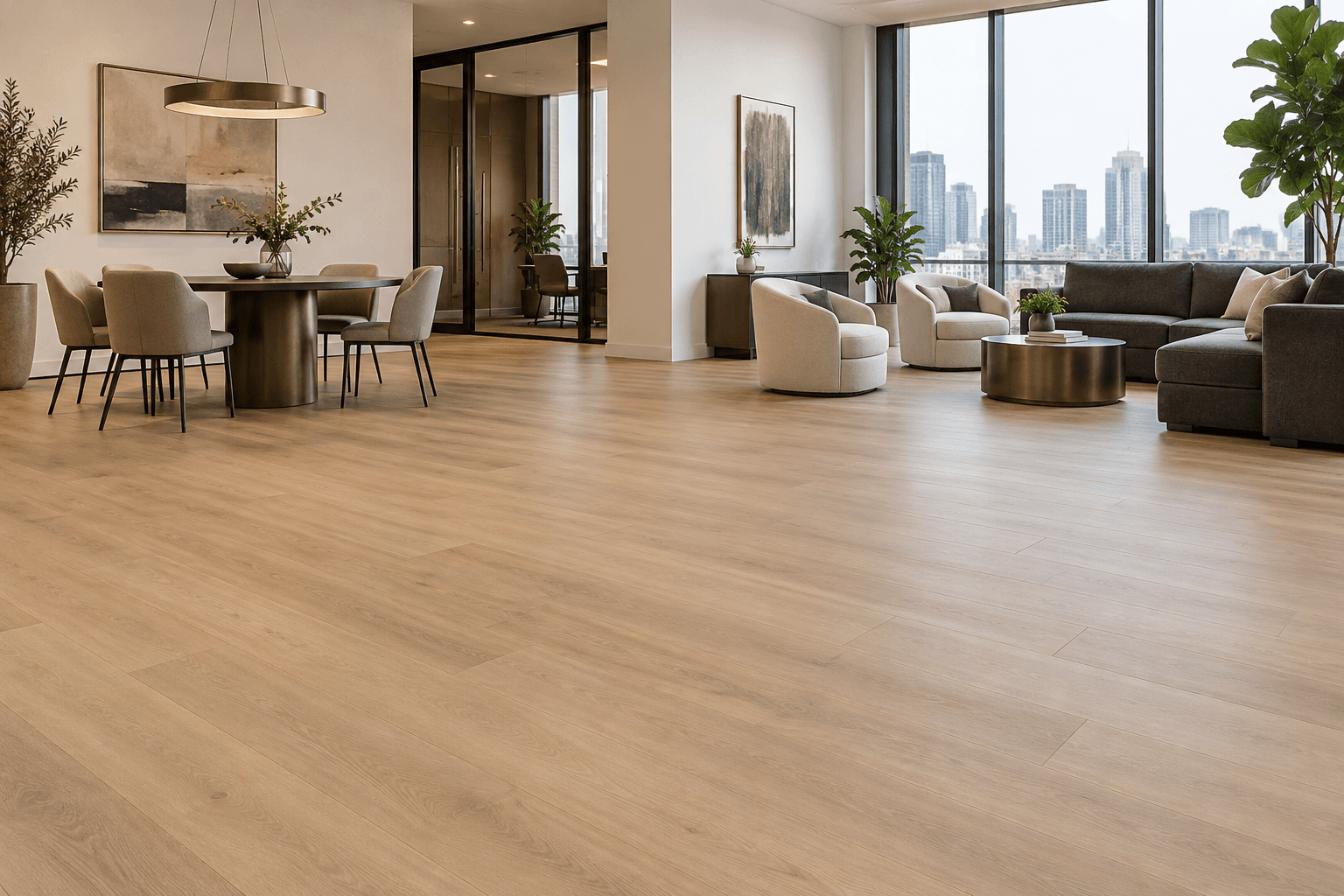
A furnished executive meeting lounge can feature warm woodgrain walls and carefully coordinated furniture. However, an attractive sample cannot establish whether the product’s emissions evidence covers the proposed purchase. For an importer, the practical question is whether the report identifies the panel and finish that the supplier will actually deliver.
The same question matters to a wholesale distributor supporting several contractors. A document that accompanies one collection may not automatically cover every finish or fixing material. Therefore, connect each claim to a defined product and an accepted project requirement before confirming the order.
Quick Answer: What Should Buyers Verify?
Match the report or certification scope to the exact bamboo charcoal wall panels, including their construction, finish and relevant model identifiers. Then identify which adhesives and other site materials require separate evidence. Ask the project reviewer to confirm the accepted test method, edition and VOC limits. Do not infer low emissions, zero emissions or air-purification performance from the product name, a low-content declaration or an absence of noticeable odor.
Build a Product Identity Record Before Reviewing Results
Start with the supplier’s product code and the selected surface finish. Add thickness, backing, construction description and any model names that appear in the technical specifications. Also, record the manufacturer and the relationship between its model and any distributor’s private label. Resolve different names with a traceable explanation rather than assuming a matching photograph proves identity.
Common sizes include 1220 x 2440 mm and 1220 x 2900 mm; these are typical options, not the only possible dimensions. Include the ordered size in the product record. However, do not decide report coverage from dimensions alone. Ask the report issuer or responsible reviewer to confirm the scope when the proposed variant differs from the identified sample or listed family.
Next, connect the approved reference to the quotation, purchase order and packing identification. This gives a building contractor a clear way to compare the incoming product with the documents that supported its approval.
Separate Content, Emissions and Certification Claims
A content document and an emissions document answer different questions. UL Solutions explicitly notes that low VOC content does not necessarily establish low emissions. Its certification guidance also points purchasers toward the official product database for checking certification claims. Consult the UL GREENGUARD certification guidance, then verify the actual listed product and scope rather than relying on a logo copied into a catalogue.
In addition, identify the method and edition behind any submitted emissions result. CDPH’s official page now lists Standard Method version 1.3, dated June 2026, and identifies changes with a January 2027 effective date. This update does not make one edition a universal requirement for every project. Ask the appointed reviewer which method, edition and acceptance criteria the destination and contract require. Check the current CDPH VOC publications when preparing the document request.
Finally, keep the supplier’s claim within the evidence. A pass against named criteria should not become a promise that a complete occupied room will have no emissions.
Check the Coverage of Each Proposed Material
Use a simple evidence register during project procurement. For each line, identify the document, the product it covers, the reviewer and the remaining question. This keeps a panel report from becoming an informal substitute for every other material’s assessment.
| Procurement item | Evidence question | Release condition |
|---|---|---|
| Finished panel | Does the scope identify this construction and finish? | Reviewer accepts the product match |
| Alternate finish | Does documented family coverage include the variation? | Issuer or reviewer resolves the difference |
| Site adhesive | What evidence applies to the exact proposed product? | Project requirements and compatibility both receive review |
| Primer or sealant | Does the installation introduce another material? | Register includes its required documentation |
| Complete wall claim | What assembly or project evidence supports the wording? | Responsible reviewer accepts the defined claim |
Moreover, read the report’s specimen description and stated evaluation conditions with the technical reviewer. Ask what the result covers and what it excludes. Where the scope remains unclear, request clarification from the issuer instead of asking a salesperson to extend the conclusion.
For an environmental chamber report, ask the reviewer to examine the specimen preparation, exposed surfaces, test timing and evaluation model. Record the report number and laboratory identity, and obtain the complete document rather than an isolated results screenshot. Next, compare its conclusions with the contract’s actual acceptance requirement. This review should identify limitations without rewriting the laboratory’s findings or turning a modeled result into a measured condition in your finished office.
Keep Fixing Compatibility and Emissions Review Separate
A low-emission adhesive claim does not establish bond suitability for a particular panel backing. Likewise, an adhesive recommendation for installation does not by itself satisfy the project’s emissions criteria. Therefore, obtain the relevant compatibility guidance and the required emissions documentation as separate approvals.
For an executive lounge with smooth woodgrain bamboo charcoal wall panels, specify the panel reference alongside the backing, adhesive and any primer. A second design might use a warm fabric-look decorative finish in a furnished meeting room. If that design changes the surface construction, confirm evidence coverage before treating the two finishes as interchangeable.
Also, ask the project team whether it needs separate component evidence, assembly evidence or additional project assessment. Do not add independent reports together and describe the result as a tested wall system. Follow the approved installation and handover instructions; a procurement article cannot supply a universal curing or ventilation schedule.
Control Changes Before Production and Handover
Record a written substitution process for panel construction, finish and site materials. If availability forces a change, reopen the affected technical review before release. Meanwhile, keep the commercial team informed of any effect on MOQ, lead time or container loading so that an urgent shipping decision does not quietly change the approved specification.
Include document collection and any agreed additional review in the project quotation. Discuss how these tasks affect installation cost, but avoid promising that paperwork alone prevents delays. At handover, retain product references and approved care instructions so that later repairs do not introduce unidentified replacements.
Buyers should verify test reports, VOC limits, fire-rating documents and warranty terms. Review the required fire rating independently from emissions evidence. Similarly, assess durability and maintenance cost through relevant product guidance rather than treating one certificate as proof of every performance attribute.
For a bulk order inquiry, send Witop Decor the destination, finish references and project document requirements. Request samples and technical data sheets for sample evaluation. A decorative building materials supplier can then identify available evidence and unresolved questions. For custom colors or OEM/ODM cooperation, agree the model identity and approval responsibilities before production.
B2B Buyer FAQs
Does the Bamboo Charcoal Name Prove Air Purification?
No. Treat air-purification performance as a separate claim that needs relevant evidence for the actual product and conditions. The decorative product name does not establish that function or replace the project’s emissions review.
Does a Report for One Finish Cover Every Color?
Not automatically. Ask whether the documented product family includes the proposed finish. Then obtain clarification for differences in surface construction or formulation instead of extending coverage through visual similarity.
Can Buyers Approve Panels by Smelling a Sample?
No. A sensory impression cannot establish compliance with specified VOC limits. Use sample evaluation for appearance and handling observations, and use appropriate documentation for the emissions decision.
Do Separate Panel and Adhesive Reports Certify the Wall?
They provide evidence within their individual scopes. However, they do not automatically certify the combined assembly or the completed room. Ask the responsible reviewer which evidence the project requires.
What Happens When the Supplier Changes a Product Code?
Request a traceable explanation linking the old and new identifiers. Confirm whether the change affects construction, finish or report coverage. Then update the approved product record before accepting the revised order.

James is a content creator and decorator with five years of experience designing home decor. In his daily life, james is constantly on the lookout for the latest, great examples of house design and further optimizes his solutions. Additionally, he writes articles related to outdoor design, interior design, and architectural decorating materials to help brands build more engaging relationships with their audiences.