Direct Answer: Which Acoustic Panel Type Should B2B Buyers Choose?
Choose the product whose documented assembly meets the project’s acoustic, visual and operational requirements. Neither a timber-look slatted face nor a fabric-covered face establishes sound absorption on its own. Therefore, compare the exact panel construction, mounting arrangement, frequency data and supply package before approving a finish or bulk price.
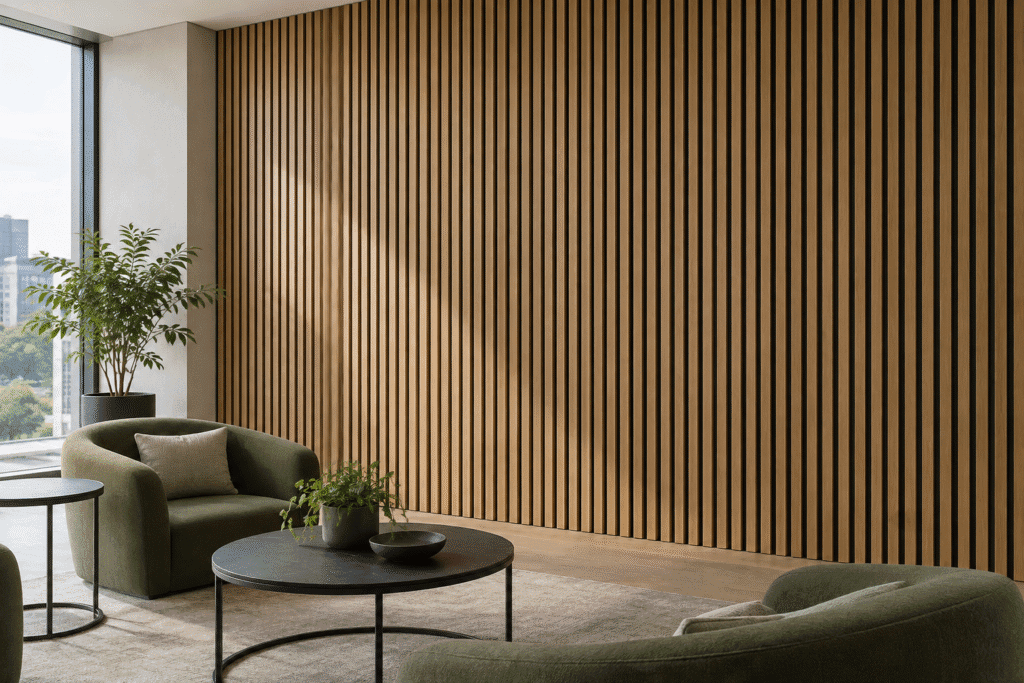
A hotel business lounge may favor the rhythm of wood-look slats, while a corporate meeting suite may favor broad fabric-covered surfaces. However, those preferences describe the design concept, not a complete specification. An importer still needs to know which components the quotation includes and which installation conditions support the supplier’s claims.
This guide compares purchasing questions rather than declaring one finish universally better. Both product descriptions cover multiple constructions. A careful buyer evaluates the actual model instead of transferring assumptions from a similar photograph or another supplier’s product.
Start with the Components Hidden Behind the Finish
Ask the supplier to identify the face material, supporting core or backing, overall depth and edge construction. For slatted products, include slat dimensions, spacing and the material visible between the slats. Additionally, establish whether the proposed installation includes a cavity or supplementary absorbing material behind the supplied panel.
For fabric-faced products, identify the fabric reference, the material beneath it, the frame where applicable and the finished edge detail. Ask whether a proposed fabric substitution changes the documented assembly. A color sample alone cannot confirm that two coverings perform in the same way over the same core.
Next, separate the factory-supplied product from materials that the installer must source. A quotation might include only the visible panel, while a project illustration shows additional backing or support components. Record those differences before comparing the two prices per square meter.
Keep the scope model-specific. Some products arrive as complete modules, while others depend on a coordinated site assembly. The purchase order should identify what the buyer receives, how the project team intends to use it and who supplies every remaining component.
Read Acoustic Evidence as an Assembly Record
Request the complete test report rather than a cropped rating badge. Check the product identification, specimen description, dimensions, mounting and reported results. Moreover, ask the supplier to explain any difference between the tested specimen and the proposed order.
ASTM C423 describes measurement of sound absorption using the reverberation-room method and cautions that practical room conditions differ from laboratory conditions. Consequently, a laboratory coefficient does not constitute a universal prediction for a finished room. See the ASTM C423 method overview.
If a supplier quotes NRC or another single-number summary, also request the frequency-dependent results and the associated test method. Two products with similar summary ratings can still present different information across the reported frequencies. Ask the project’s acoustic professional which data matter to the intended use rather than selecting a panel from a headline number alone.
Also, keep sound absorption separate from room-to-room sound isolation. An absorptive wall finish does not by itself establish privacy through a partition, a door or a shared ceiling route. Do not present an absorption rating as the percentage by which the panel will reduce all noise in the room.
Compare Slatted and Fabric-Faced Options on Equal Terms
| Procurement issue | Slatted option: ask about | Fabric-faced option: ask about | Approval record |
|---|---|---|---|
| Visible construction | Slat material, spacing and backing | Fabric reference, core and frame | Exact product and component list |
| Acoustic evidence | Report for the complete slat and backing arrangement | Report for the stated fabric and underlying construction | Full report and mounting description |
| Perimeter detail | Visible slat ends, returns and infill | Wrapped edges, frames and module junctions | Approved edge sample |
| Cleaning access | Gaps, grooves and exposed backing | Surface-care method and sensitivity of the covering | Written care instructions |
| Replacement | Removal sequence and matching slat finish | Module size and matching fabric reference | Spare-product schedule |
| Commercial scope | Panels plus any separate support or backing | Finished modules plus mounting components | Itemized quotation |
The table identifies questions, not guaranteed differences in performance or cost. For example, a factory can offer different edge constructions within the same visual family. Obtain the actual details instead of treating the table as a substitute for a technical data sheet.
Review Appearance at the Scale of the Finished Wall
Evaluate several adjacent panels under the intended lighting. Slat rhythm, module joints and fabric direction can become more apparent across a complete wall than on a small sample. Likewise, adjacent doors, screens and furniture can interrupt the pattern that looked continuous in a presentation image.
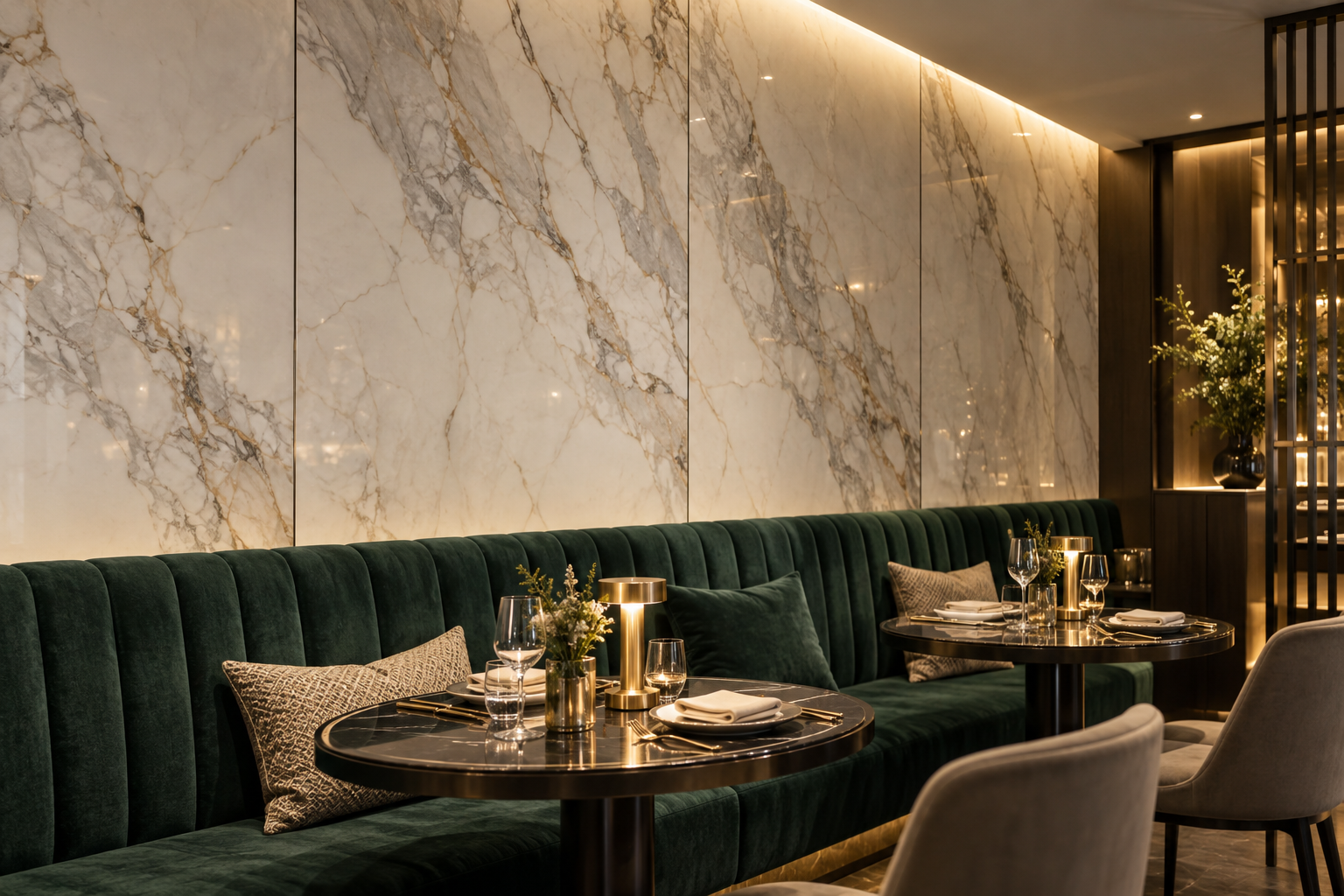
For a hospitality lounge, review the wall from seated positions as well as from the entrance. For a meeting suite, include the position of the display and the surfaces that the furniture will conceal. Keep the arrangement realistic without assuming that a visually balanced wall automatically provides the correct acoustic coverage.
Additionally, ask the design team to approve the visible perimeter and corners. A small change in module size may alter both the joint pattern and the accessory schedule. Link the accepted arrangement to a drawing revision so the factory and contractor price the same wall.
Avoid making approval depend on an uncalibrated screen image. Retain physical finish references and document reasonable viewing conditions. The supplier should explain expected variation, while the buyer and design team agree how to assess the delivered material.
Include Maintenance and Replacement in the Decision
Ask the operator which cleaning methods the maintenance team can support. Then compare those methods with the supplier’s instructions for the exact face, backing and edge materials. However, do not assume that a wipeable-looking surface tolerates every cleaner or repeated wet cleaning.
Review any vulnerable locations near furniture and circulation routes. The designer may prefer a separate protective detail or another finish in a contact zone. A decorative acoustic panel does not automatically provide a tested impact-resistant wall system.
Next, discuss replacement access. Confirm whether the maintenance team can remove one module without disturbing adjacent finishes, and ask what practical spare sizes the project should retain. For fabric-faced panels, keep the fabric reference; for slatted panels, retain the face and backing references together.
Treat future matching as a supply discussion, not an indefinite guarantee. Finishes, fabrics and component options can change. Request reorder identification and availability procedures before the distributor promises a permanent match to its customer.
Build a Comparable Factory Quotation
Send each bidder the same elevation, quantity, required documentation and intended installation arrangement. Moreover, separate the supplied panel price from accessories, backing, mounting components and any project-specific fabrication. This exposes scope differences without forcing unlike systems into a misleading unit-price comparison.
Discuss MOQ, sample timing, production lead time, packaging and container loading once the model and finish reach the shortlist. Identify custom colors and private-label requirements as separate OEM/ODM items. Ask the factory to confirm feasibility rather than assume every sample option has the same commercial conditions.
Buyers should verify fire-rating documents, VOC information and warranty terms for the exact assembly and destination. An acoustic report does not replace those checks. Keep the confirmed product code and supporting documents together throughout purchasing and quality control.
B2B Acoustic Panel FAQ
Are slatted acoustic panels always better than fabric-faced panels?
No. The result depends on the complete products, their documented mounting arrangements and the room requirements. Therefore, compare evidence and operating needs rather than ranking finishes by appearance.
Can two products with the same NRC serve as automatic substitutes?
No. Review frequency data, construction, mounting, dimensions and the project’s approval requirements. A similar summary rating does not establish an interchangeable wall assembly.
Can buyers change the fabric after approving the panel?
Ask the supplier and responsible project professional to review the proposed covering. Additionally, check how the substitution affects the available acoustic and other relevant documents. Do not assume a visual match preserves the original specification.
What should a sample package contain?
Request the finished face, a representative edge or corner and clear construction information. Include the mounting detail and relevant documentation. A flat decorative chip helps select color but does not explain the complete product.
What information helps a distributor obtain a useful bulk quotation?
Provide the application, elevation, approximate volume, selected finish and destination. Also, state whether the order requires complete modules, extra backing, accessories or private-label packaging. Ask the supplier to price those elements separately.
Request an Assembly-Based Acoustic Panel Proposal
Use the Witop Decor acoustic panel range to begin a product discussion. Share your preferred visual direction, room layout and documentation requirements, then request current samples and a model-specific supply proposal.
Finally, compare the options as complete purchasing packages. For importers, contractors and wholesale distributors, a clear assembly record connects the finished decorative effect with verifiable specifications, realistic lead times and a practical basis for repeat business.

James is a content creator and decorator with five years of experience designing home decor. In his daily life, james is constantly on the lookout for the latest, great examples of house design and further optimizes his solutions. Additionally, he writes articles related to outdoor design, interior design, and architectural decorating materials to help brands build more engaging relationships with their audiences.