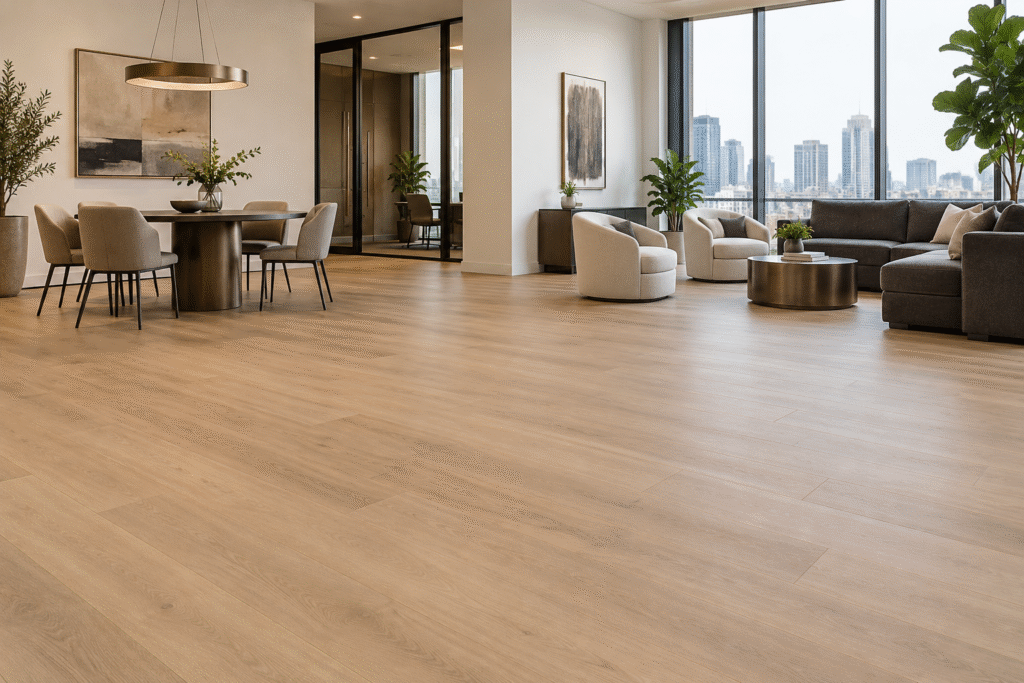
A finished office lounge can look ready for occupation while its maintenance plan still contains an expensive assumption: the cleaning contractor intends to use the machine already in its fleet. For an importer or wholesale distributor supplying SPC flooring, that assumption deserves attention before the building changes hands. The selected finish, equipment and cleaning products need a compatible operating method.
Moreover, equipment approval affects the quotation. A building contractor may price one initial clean while the facilities team expects machine cleaning and staff training. Define these responsibilities during project procurement so the material order and handover plan support the same outcome.
Quick Answer: Can Any Commercial Scrubber Clean SPC Flooring?
Do not assume so. Ask the flooring manufacturer to confirm the proposed machine, brush or pad, cleaning product and operating method for the exact SKU and installation. Then conduct an agreed trial and record the result. A general claim of durability does not approve every cleaning machine, chemical concentration or contact time. Keep polishing, coating and stripping outside routine cleaning approval unless the manufacturer separately permits them.
Approve a Combination, Not Just a Machine Name
First, identify the flooring code, surface texture, factory finish and installation arrangement. Ask the decorative building materials supplier for current care instructions alongside the technical specifications. Then submit the actual equipment model and proposed consumables for review. An equipment brochure that lists “vinyl” among its applications does not establish approval for every SPC product.
For context, Shaw’s resilient maintenance checklist distinguishes cleaning approaches for smooth and textured surfaces and flags exceptions for floating floors. Those instructions concern Shaw products; they do not authorize a method for Witop flooring. The procurement lesson is to match the guidance to the actual finish and installation.
Similarly, retain the pad or brush manufacturer’s product reference. A color description alone leaves room for substitution. Ask whether a change in brush construction, machine settings or detergent requires another review, and assign someone to approve changes before the cleaning team uses them.
Build a Short Equipment Approval Schedule
Use the following schedule in the cleaning subcontract and handover file. Seek product-specific limits rather than filling the blanks with generic operating values.
| Approval item | Information to record | Purchasing decision it supports |
|---|---|---|
| Floor identification | SKU, finish, texture and installation reference | Connects the method to the supplied floor |
| Machine and contact tool | Model, pad or brush code and approved settings | Prevents an undocumented equipment substitution |
| Cleaning chemistry | Product, dilution, permitted contact time and rinsing instructions | Defines consumables and operator training |
| Solution removal | Recovery method, edge treatment and drying procedure | Establishes the full cleaning sequence |
| Site access | Furnished layout, opening hours and restricted areas | Tests whether the equipment suits the actual space |
| Approval evidence | Manufacturer response, trial record and responsible signatories | Establishes what the contractor may use |
In addition, separate equipment access from cleaning compatibility. A machine may reach an open office aisle but miss narrow areas around lounge seating. Include the approved manual method for those areas when calculating labor and consumables.
Run a Documented Trial Before Routine Use
After receiving the relevant guidance, agree a representative trial location and acceptance criteria. Record the starting condition under consistent lighting, including an uncleaned reference area where practical. During sample evaluation, use a suitably sized assembled sample area or an approved site location; a loose color chip cannot demonstrate the complete machine process.
Next, log the actual machine, consumable codes, settings, chemical mixture, contact time and solution removal steps. Check the result after the specified drying period. Ask the responsible team to review remaining soil, residue, changes in sheen and visible surface marking against its agreed criteria. Investigate an unexpected result before expanding the method across the floor.
Also, treat solution recovery as a planned step. Karndean’s commercial cleaning guidance includes dirty-water removal, rinsing and drying in its machine-cleaning procedures. This brand-specific example supports checking the full sequence rather than judging only the scrubbing pass. Obtain the corresponding requirements for the selected SPC floor instead of borrowing another brand’s settings.
Compare Real Working Time and Maintenance Cost
A supplier’s theoretical machine coverage rate does not describe a furnished office. Therefore, compare complete tasks: equipment preparation, dry-soil removal, cleaning passes, solution recovery, edge work, equipment care and reopening. Include access to water, storage and charging where the proposed equipment requires them.
For example, consider a completed oak-look SPC office lounge with meeting tables on one side and upholstered seating on the other. The open central area may permit a different workflow from the furniture perimeter. An approved manual method could remain part of the plan even when the owner selects a machine for the main area.
Then obtain labor estimates for the approved workflow and compare them with the trial record. Include consumable replacement and staff training in maintenance cost. Keep those operating costs separate from installation cost and the initial handover clean, which may involve a different scope. Do not promise savings from equipment speed alone.
Assign Handover Duties and Change Control
The handover record should name who supplies the floor-care instructions, approves the method, performs the initial clean and trains the operating team. Additionally, identify who holds the trial record and answers questions after the contractor leaves. Also, give the facilities manager the exact consumable references instead of a broad instruction to use a suitable cleaner.
Distinguish routine cleaning from polishing, applying a maintenance coating or stripping an existing finish. A request to make a matte wood-look floor shinier changes the proposed treatment. Consequently, obtain separate written guidance before adding that service to the cleaning contract.
For repeat commercial projects, retain an approval register by flooring SKU and equipment combination. However, review it when the product, finish, machine, chemical or site conditions change. A successful trial on one office floor does not establish unlimited approval for future purchases.
Include the Care Plan in the Bulk Inquiry
Explore Witop Decor’s SPC flooring range and request samples with current technical data sheets. Share the commercial room layout, intended finish and proposed cleaning method with the bulk order inquiry. Ask for a project quotation that identifies the supplied material and available care documentation.
Before purchase, buyers should verify test reports, VOC limits, fire-rating documents and warranty terms for the exact SKU and destination. Confirm the required fire rating with the project team rather than inferring it from the product category. Review maintenance-related warranty conditions alongside the equipment approval.
Finally, align MOQ, lead time and container loading with the order schedule. For custom colors or OEM/ODM cooperation, include care-document identification in the approval process. Finish selection and maintenance planning should refer to the same product version throughout the project.
B2B Buyer FAQs
Does a Thick Wear Layer Approve Machine Cleaning?
No. Wear-layer information alone does not approve a cleaning process. Request guidance for the complete floor product, equipment, consumables and operating method.
Can We Specify a Pad by Color Alone?
Use an identifiable product code and manufacturer reference. Then confirm that the flooring guidance covers that item or an explicitly approved equivalent before accepting substitutions.
Should a Machine Replace Every Manual Cleaning Task?
Assess the actual furnished layout and approved procedure. Edges and restricted areas may still require a separate method. Include that work when comparing costs.
Does a Successful Trial Guarantee Long-Term Durability?
No. A trial documents the observed result under stated conditions. Keep the manufacturer’s requirements and ongoing inspection in place; do not turn one clean into a service-life guarantee.
Who Should Receive the Approved Care Record?
Give it to the owner, facilities manager and cleaning contractor. Also retain a copy with the project procurement file so later teams can identify the floor and approved equipment combination.

James is a content creator and decorator with five years of experience designing home decor. In his daily life, james is constantly on the lookout for the latest, great examples of house design and further optimizes his solutions. Additionally, he writes articles related to outdoor design, interior design, and architectural decorating materials to help brands build more engaging relationships with their audiences.