Quick Answer: What Must Buyers Confirm Before Ordering?
Approve the exact SPC flooring construction together with the proposed underfloor heating system and installation assembly. Request written compatibility, thermal resistance information, temperature limits with defined measurement locations, and installation and operating instructions. Also assign responsibility for commissioning and handover records. A general “suitable for heating” statement does not identify every acceptable combination. Therefore, release the bulk order after the relevant suppliers and project reviewers resolve those details.
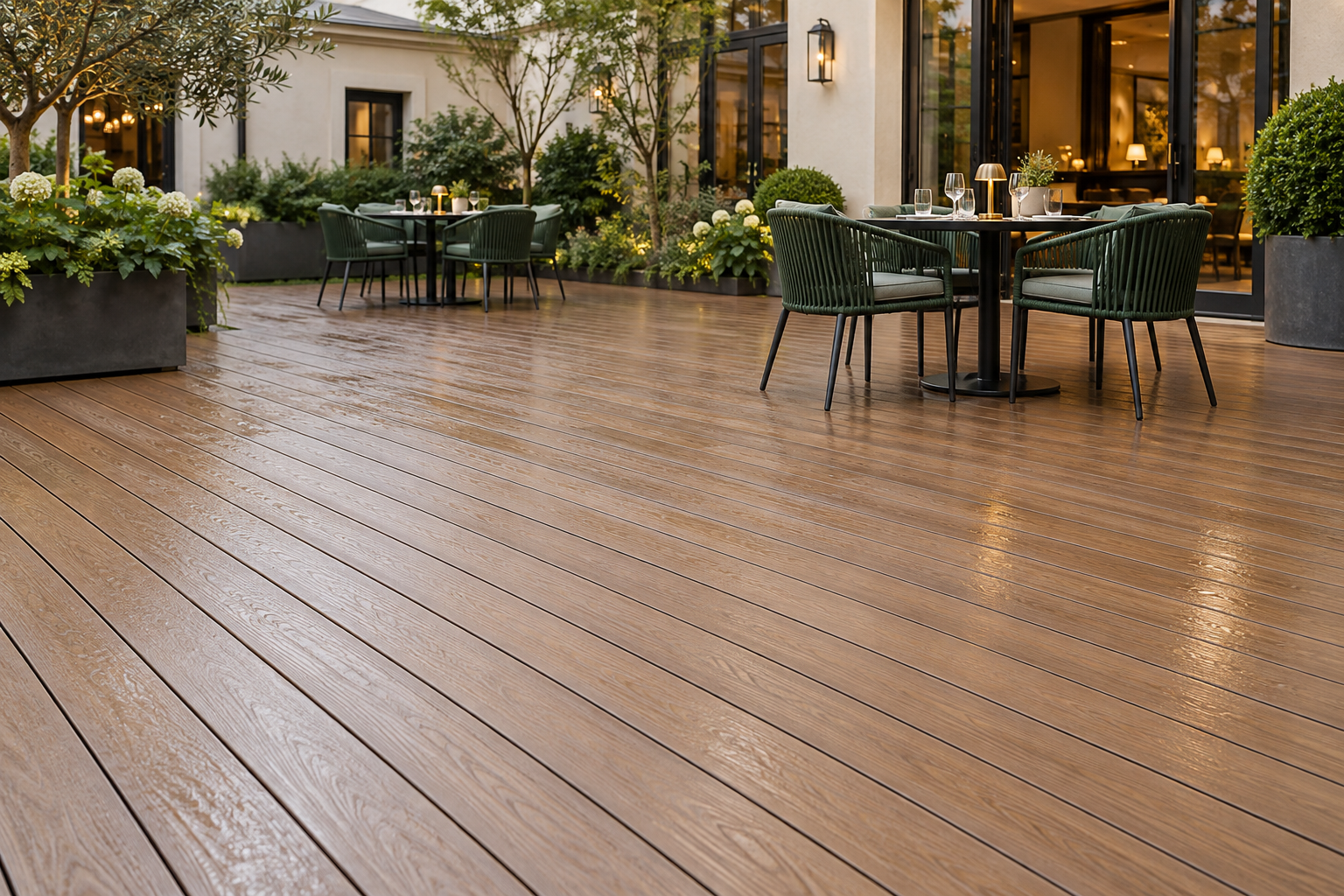
In a hotel suite living room or apartment show unit, buyers see the finished wood-look floor. The heating equipment remains hidden. However, the purchasing decision connects the decorative finish to controls, construction layers and daily operation. An importer needs a documented combination that the building contractor can install and the operator can maintain.
Specify the Flooring and Heating System Together
Start with a named flooring SKU, its complete construction and the proposed installation method. Match those details to the supplier’s technical specifications. Then identify the heating manufacturer, system model and build-up. Distinguish water-based systems from electric systems, and systems embedded in a substrate from dry assemblies. These descriptions help suppliers respond to the actual proposal instead of answering a broad category question.
For example, Quick-Step’s guidance distinguishes heating system types and sets conditions for its own floors and accessories. That illustrates the level of product-specific detail buyers should request. It does not establish compatibility for Witop products or authorize another assembly. See Quick-Step’s floor heating instructions.
Also ask whether the proposed backing, membrane and any separate underlay form part of the approved combination. Record exclusions and unresolved questions in the quotation. A supplier’s approval for one plank construction should not silently carry over to a replacement SKU with different layers.
Create a Compatibility Record with Named Owners
Project procurement should gather the following information in one review record. The suggested owners organize the questions; the project team must agree the actual responsibilities.
| Review dimension | Evidence to request | Suggested coordination owner |
|---|---|---|
| Flooring identity | SKU, construction, backing and installation method | Flooring supplier |
| Heating identity | Named system and proposed assembly | Heating supplier and designer |
| Temperature conditions | Limit, units, measurement location and operating scope | Both suppliers and controls designer |
| Thermal resistance | Included layers, data source and complete build-up review | Flooring supplier and heating designer |
| Site readiness | Substrate records and relevant commissioning requirements | Main contractor and installers |
| Restart and operation | Applicable written sequence and permitted controls | Heating contractor and operator |
| Handover | Approved revisions, test records and operating instructions | Project manager |
Next, mark each item confirmed, pending or outside the offered scope. Record the reviewing party and document revision. This gives a wholesale distributor a practical basis for explaining what its supply includes and which project decisions still need closure.
Name the Temperature Measurement Location
Avoid putting an unexplained maximum temperature into a purchase order. Ask whether the document refers to the finished floor surface, an interface beneath the flooring, room air or another defined location. Also distinguish an operating limit from an installation condition. A room thermostat display does not, by itself, document the temperature at every relevant flooring location.
Karndean’s underfloor heating guide describes limits at specific interfaces and separates instructions by installation format. It also calls for compatibility checks with electrical heating manufacturers. Read those statements as requirements for the named products, not universal SPC rules. See Karndean’s underfloor heating compatibility guide.
Consequently, ask the controls designer to explain how the proposed sensors and settings address the flooring’s documented conditions. Identify who records commissioning results and who can change protected settings. Resolve conflicting descriptions with the relevant suppliers rather than selecting whichever value seems most convenient.
Request Thermal Resistance Data for the Actual Layers
Thermal resistance information should identify the tested or declared construction and the layers it includes. Request the data source, method, units and product revision. Then ask the heating designer to evaluate the complete proposed build-up against the project’s heating requirements and the suppliers’ conditions.
However, do not confuse a plank-only value with a value that already includes attached backing. Counting that backing twice can distort a comparison; omitting a separate layer can do the same. Require a clear layer schedule before comparing quoted options. If the supplier lacks relevant data, keep the item pending rather than estimating performance from the product name.
Likewise, a low resistance value alone does not prove room comfort, energy savings or faster payback. Those outcomes depend on the wider design and operation. Ask for a project assessment before attaching an efficiency claim to the flooring offer.
Put Site Readiness and Startup into the Delivery Plan
The material delivery date does not prove that a heated substrate is ready for flooring. Request the applicable substrate acceptance, moisture assessment and heating commissioning records. Also identify any installation shutdown, temperature stabilization or restart requirements in the selected products’ instructions. The responsible contractors should agree the sequence and record its completion.
Avoid copying a startup schedule from another flooring brand or installation format. Where instructions conflict, obtain a coordinated response before work proceeds. Meanwhile, connect the approved sequence to the room handover programme. This helps the buyer estimate installation cost and access needs without promising that an earlier container arrival automatically produces an earlier opening date.
Give the Operator a Usable Handover Pack
Include the approved flooring and heating references, final layer schedule, relevant installation records and operating instructions. Also identify the control zones, permitted adjustments and contact route for questions. The facilities team should receive practical instructions for restarting the system after planned shutdowns, based on the approved product guidance.
For a hotel suite, discuss who controls guest adjustments and how staff handle a complaint. For an apartment show unit, ensure that the eventual resident information matches the installed specification. Additionally, ask whether future rugs, furniture changes or replacement finishes require review under the manufacturers’ operating instructions.
Keep appearance approval separate from technical acceptance. Sample evaluation can establish oak tone, texture and plank layout, while documents address compatibility and durability evidence. A photograph of a finished floor shows its appearance; it does not establish the hidden heating system’s compatibility or performance.
Compare Commercial Scope and Long-Term Cost
Ask each decorative building materials supplier to quote the same approved construction. Confirm MOQ, lead time, packing identification and container loading quantities. For OEM/ODM cooperation or custom colors, identify which changes need another compatibility review before production release.
Also compare maintenance cost assumptions, replacement access and document availability alongside material price. Clear records can support fault investigation when several trades share responsibility. However, they do not replace warranty review: buyers should verify test reports, VOC limits, fire-rating documents and warranty terms for the exact product and destination. A fire rating or emissions report answers a different question from heating compatibility.
B2B Buyer FAQs
Is every SPC flooring product suitable for underfloor heating?
No. Obtain written confirmation for the exact flooring and heating combination. Also review the installation assembly, operating conditions and intended commercial application before ordering.
Can we use one temperature limit across all projects?
Do not assume so. Product documents may define different conditions or measurement locations. Record the applicable requirements for each approved combination and resolve ambiguities with its suppliers.
Does attached backing remove the need for thermal data?
No. Confirm whether the declared value includes that backing and whether additional layers form part of the proposal. Then submit the complete build-up for the heating designer’s review.
Does an approved heating application include floor cooling?
Not automatically. Cooling introduces separate control and moisture considerations. Request explicit confirmation for that use rather than extending a heating approval without review.
What should a distributor keep for later reorders?
Retain the approved SKU, construction revision, heating combination and supporting documents. Also require review when a replacement product or accessory changes the original assembly.
Request a Project-Specific SPC Flooring Quotation
Send Witopdecor the project location, heating system details, proposed floor build-up and required quantities. Request samples, technical data sheets and a bulk order inquiry response tied to the named construction. Include your delivery programme and documentation requirements so the project quotation can address compatibility review, supply planning and handover together.

James is a content creator and decorator with five years of experience designing home decor. In his daily life, james is constantly on the lookout for the latest, great examples of house design and further optimizes his solutions. Additionally, he writes articles related to outdoor design, interior design, and architectural decorating materials to help brands build more engaging relationships with their audiences.