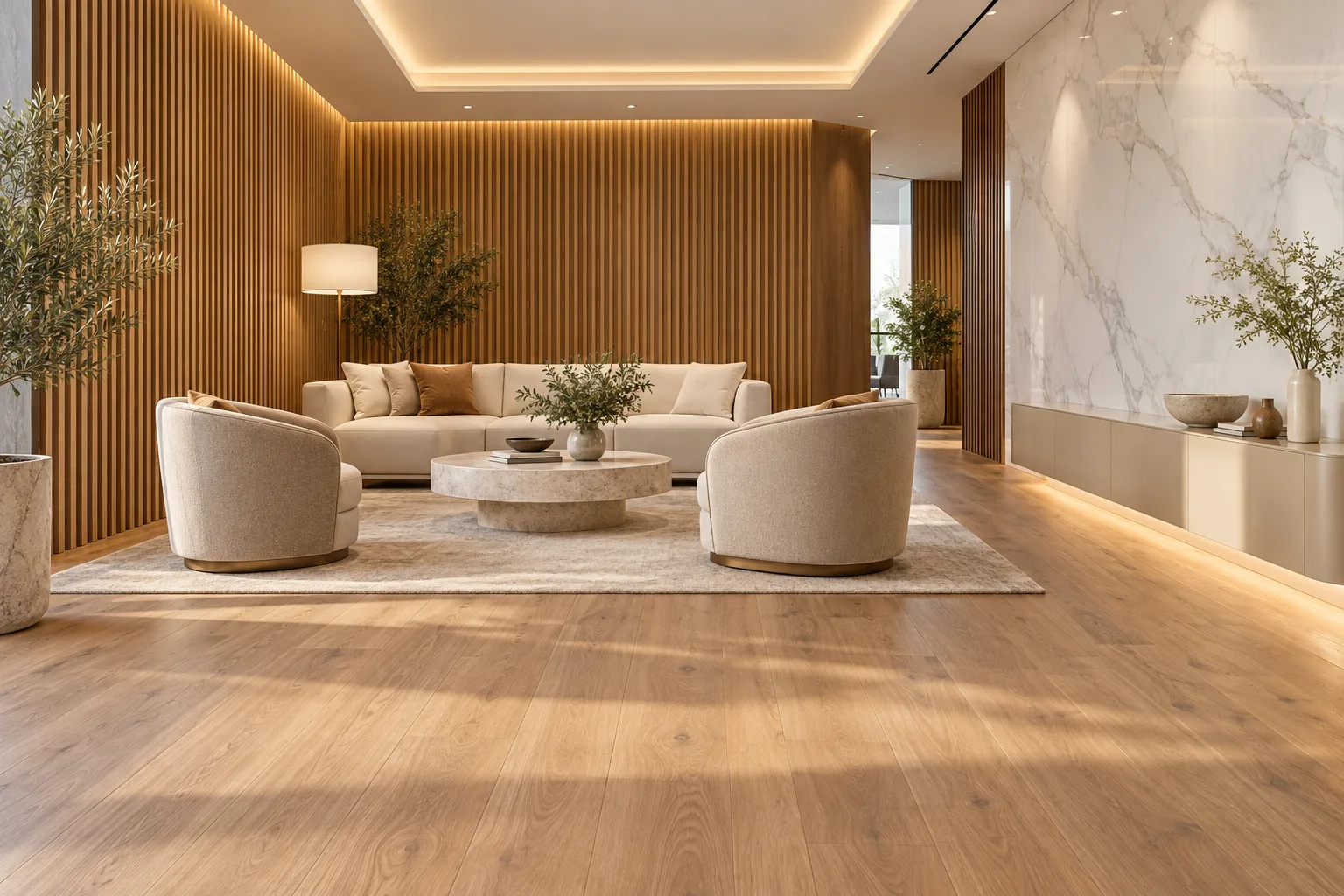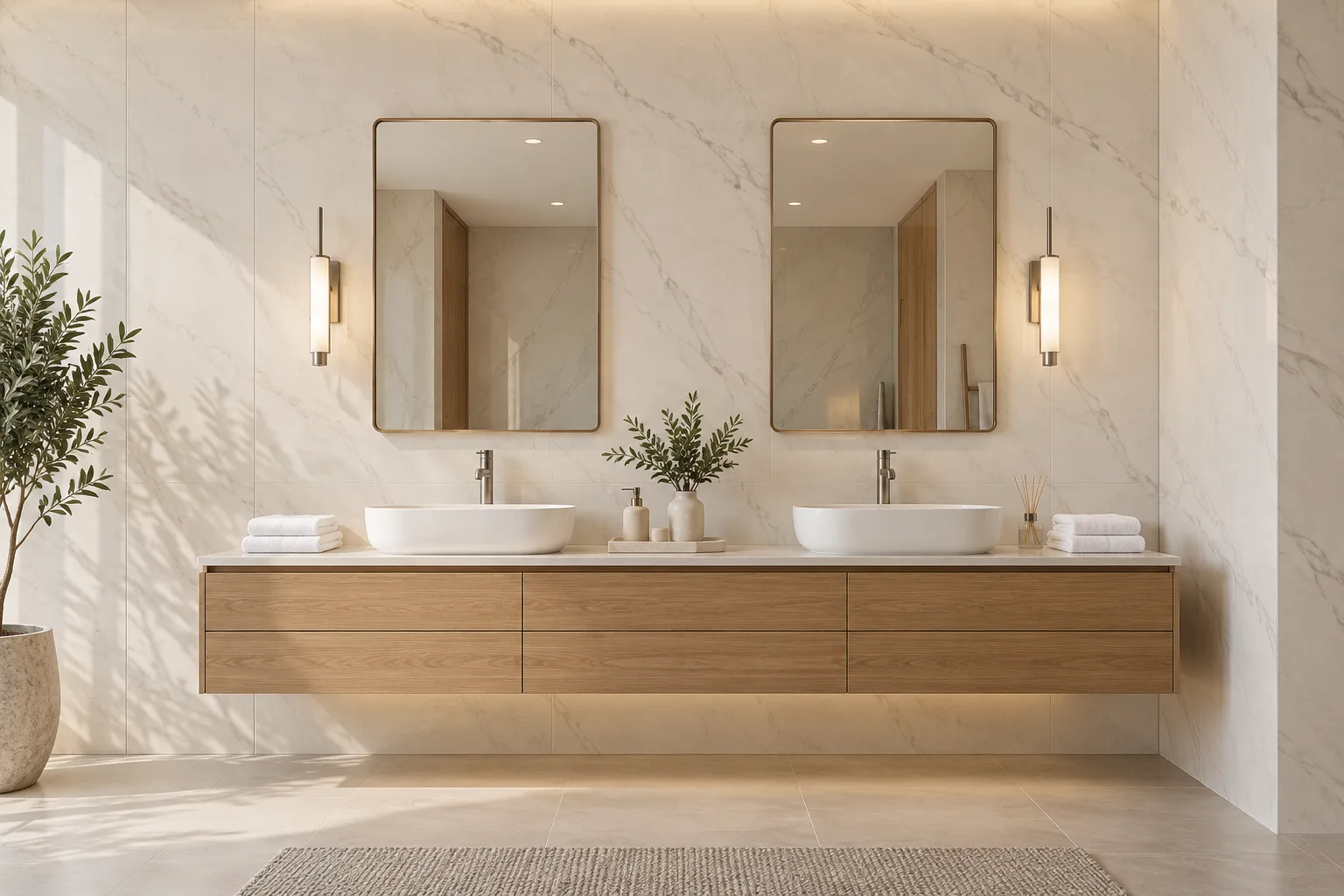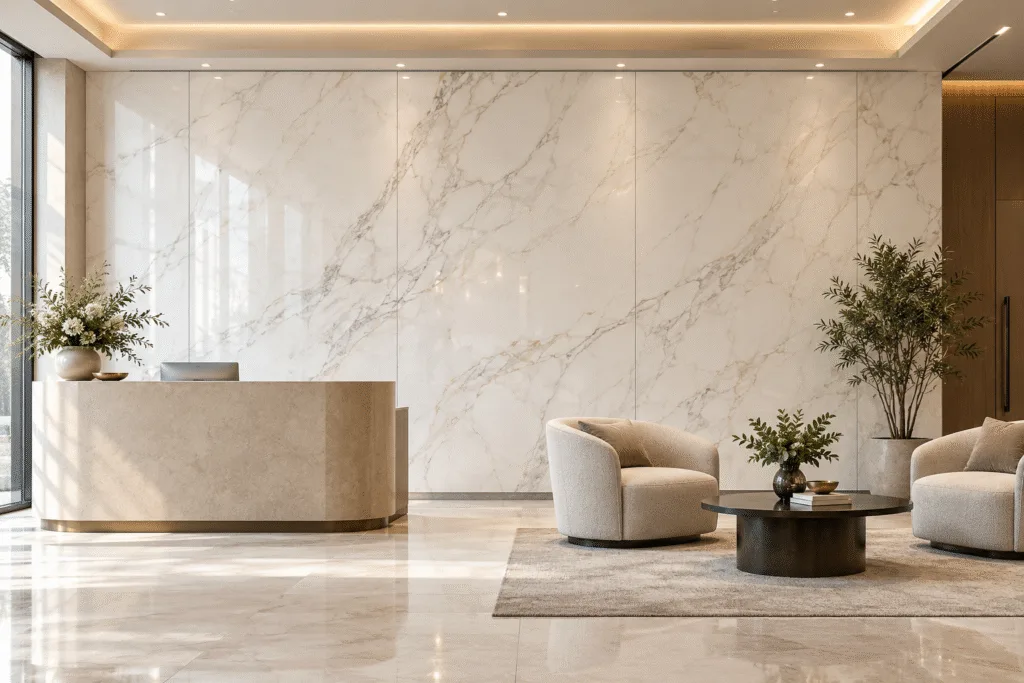
A boutique reception area needs a new marble-look feature wall, but its existing ceramic tiles still cover the background. Overlaying them sounds attractive because the contractor could avoid some demolition. However, a smooth tile face cannot tell an importer whether the old installation can support another finish. The purchasing decision needs evidence about the complete wall, not simply the appearance of the proposed sheets.
For a wholesale distributor, this distinction also protects the quotation. If the building contractor discovers loose tiles after material delivery, an assumed installation shortcut can become extra work and a disputed invoice. Therefore, decide overlay eligibility before promising a renovation schedule or comparing installation cost.
Quick Answer: Can UV Marble Sheets Cover Existing Tiles?
Consider overlay only when the project team confirms a stable existing wall, resolves moisture concerns, accepts the surface preparation and verifies compatibility among the sheet backing, adhesive, tile surface and underlying assembly. Require written instructions and representative site checks. Otherwise, investigate repairs, removal or another approved support arrangement. Do not treat an adhesive’s ability to bond to ceramic as approval for the entire proposed wall.
Establish the Existing Wall’s Condition First
Start with a survey that records different wall zones, previous repairs and the tile installation history where available. Ask the contractor to identify loose tiles, cracking, contaminated surfaces, uneven areas and signs of moisture. Then appoint the responsible specialist to investigate uncertain conditions and define any additional checks. A visual walk-through alone should not release the purchase order for an unverified overlay.
In addition, distinguish a localized defect from evidence of a wider problem. Removing one loose tile may reveal a weak background that extends beyond that opening. Conversely, a repair plan may address an isolated area without requiring complete demolition. Let the investigation determine the scope instead of selecting the smallest provisional allowance to win the bid.
For example, Sika’s tile adhesive documentation requires sound existing ceramic surfaces and appropriate cleaning before its specified use. This illustrates the need to assess retained layers; it does not approve that adhesive for Witop UV sheets. Review the relevant Sika substrate preparation example, then obtain instructions for your actual materials.
Use an Evidence Gate Before Comparing Prices
Create a decision record that separates an acceptable condition from an unanswered question. The following dimensions support project procurement; they do not replace a site-specific design or manufacturer’s requirements.
| Decision dimension | Evidence needed before overlay | Hold point or alternative to investigate |
|---|---|---|
| Existing tile attachment | Survey and checks appropriate to the actual wall | Loose tiles, uncertain attachment or a weak underlying layer |
| Moisture condition | Cause assessment and acceptance for the proposed system | Active moisture concerns or an unresolved source |
| Surface preparation | Approved cleaning and preparation procedure with site confirmation | Contamination or coatings that the proposed procedure cannot address |
| Material compatibility | Written guidance covering tile, adhesive and sheet backing | Approval for only one interface or unidentified materials |
| Wall geometry | Survey against the selected system’s requirements | Unevenness beyond the approved preparation scope |
| Commercial interfaces | Agreed details at edges, fixtures and adjacent finishes | Unpriced changes or unclear trade responsibility |
Next, assign each outstanding item an owner and a release condition. A pending technical response should remain pending in the quotation. It should not quietly become a statement that the wall qualifies for overlay.
Also, record the limits of the survey. If some areas remain inaccessible, identify them on the wall schedule and agree how the team will assess them. This makes a later scope adjustment traceable to an identified uncertainty rather than an unexplained variation.
Where the survey identifies different wall conditions, divide the quotation into corresponding zones. For example, the entrance wall and a former display recess may need different preparation. However, keep the finished panel layout and interfaces coordinated across those zones. Require a written release for each area before the contractor conceals the existing surface.
Verify Both Adhesion Interfaces and the Retained Layers
Ask the decorative building materials supplier to identify the exact sheet construction, backing and approved fixing options. Then ask the proposed adhesive supplier to assess that backing together with the existing glazed surface, preparation method and expected room conditions. The term “UV marble” describes a product category, so it cannot establish compatibility across every SKU.
Furthermore, request a representative trial with an agreed evaluation method and acceptance criteria. Record the surface preparation, products, application conditions and assessment timing. The project team should determine what the trial can demonstrate and whether additional checks remain necessary. A successful small patch does not, by itself, validate every retained tile or reveal every hidden defect.
Keep open time, curing requirements and room handover separate in the schedule. Ask for the relevant instructions for the proposed assembly, particularly where both surfaces limit absorption. Do not assume a generic overnight wait. Also confirm any temporary support and restrictions on moving fixtures or cleaning the finished wall during the specified period.
Compare Two Complete Renovation Scopes
Price the overlay route with investigation, localized repairs, cleaning, preparation, approved fixing materials, labor, curing allowances and finished interfaces. Separately, price removal with protection, demolition, waste handling, background repair, preparation and the new finish installation. This comparison reveals the cost of each approved route without assuming that avoiding demolition always saves money.
For both routes, include opening hours, access restrictions and protection for a furnished reception lounge or boutique client area. A contractor may work in short evening shifts while the business operates during the day. Consequently, repeated setup and return visits can affect the result even when the panel quantity stays the same.
Check the resulting wall depth at doors, sockets, skirting and fixed furniture, but treat those dimensions as scope consequences rather than the sole decision criterion. Next, identify which trade handles each adjustment. Include later access and repair assumptions when estimating maintenance cost. A low initial quote offers limited value when nobody accepts responsibility for a concealed background failure.
Release the Order With Clear Responsibilities
Use sample evaluation to approve the selected marble pattern, sheen and visible joint treatment in the intended reception lighting. Witop Decor’s UV marble sheet range provides a starting point for finish selection. However, appearance approval does not establish overlay suitability, durability or a fire rating for the proposed assembly.
Buyers should verify test reports, applicable VOC limits, fire-rating documents and warranty terms for the exact materials and destination. Ask whether retaining the old finish changes the evidence the project team needs. Record who approves the existing wall and who handles a claim involving more than one supplier’s material.
Finally, align MOQ, lead time and container loading with the quantities that the approved wall schedule actually requires. For custom colors or OEM/ODM cooperation, confirm the sample approval and identification process before production. Send Witopdecor a bulk order inquiry with wall plans, substrate findings and destination details. Request samples, technical data sheets and a project quotation that clearly states material scope and unresolved site conditions.
B2B Buyer FAQs
Do Solid-Looking Tiles Automatically Qualify for Overlay?
No. The visible face does not establish the condition of the retained layers. Therefore, ask the responsible contractor or specialist to assess attachment, background condition and relevant site risks before recommending a route.
Can a Universal Construction Adhesive Settle the Decision?
An adhesive label cannot approve the whole assembly. Obtain guidance for the exact tile surface, preparation products and sheet backing. In addition, confirm application and curing conditions rather than assuming that all panel products behave alike.
Should Buyers Remove Every Existing Tile?
Let the survey and approved system determine the answer. Some projects may support a defined overlay route; others require repairs or removal. Compare the complete scopes only after the team establishes their technical eligibility.
Who Pays if Hidden Problems Appear During Preparation?
Agree a variation process before work starts. Identify survey limitations, evidence requirements, authorization responsibility and the affected cost categories. Then assess the finding against that record instead of relying on an informal promise about the wall.
What Documents Should Accompany a Distributor’s Quotation?
Include product identification, available technical data, sample references and the stated supply scope. Also attach the site assumptions and approval responsibilities. This helps the contractor distinguish a material offer from confirmation that a particular wall supports overlay.

James is a content creator and decorator with five years of experience designing home decor. In his daily life, james is constantly on the lookout for the latest, great examples of house design and further optimizes his solutions. Additionally, he writes articles related to outdoor design, interior design, and architectural decorating materials to help brands build more engaging relationships with their audiences.