Direct Answer: Why Do B2B Buyers Source Acoustic Panels?
Acoustic panels help importers, wholesalers, contractors, and project buyers solve sound comfort problems in offices, hotels, schools, restaurants, meeting rooms, studios, and public interiors. Moreover, they give building material distributors a higher-value product category because customers increasingly care about noise control, interior design, and project performance.
However, buyers should not choose acoustic panels only by color or surface style. Instead, they should compare NRC performance, core material, thickness, density, surface finish, fire-related documents, VOC-related information, installation method, packing quality, MOQ, lead time, and supplier support before placing bulk orders.
What Are Acoustic Panels in B2B Decorative Building Materials?
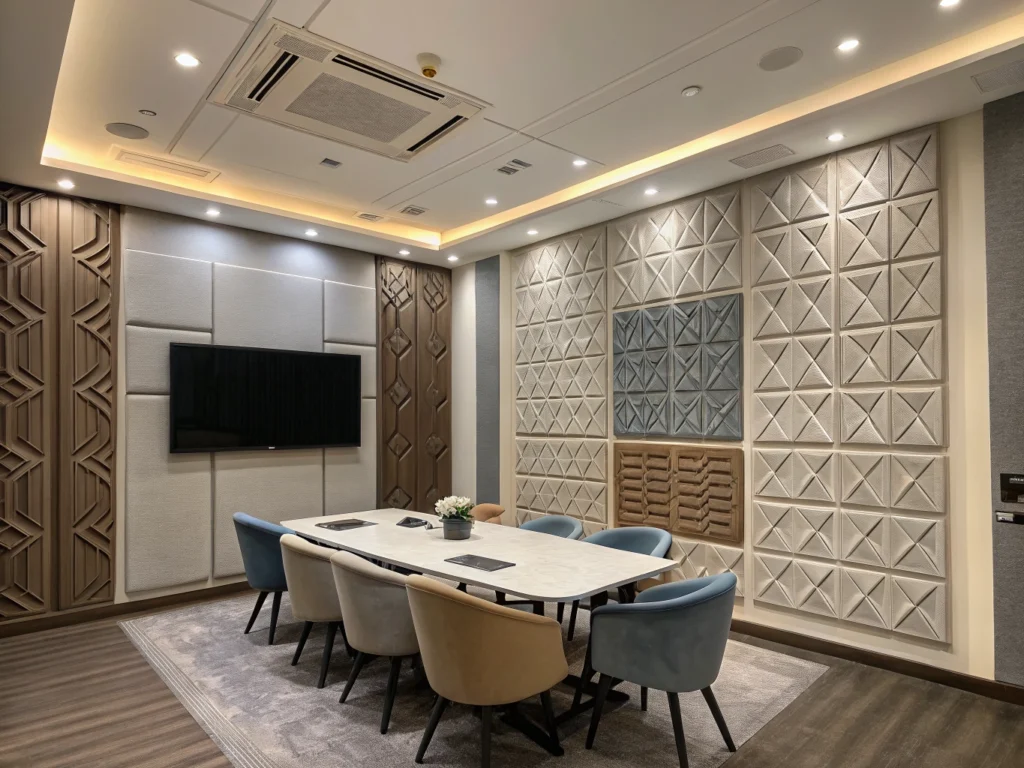
Acoustic panels improve interior sound environments by helping reduce echo, reverberation, and noise reflection. In B2B decoration projects, contractors and designers often use them in office meeting rooms, hotel corridors, school classrooms, commercial lobbies, restaurants, training rooms, home theater projects, recording spaces, and open-plan work areas.
Additionally, acoustic panels no longer serve only technical sound-control projects. Many buyers now treat them as decorative wall and ceiling materials. Therefore, importers and distributors can sell acoustic panels as both functional and visual products. This dual value makes the category attractive for wholesale channels, project contractors, and interior design supply chains.
Witopdecor supports overseas B2B buyers with decorative building materials, including wall panels, UV marble sheets, bamboo charcoal panels, acoustic panels, SPC flooring, and related interior products. Consequently, importers can build a more complete wall, floor, and interior surface product portfolio for their local markets.
Search Intent: What B2B Buyers Really Want to Know
When a buyer searches for “acoustic panel supplier,” the search intent usually goes deeper than finding a low price. First, importers want to know whether the product can support stable wholesale distribution. Additionally, contractors want to know whether the panels can help them meet project acoustic goals without making installation too complex. Moreover, architects and project buyers want to know whether the panels can match design requirements while supporting document review.
Therefore, strong acoustic panel content should answer both performance and procurement questions. Buyers want to compare NRC values, material structure, panel thickness, fabric or wood slat surfaces, color options, fire rating documents, VOC information, packing methods, lead time, MOQ, and container loading quantity. Furthermore, they want to know whether the supplier can support sample evaluation, technical data sheets, OEM/ODM packaging, and repeat orders.
Acoustic Panels vs. Ordinary Wall Panels and Soft Furnishings
B2B buyers often compare acoustic panels with standard decorative wall panels, fabric wallpaper, carpets, curtains, and traditional ceiling materials. However, each option solves a different project problem.
| Material Option | Main B2B Advantage | Main Procurement Concern | Best-Fit Scenario |
|---|---|---|---|
| Acoustic Panels | Improve sound comfort and add decorative value | Buyers should verify NRC, material, thickness, fire documents, and installation method | Offices, hotels, schools, meeting rooms, studios, restaurants |
| WPC Wall Panels | Strong decorative profile and modern wall design | Sound absorption may vary by structure and backing | Feature walls, corridors, ceilings, commercial interiors |
| Fabric Wallpaper | Soft visual effect and lower material complexity | Limited acoustic performance and durability concerns | Decorative walls with light sound requirements |
| Curtains and Carpets | Add softness and reduce some sound reflection | Harder to standardize for walls and commercial interiors | Hospitality spaces and mixed interior solutions |
| Mineral Ceiling Panels | Familiar acoustic ceiling solution | Less design flexibility for wall decoration | Offices, schools, commercial ceilings |
As a result, acoustic panels work best when the project needs both interior design value and sound improvement. In contrast, ordinary decorative panels may fit projects that prioritize appearance but do not require measurable acoustic performance.
Key Technical Specifications B2B Buyers Should Compare
Acoustic panels can look similar in catalog photos, yet their performance and commercial value may differ significantly. Therefore, buyers should request clear specifications and physical samples before confirming a bulk order.
1. NRC and Acoustic Performance
NRC, or Noise Reduction Coefficient, helps buyers understand how much sound a material may absorb under test conditions. However, buyers should treat NRC as one part of the decision, not the entire decision. Panel thickness, air gap, wall condition, installation method, room size, and surface area all influence the final acoustic result.
Therefore, B2B buyers should ask for available acoustic test data, recommended applications, and installation suggestions. Additionally, contractors should evaluate whether the project needs general echo reduction or a more specific acoustic design plan.
2. Core Material and Thickness
Common acoustic panel structures may include polyester fiber, PET felt, fabric-wrapped cores, wood slat acoustic panels, or composite structures. Each structure affects weight, cutting behavior, durability, acoustic performance, and price. Moreover, thickness influences both sound absorption and visual impact.
For example, a thicker PET acoustic panel may support stronger sound absorption in some applications, while a wood slat acoustic panel may add a premium decorative effect. Consequently, importers should match panel structure to customer demand, not only to the lowest quotation.
3. Surface Finish and Design Range
Surface finish matters because many acoustic projects involve visible walls or ceilings. Buyers may need fabric colors, PET felt colors, wood veneer effects, grooved surfaces, or custom patterns. Additionally, designers often need consistent color tones across rooms, corridors, and project phases.
Therefore, distributors should select a focused range of high-demand colors first. Neutral grey, black, beige, natural wood, walnut, oak, and warm modern tones often work well for B2B channels. However, market preferences differ, so buyers should test sample boards with local dealers, designers, and contractors.
4. Fire-Related and VOC-Related Documents
Commercial projects often require document review. Therefore, buyers should ask suppliers for available fire-related documents, VOC-related information, product specifications, and warranty terms. Moreover, importers should confirm local regulations before promoting panels for offices, hotels, schools, or public spaces.
However, buyers should avoid broad claims that lack document support. Instead, they should use careful wording such as “buyers should verify test reports according to local project requirements.” This approach protects both the importer and the final project team.
5. Installation Method and Accessories
Installation affects performance, labor cost, and project risk. Some acoustic panels attach directly to walls, while other systems may use battens, clips, adhesive, frames, or ceiling suspension methods. Additionally, cutting tools, edge treatment, spacing, and backing conditions can influence the finished result.
Consequently, contractors should ask for installation guidance before starting a project. Importers should also prepare basic technical support materials for local dealers because clear guidance reduces claims and improves customer confidence.
ROI: Why Acoustic Panels Can Improve B2B Channel Value
Acoustic panels often carry a stronger value story than basic decorative panels because they solve a functional problem. Moreover, customers can understand the need quickly: noisy rooms reduce comfort, productivity, privacy, and user experience. Therefore, distributors can position acoustic panels as a performance-driven decorative material rather than a simple surface product.
However, ROI still depends on smart procurement. Buyers should calculate total cost, including product price, freight, customs, warehouse handling, sample displays, installation accessories, dealer margin, damage rate, and reorder potential. Additionally, they should consider whether the product supports repeat demand from offices, schools, hotels, restaurants, and commercial fit-out contractors.
For contractors, acoustic panels may reduce project complaints when the correct product and installation method match the acoustic need. Furthermore, panels with strong design appeal can help contractors offer upgraded project packages. As a result, acoustic panels can support both margin and differentiation in competitive building material markets.
B2B Procurement Pain Points and Practical Solutions
Acoustic panel sourcing often creates several common problems. First, some suppliers show attractive samples but cannot provide clear acoustic data or document support. Second, buyers may choose panels based only on appearance and later discover that the product does not match project requirements. Third, weak packing can damage panel corners, fabric surfaces, or wood slats during long-distance shipping. Additionally, unclear installation guidance can create inconsistent results across job sites.
Therefore, buyers should build a structured sourcing process. They can request samples, compare NRC or acoustic data where available, review material structure, check fire-related and VOC-related documents, confirm packing details, discuss container loading, and ask for pre-shipment photos. Moreover, buyers should keep approved samples for repeat order comparison.
This process protects profit. It also helps importers build trust with architects, contractors, dealers, and project owners.
How Importers Can Build a Strong Acoustic Panel Product Line
A strong acoustic panel program starts with clear customer segmentation. For example, importers selling to office contractors may need neutral colors, fast installation systems, and reliable document support. Meanwhile, distributors selling to interior designers may need richer surface textures, sample books, and project photos. Additionally, wholesalers serving schools or public buildings may need stronger focus on fire-related documentation and durable surfaces.
Next, buyers should avoid too many SKUs at the beginning. Instead, they can start with a focused selection of PET felt panels, wood slat acoustic panels, and several fabric or neutral color options. This structure gives dealers enough variety while reducing inventory pressure.
Furthermore, OEM/ODM cooperation can help distributors strengthen their brand. Buyers may request private label cartons, custom sample books, exclusive colors, project packaging, or market-specific product names. However, they should confirm MOQ, artwork requirements, lead time, packaging cost, and reorder policy before launching customized programs.
Supplier Selection Checklist for Acoustic Panel Buyers
Before placing a bulk acoustic panel order, B2B buyers should review these points:
- Target customer type: importer, wholesaler, distributor, contractor, architect, or project buyer
- Main application: office, hotel, school, restaurant, studio, meeting room, lobby, or commercial renovation
- Panel structure: PET felt, fabric-wrapped panel, wood slat acoustic panel, or composite system
- NRC or acoustic data where available, plus recommended use conditions
- Size, thickness, density, weight, color range, and surface finish
- Fire-related documents, VOC-related information, product specifications, and warranty terms
- Installation method, accessories, trims, battens, clips, adhesive, or ceiling system needs
- MOQ, lead time, production schedule, payment terms, and repeat order support
- Packing method, carton strength, pallet option, surface protection, and container loading quantity
- OEM/ODM needs, private label packaging, sample books, and distributor support
- Inspection plan, pre-shipment photos, and claim communication process
Additionally, buyers should evaluate supplier communication quality. A reliable factory partner should explain specification differences clearly, support sample testing, and help buyers reduce project risk.
FAQ: Acoustic Panels for B2B Buyers
1. Are acoustic panels suitable for wholesale distribution?
Yes, acoustic panels can suit wholesale distribution because they combine functional sound control with decorative interior value. However, distributors should select stable product structures, prepare clear samples, and explain performance limits honestly to local dealers and contractors.
2. What should importers check before buying acoustic panels in bulk?
Importers should check acoustic data where available, panel material, thickness, density, surface finish, fire-related documents, VOC-related information, MOQ, lead time, packing strength, and container loading quantity. Additionally, they should compare approved samples with bulk production before shipment.
3. Do acoustic panels always solve noise problems?
No. Acoustic panels can help reduce echo and reverberation, but they do not solve every sound problem. Therefore, buyers should distinguish between sound absorption, sound insulation, and overall acoustic design before promising project results.
4. Can acoustic panels support OEM or private label orders?
Yes, many B2B acoustic panel programs can support OEM or private label cooperation. Buyers should discuss carton design, logo use, sample books, exclusive colors, product names, MOQ, artwork approval, and reorder terms with the factory.
5. What documents should buyers request for commercial projects?
Buyers should request product specifications, available acoustic data, fire-related documents, VOC-related information, installation guidance, and warranty terms. However, they should verify local project requirements because different countries and project types may apply different rules.
Conclusion: Source Acoustic Panels With Performance and Profit in Mind
Acoustic panels can help importers, wholesalers, distributors, contractors, and project buyers build a more valuable decorative building material category. However, successful sourcing requires more than choosing attractive colors. Buyers should compare acoustic performance, material structure, surface finish, fire-related documents, VOC-related information, installation methods, packing strength, and repeat supply capability.
Therefore, the right supplier relationship can improve both project outcomes and channel profit. If you want to compare acoustic panel specifications, request sample kits, discuss container loading, prepare private label packaging, or build a wholesale acoustic product line, contact Witopdecor for B2B sourcing support and project-based quotation.

James is a content creator and decorator with five years of experience designing home decor. In his daily life, james is constantly on the lookout for the latest, great examples of house design and further optimizes his solutions. Additionally, he writes articles related to outdoor design, interior design, and architectural decorating materials to help brands build more engaging relationships with their audiences.