Quick Answer: Can Bamboo Charcoal Panels Suit a Bright Interior?
Evaluate the exact decorative finish against the room’s light and temperature conditions before approving bamboo charcoal panels near glazing. The product-family name alone does not establish colorfastness. Ask for finish-specific exposure results, the test conditions and the supplier’s intended-use statement. Furthermore, agree how the project will assess visible color change and manage replacements. Do not convert a laboratory exposure duration into a guaranteed number of service years.
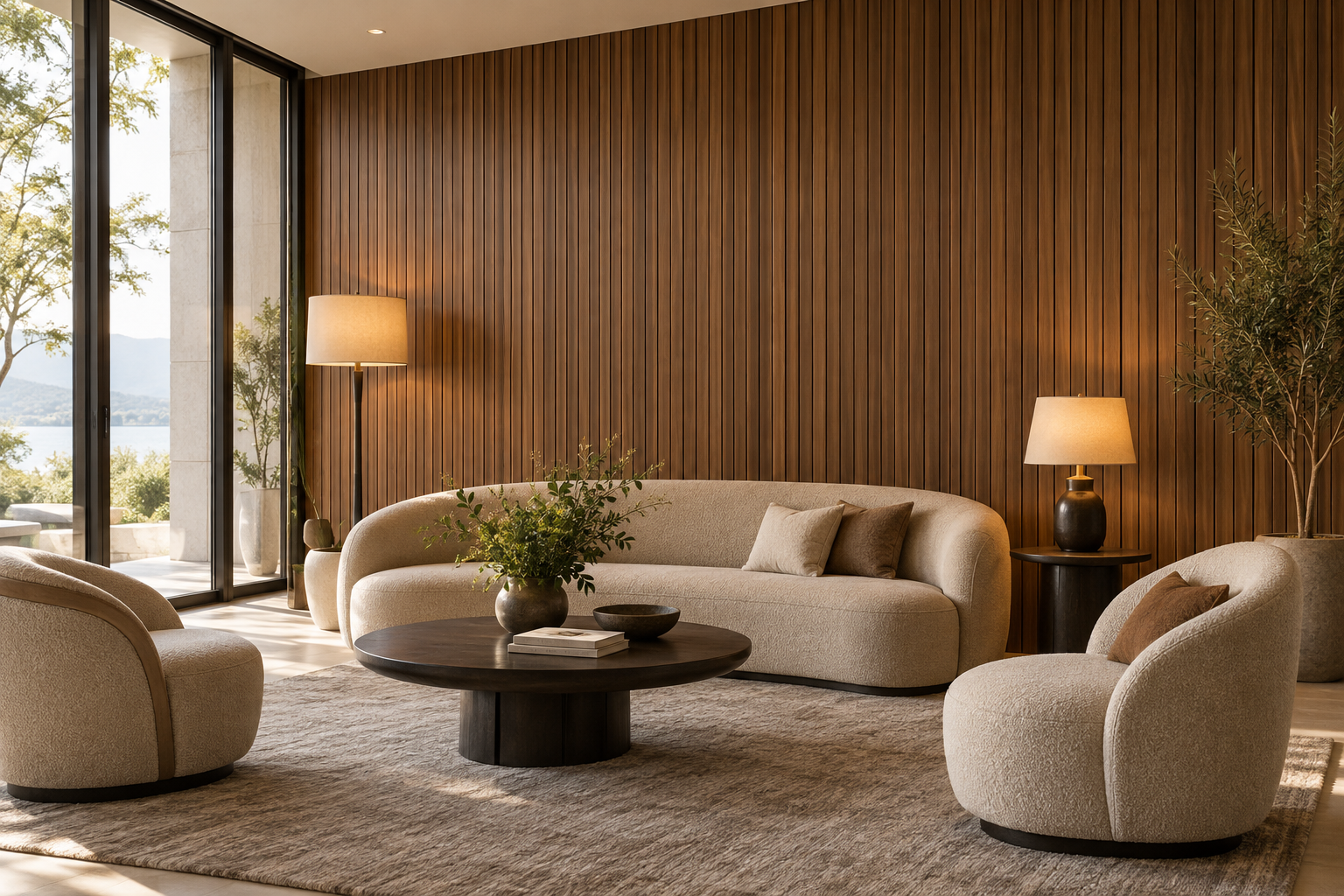
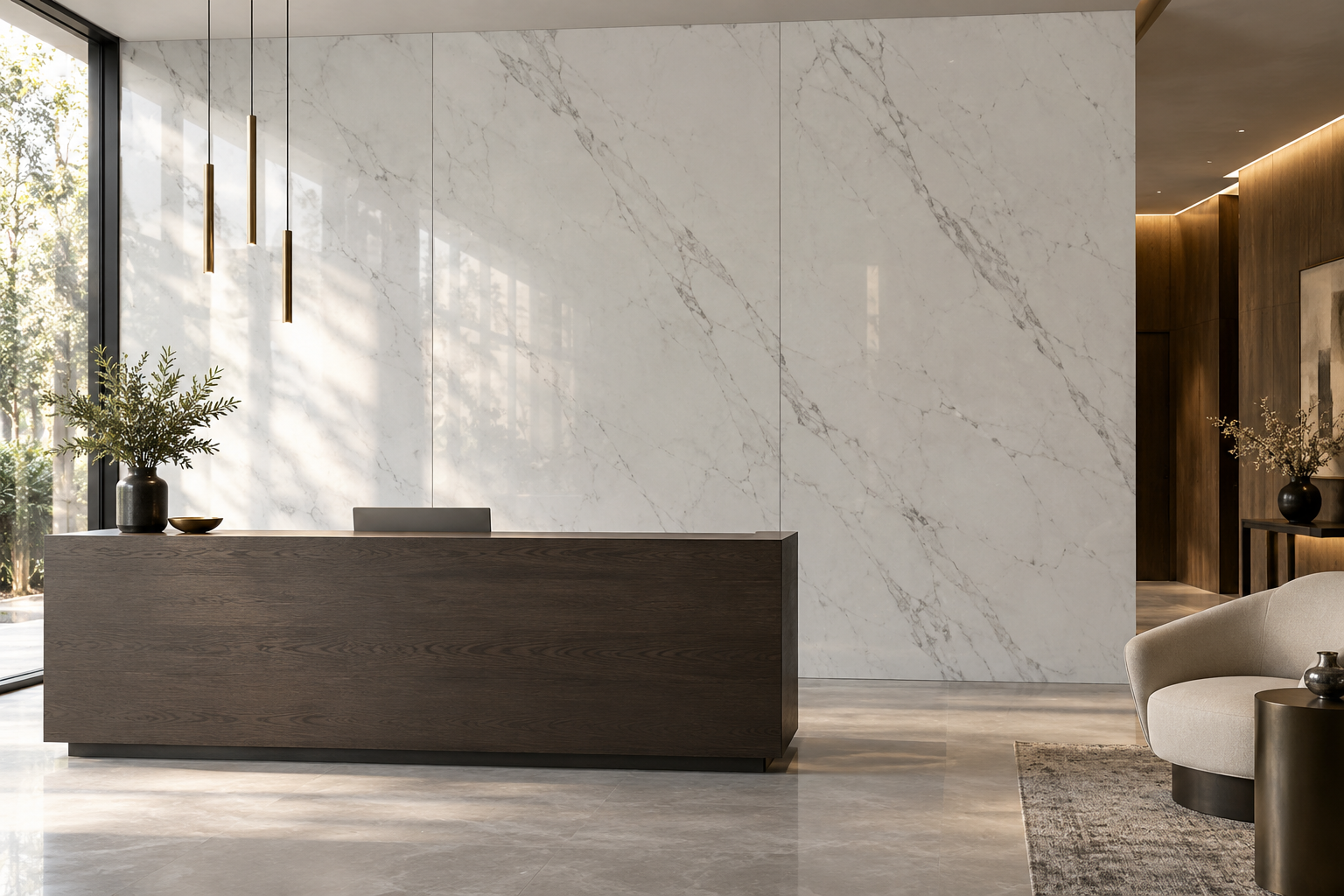
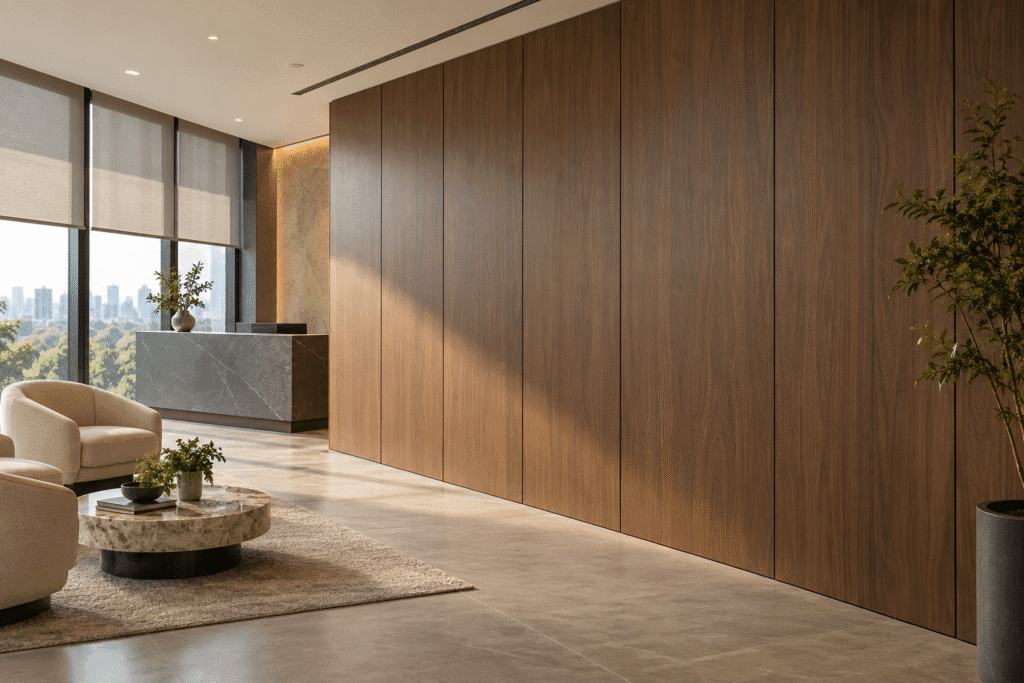
Consider a furnished office reception with a broad walnut-look panel wall beside full-height windows. A second design uses pale wood-look panels in a hotel reading lounge with adjustable shades. Both concepts emphasize a finished decorative surface. However, an attractive rendering cannot confirm how either finish will age. Project procurement needs evidence that addresses the actual selected surface and planned exposure.
Identify the Decorative Surface Before Comparing Boards
Start with the complete SKU, finish code and construction description. Ask the decorative building materials supplier which film, print, coating or other facing creates the visible color. Also record thickness, edge treatment and any approved surface-care restrictions. Avoid assuming that every panel sold under the bamboo charcoal label uses identical materials or finishes.
For example, a report on one plain-color face may not support a wood-print variant or a later coating revision. Ask the supplier to connect each submitted result to the proposed order and explain any differences. The importer should receive a clear trace from the sample to the specification and production record, rather than a collection of unrelated certificates.
Map Exposure by Wall Zone, Not by Room Name
Record glazing type, orientation, adjacent shading and the parts of the wall that receive direct sun at different times. Next, ask the design team to identify seasonal changes that a single site visit might miss. A reception label or hotel label says little about the light that reaches a particular decorative surface.
Q-Lab distinguishes lightfastness concerns for indoor materials from broader weathering and notes that window glass changes the incoming light spectrum according to its properties. Therefore, treat glazing and shading as inputs to the assessment rather than assume that all indoor locations provide the same exposure. Q-Lab’s introduction to weathering and lightstability.
Also consider operating behavior. Staff may raise blinds throughout the working day, while the design presentation shows them partly closed. Record that difference before the buyer accepts a shading-dependent proposal. If the operator cannot maintain the assumed shade position, ask the supplier and designer to assess the more exposed condition instead.
Request a Report That Answers a Purchasing Question
Ask the laboratory or technical reviewer which exposure method suits the intended application. The buyer’s role is to define the use case, required evidence and acceptance decision. A long test duration without a clear specimen identity or measured outcome does not establish suitability.
| Evidence dimension | What the buyer should request | Why it matters |
|---|---|---|
| Specimen identity | Exact facing, finish code and construction revision | Connects the result to the ordered product |
| Exposure setup | Light source, filter, temperature and relevant cycle details | Makes the test conditions understandable |
| Evaluation method | Color measurement method and visual review conditions | Defines how the reviewer judged change |
| Reported outcome | Initial and final observations, with stated criteria | Separates measured change from a marketing label |
| Reference comparison | An appropriate control or comparison material when available | Helps interpret relative performance |
| Intended use | Supplier statement covering the proposed interior location | Connects laboratory evidence to project approval |
If a supplier cites a standard, request its designation and edition along with the complete report. Moreover, distinguish a testing practice from the project’s pass-or-fail requirements. Agree the acceptance criteria with the responsible technical adviser before comparing offers; do not invent a universal color-difference limit for every finish and room.
Compare Reports Without Inventing Service-Life Equivalents
Check whether competing reports use comparable specimens, exposure conditions and evaluation methods. Different setups can prevent a simple numerical ranking. For example, a longer exposure under one procedure does not automatically outperform a shorter exposure under another. Ask the reviewer to identify what the data can support and where a direct comparison would mislead.
Q-Lab explains that accelerated exposure hours have no universal conversion to outdoor service years. Its discussion also emphasizes the importance of material and test conditions when interpreting results. Consequently, a buyer should reject an unsupported hours-to-years claim in a quotation and request a documented explanation of the supplier’s actual warranty position. Q-Lab’s correlation guidance.
Use Samples for Appearance Approval and Evidence Review
Arrange sample evaluation under representative daylight and the planned artificial lighting. Review the selected panels beside upholstery, metal trims and adjacent painted surfaces. Also keep the original approved sample identifiable, with a record of its storage conditions. A sample on display and a protected reference serve different purposes and should not share an ambiguous label.
A practical room mock-up can help the designer judge grain scale, joints, gloss and visual contrast. However, a short informal window exposure cannot establish long-term durability. Let the technical reviewer decide whether further testing or a monitored trial would resolve a material evidence gap. Record the unresolved question and decision owner before releasing the bulk order.
Turn Exposure Assumptions into a Clear Purchase Scope
Give the building contractor a finish schedule that identifies the relevant wall zones and approved product references. Also identify who must review a change in glazing, shades, surface finish or room use. The same panel color on an order form does not guarantee that an altered installation still matches the original exposure assessment.
Ask for technical specifications, installation instructions and the supplier’s documented use limitations. Buyers should verify test reports, VOC limits, fire-rating documents and warranty terms for the actual construction and destination. In addition, review fire rating and emissions separately from color stability: evidence about one property does not establish the others.
Price Replacement Planning Alongside the Initial Order
For a wholesale distributor, review MOQ, lead time and continuity of the specific decorative finish. Custom colors may need their own development and reorder discussion. Likewise, agree how the supplier will identify a revised film or coating before a later shipment. Keep finish references separate in packing records and container loading plans.
Compare installation cost with the practical cost of replacing a visible section after handover. A panel-by-panel repair may leave a noticeable contrast with adjacent aged surfaces, even when the spare came from the original order. Therefore, ask the designer to define sensible replacement zones. Include removal, matching accessories, business interruption and ongoing maintenance cost in the purchasing discussion without promising a universal saving.
B2B Buyer FAQs
Does the bamboo charcoal name guarantee resistance to fading?
No. The name does not identify every component of the visible surface or establish a tested result. Request evidence for the particular facing, finish and construction that the supplier proposes for your order.
Does ordinary window glass remove the need for evaluation?
No. Glazing changes exposure, but the project still needs a location-specific assessment. Also review direct sun, shading behavior and the supplier’s intended-use limits rather than treat indoor placement as sufficient proof.
Can we compare suppliers using test hours alone?
No. First compare the specimen identity, exposure procedure and evaluation criteria. Different conditions may prevent a useful ranking. Ask the technical reviewer to explain which comparisons the reports actually support.
Will stored spare panels always match an exposed wall?
No. A protected spare and a surface in service can develop different appearances. Moreover, storage conditions and later production changes can complicate matching. Plan replacement zones and avoid promising an invisible repair.
What should accompany a bulk order inquiry?
Send the application, destination, quantities, finish preference and glazing or shading information. Ask for samples, relevant evidence, technical data sheets and warranty terms so the supplier can address the actual project brief.
Request a Finish-Specific Project Quotation
Discuss your bright-interior concept with Witop Decor before finalizing the finish schedule. Request samples of the proposed bamboo charcoal panels and a project quotation that identifies the exact surface construction. For OEM/ODM cooperation, include custom colors, evidence requirements and reorder expectations. Confirm MOQ, lead time and packing details after the technical and appearance reviews establish a suitable specification.

James is a content creator and decorator with five years of experience designing home decor. In his daily life, james is constantly on the lookout for the latest, great examples of house design and further optimizes his solutions. Additionally, he writes articles related to outdoor design, interior design, and architectural decorating materials to help brands build more engaging relationships with their audiences.