Quick Answer: Is Decorative SPC Flooring an ESD Floor?
An SPC flooring label, wood-look finish, or general antistatic claim does not establish a verified electrostatic discharge control system. For an electronics showroom, first identify the activities in each zone. Assess decorative flooring against ordinary commercial requirements where appropriate. If a project requires an ESD protected area, ask the responsible specialist to define the complete control system and review evidence for the exact proposed products. Do not substitute ordinary decorative SPC for an approved specialist specification.
This distinction helps an importer, wholesale distributor, or building contractor ask a better question than whether a floor suits technology businesses. The relevant question concerns the work people perform on that floor and the evidence the project requires.
Start with Room Activities, Not the Store’s Industry Label
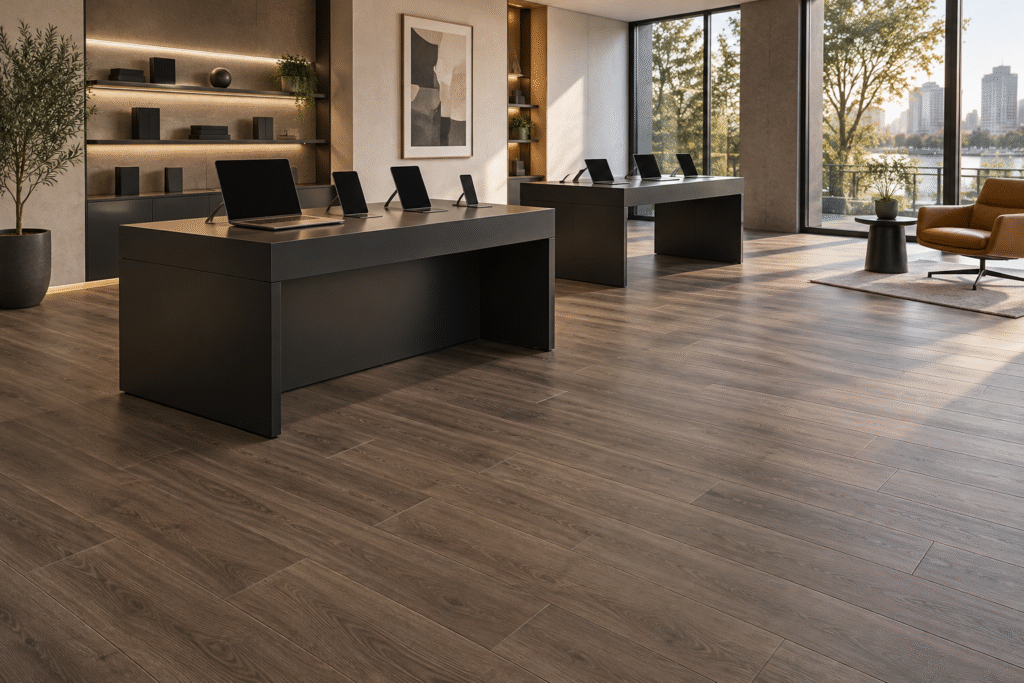
Consider a completed electronics showroom with pale oak-look SPC planks, freestanding display tables, enclosed devices, and a customer seating area. The buyer may prioritize appearance, durability, cleaning, and replacement planning. However, the same business may also operate a room where technicians handle exposed electronic assemblies. Similar furniture colors do not make those activities equivalent.
Therefore, ask the operator to mark sales areas, demonstrations, component handling, repairs, and other activities on the room schedule. Do not assume that a public showroom automatically has no ESD requirements. Instead, obtain the project team’s assessment before selecting the flooring category. Record who can approve ordinary decorative flooring and who controls any specialist ESD specification.
This article discusses procurement boundaries. It does not establish ESD suitability for any Witop Decor flooring SKU or provide a grounding installation design.
Treat ESD Control as a Program Requirement
IEC 61340-5-1:2024 addresses administrative and technical requirements for an ESD control program for relevant electronic handling activities. It does not make a decorative flooring purchase into a complete control program. Ask the project’s ESD specialist which standards, current editions, and project criteria apply. See the IEC description of IEC 61340-5-1:2024.
Next, separate three procurement records: the room-use assessment, the decorative floor specification, and any required ESD system specification. Connect them through room numbers and revision dates. Consequently, a late change from device display to component servicing will trigger a review instead of slipping through under an unchanged finish code.
Compare the Questions Each Specification Must Answer
A shared comparison table helps the design team and procurement team keep their requests clear. It also prevents a supplier’s attractive sample from carrying claims that the technical documents never support.
| Decision area | Decorative SPC selection | Project requiring ESD control |
|---|---|---|
| Intended activity | Confirm commercial room use | Obtain specialist activity and risk review |
| Product identity | Specify exact plank and finish | Identify every proposed system component |
| Evidence | Review relevant commercial performance | Review project-specific qualification evidence |
| Footwear | Consider ordinary traffic and wear | Verify the required personnel-grounding approach |
| Installation | Follow the approved SPC instructions | Follow the approved specialist system design |
| Handover | Supply care and warranty documents | Include required verification and control records |
For example, the decorative schedule might describe a warm wood tone and a plank format. The specialist schedule may require a different flooring system. Coordinate the visual boundary between areas, but do not force one product across both simply to simplify the order.
Understand the Footwear and Flooring Evidence Boundary
When a project uses footwear and flooring for personnel grounding, the combination matters. EOS/ESD Association explains that separately acceptable footwear and flooring do not automatically perform adequately together. Contact resistance and charge generation can affect the result. It also warns that cleaning materials can change system behavior. See its footwear and flooring explanation.
Accordingly, request evidence that matches the proposed combination and test conditions. Ask the specialist to review system resistance and body-voltage evidence where the applicable program requires them. Avoid choosing a universal acceptance number from an internet article. The responsible reviewer should determine the relevant method, limits, installation verification, and ongoing checks for the actual project.
Make the Technical Submission Traceable
Ask the supplier to identify the exact flooring model, surface construction, backing, and installation system in the technical specifications. Then compare those identifiers with the sample label and proposed purchase-order line. A report for a different surface, accessory, or assembly should prompt clarification. The word antistatic on a sales sheet cannot resolve a mismatch between the order and the tested configuration.
Also request the test method, report date, laboratory identity, conditioning details, and any limitations that affect interpretation. Keep a question log so the reviewer can distinguish missing information from an actual rejection. Sample evaluation can confirm color and texture, but visual approval alone cannot close an electrical-performance requirement. Route those questions to the specialist before committing the relevant zone.
Continue Ordinary Commercial Flooring Checks
For areas where the project approves decorative SPC, compare the practical demands of the showroom. Review display-table loads, chair movement, entrance dirt, cleaning routines, and the manufacturer’s installation conditions. Moreover, check room dimensions, transitions, and the instructions for fixed fixtures before approving a continuous floor layout. Do not let an ESD discussion distract from ordinary suitability questions.
A decorative building materials supplier should receive a clear room brief. Buyers should verify test reports, VOC limits, fire-rating documents, and warranty terms for the exact product and intended use. Confirm what a stated fire rating actually covers. Likewise, compare installation cost and maintenance cost with the proposed operating routine rather than assuming that a familiar SPC category guarantees identical performance across suppliers.
Keep the Quote and Handover Scope Honest
In the project quotation, identify which rooms use decorative SPC and which require specialist review or a separate supply scope. Then list the floor quantity, accessories, sample references, and specification revisions against those rooms. This structure helps project procurement compare offers without hiding a specialist requirement inside a generic price per square meter.
Discuss MOQ, lead time, and container loading after the product scope becomes clear. Also ask whether custom colors or OEM/ODM cooperation would change the construction behind an approved sample. If a change affects relevant technical evidence, reopen the review before production. A private label should not imply new electrical properties or transfer another product’s qualification to your order.
At handover, provide the agreed care documents and name the party responsible for each outstanding acceptance item. Meanwhile, keep decorative warranties distinct from any specialist system obligations. This prevents an ordinary flooring supplier’s delivery note from becoming accidental confirmation of an ESD program that another team must validate.
B2B Buyer FAQ
Can an electronics retailer use ordinary SPC flooring?
Possibly, where the exact product meets the approved requirements for that area. First confirm the activities and project assessment. A retailer’s business name alone does not establish either a need for specialist ESD flooring or an exemption from it.
Does an antistatic description prove ESD suitability?
No. Ask what the claim means, which test supports it, and which product configuration the report covers. Then let the responsible specialist assess its relevance to the project. Avoid turning a limited marketing statement into an unrestricted system claim.
Can matching footwear make any SPC floor acceptable?
Do not assume so. The project needs evidence for its specified personnel-grounding approach and actual components. Therefore, obtain specialist review before accepting a footwear change as a solution to an unresolved flooring requirement.
Should a showroom sample approval include ESD acceptance?
Keep appearance approval and specialist acceptance clearly identified. The same sample reference can connect both records, but the reviewer must see what each approval covers. Also record unresolved technical questions before the purchasing team releases the order.
What should a distributor include in an SPC flooring inquiry?
Send room activities, quantities, the destination, and the approved performance requirements. Identify any specialist exclusions or unresolved ESD questions. Contact Witopdecor to request samples and technical data sheets, then submit a bulk order inquiry for the proposed decorative flooring scope.

James is a content creator and decorator with five years of experience designing home decor. In his daily life, james is constantly on the lookout for the latest, great examples of house design and further optimizes his solutions. Additionally, he writes articles related to outdoor design, interior design, and architectural decorating materials to help brands build more engaging relationships with their audiences.