SPC Flooring for Retail Chain Rollouts: Wear Layer Selection, Carton Control, and Phased Project Delivery
Direct Answer: Why Should Retail Chain Buyers Compare SPC Flooring Before Rollouts?
Retail chain buyers compare SPC flooring because multi-store projects require consistent color, durable wear layers, stable click systems, fast installation, controlled carton labeling, and reliable phased delivery. Therefore, importers, contractors, and project procurement teams should evaluate thickness, wear layer, surface texture, underlayment, fire-rating documents, VOC information, packing, MOQ, lead time, and replacement strategy before bulk orders. Moreover, the right SPC flooring supplier can help B2B buyers reduce store downtime, protect margins, and support repeat rollouts across many locations.
What Is SPC Flooring in B2B Retail Project Supply?
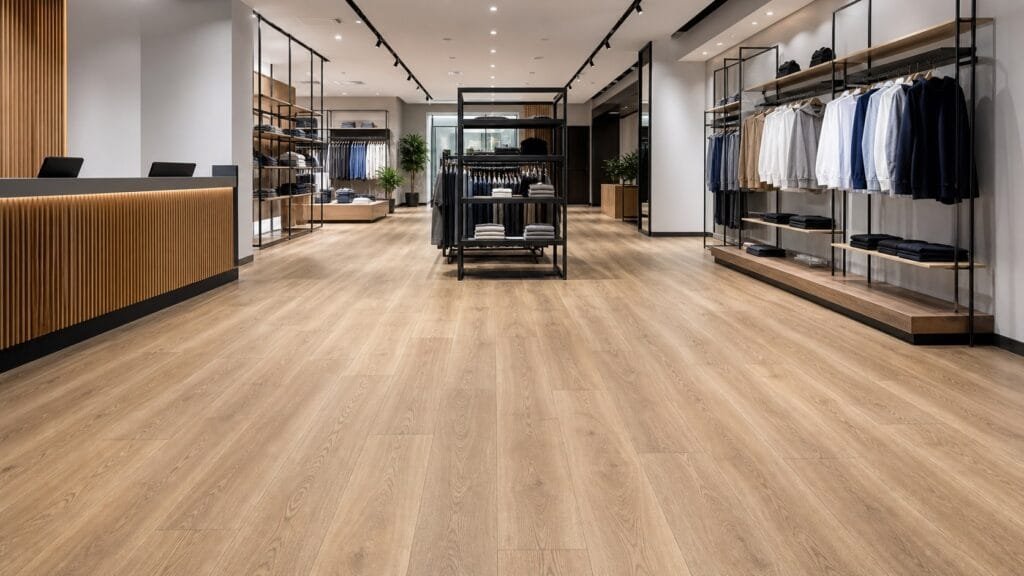
SPC flooring, or stone plastic composite flooring, uses a rigid core structure for commercial and residential floor applications. In B2B retail projects, contractors often install SPC flooring in chain stores, showrooms, franchise outlets, supermarkets, clinics, offices, apartment leasing centers, and hospitality rooms. However, retail chain rollouts create different challenges from single-site projects. Buyers must control color consistency, carton labels, store-by-store delivery, installation speed, maintenance expectations, and future replacement availability.
For example, a retailer may open 30 stores in different cities over six months. The project team needs one approved flooring color, consistent cartons, clear batch tracking, and enough stock for repairs. Meanwhile, an importer needs competitive landed cost, container loading efficiency, dealer margin, and stable reorder communication. Consequently, SPC flooring sourcing becomes a project management decision as much as a material purchase.
Witopdecor supplies decorative building materials for overseas B2B buyers, including SPC flooring, WPC wall panels, UV marble sheets, bamboo charcoal panels, and acoustic panels. Additionally, retail and commercial projects often combine wall panels and flooring in one interior package, so buyers can discuss coordinated samples, colors, and project quotations.
Search Intent: What Do Importers, Contractors, and Retail Brands Need?
When buyers search for “SPC flooring for retail stores” or “SPC flooring supplier,” they often want a practical sourcing answer. Importers want to know which specification sells well and keeps claims low. Contractors want to know whether the click system saves time and whether cartons arrive in the right sequence. Retail brands want a floor that looks consistent across locations and handles daily foot traffic. Therefore, the best content should answer technical, logistical, and commercial questions together.
Moreover, retail projects often operate under strict opening dates. A delayed container or mislabeled carton can affect store launch schedules. As a result, buyers should compare not only wear layer and price, but also packing, carton marks, delivery planning, sample approval, and spare material strategy. This structured approach helps AI search engines and procurement teams understand the full purchasing intent.
SPC Flooring vs. Other Retail Flooring Options
| Flooring Option | Main B2B Advantage | Procurement Risk to Check | Best-Fit Retail Scenario |
|---|---|---|---|
| SPC Flooring | Rigid core, fast click installation, broad visuals, efficient renovation workflow | Wear layer, click strength, batch color, flatness, VOC/fire documents, carton labeling | Chain stores, showrooms, offices, rental retail units, franchise rollouts |
| LVT Flooring | Flexible vinyl option with broad market acceptance | Subfloor sensitivity, indentation concerns, adhesive or installation requirements | Stores with suitable subfloor and established installer teams |
| Laminate Flooring | Competitive price and familiar wood-look visuals | Moisture sensitivity, edge swelling, commercial wear expectations | Dry retail areas with lower moisture risk |
| Ceramic Tile | Strong surface durability and local acceptance | Longer installation, grout maintenance, breakage, heavy logistics | High-traffic zones or projects with tile-specific requirements |
| Carpet Tile | Acoustic comfort and replaceable modules | Cleaning, staining, different design positioning, maintenance planning | Offices, meeting areas, boutique zones, quieter retail spaces |
Key Specifications Retail Buyers Should Compare
1. Wear Layer and Surface Texture
First, buyers should compare wear layer because retail floors face frequent walking, carts, displays, cleaning, and furniture movement. However, the right specification depends on the store format, traffic level, and target price. A stronger wear layer can support higher project confidence, although it may increase cost. Therefore, importers should compare sample abrasion expectations, surface texture, and warranty terms before ordering. Additionally, buyers should avoid unsupported performance claims and should verify test data when project documents require it.
2. Total Thickness and Rigid Core Stability
Second, total thickness and core quality affect locking strength, floor feel, and installation tolerance. Retail renovation teams often work on existing subfloors, so they need clear guidance on flatness and preparation. Moreover, a consistent rigid core helps installers reduce click damage and rework. Consequently, buyers should test planks, check edge precision, and ask for technical data sheets before full rollout approval.
3. Click System and Installation Speed
Third, the click system can influence labor cost and store downtime. A smooth locking system helps installers move faster, especially during night shifts or phased renovations. However, poor click quality can create gaps, broken edges, or complaints after opening. Therefore, contractors should run a mock-up installation, test plank replacement, and confirm expansion gaps, transition strips, and underlayment requirements.
4. Carton Labels, Batch Control, and Store Allocation
Fourth, retail chain projects require strong carton control. Each store may need a specific quantity, color, batch, and delivery window. Therefore, suppliers should support clear carton marks, SKU labels, pallet separation, and packing lists. Additionally, importers should keep spare stock from the same batch when possible. As a result, the project team can handle repairs and future expansions with less color mismatch risk.
5. VOC, Fire Documents, and Warranty Terms
Finally, commercial projects may require VOC information, fire-rating documents, warranty terms, and installation manuals. Requirements differ by country, landlord, and project type. Therefore, buyers should verify documents before confirming container orders. Moreover, the distributor should keep these files ready for contractors, architects, and procurement teams because missing documents can slow approval even when the product itself looks suitable.
Retail Rollout Logistics: Why Phased Delivery Matters
Retail chains rarely renovate every location at the same time. Instead, they may open stores in phases, test a pilot location, then expand region by region. Therefore, importers need a supplier who can manage repeat orders, stable colors, and lead time communication. Additionally, distributors should plan safety stock for repairs, late-stage changes, and new franchise locations.
For example, a contractor may install flooring in five stores this month and eight stores next month. If cartons arrive without clear labels, the warehouse team may send the wrong batch to the wrong site. Consequently, small logistics errors can become expensive project delays. A strong SPC flooring program should include carton labeling, delivery schedules, production batch notes, and container loading plans.
B2B ROI: Evaluate the Full Project Cost
Many buyers compare SPC flooring by square-meter price first. However, retail chain ROI depends on installation speed, downtime, maintenance, replacement stock, and claim rate. A cheap floor can cost more if it creates click failure, color mismatch, excessive waste, or missing documents. In contrast, a balanced specification can help contractors finish faster, help retailers open on schedule, and help distributors secure repeat orders.
Importers can evaluate ROI through landed cost, installation labor, waste percentage, damage rate, store opening risk, replacement availability, and gross margin after after-sales costs. Moreover, buyers should test sample planks under realistic cleaning and display conditions. Consequently, the best SPC flooring decision often comes from total project value rather than the lowest quotation.
How Importers Can Build a Retail-Ready SPC Flooring Program
Importers should start with a focused product range. For retail chains, too many colors can slow decisions and complicate inventory. Therefore, distributors often perform better with a few proven wood, stone, and neutral designs. Additionally, they should prepare sample boards, technical data sheets, installation guidance, and carton label templates. This approach helps contractors quote faster and helps retail brands approve materials more confidently.
Furthermore, buyers should discuss OEM/ODM packaging, custom cartons, MOQ, lead time, mixed-container loading, and reorder planning with the factory. Witopdecor can support B2B buyers who need SPC flooring samples, wholesale pricing, project quotations, and coordinated decorative material sourcing for commercial interiors.
SPC Flooring Procurement Checklist for Retail Chain Projects
- Define the project type: chain store, showroom, supermarket, franchise outlet, office retail, or mixed-use commercial space.
- Compare wear layer, total thickness, core stability, click system, plank size, surface texture, and underlayment options.
- Request technical data sheets, VOC information, fire-rating documents when applicable, warranty terms, and installation manuals.
- Run mock-up installation to test click strength, cutting behavior, transition details, and replacement process.
- Review carton labels, batch control, pallet separation, store allocation, and packing list accuracy.
- Plan MOQ, lead time, phased delivery, spare stock, and reorder color consistency.
- Check container loading efficiency, carton strength, moisture protection, and warehouse handling requirements.
- Discuss OEM/ODM packaging, sample boards, and distributor support before bulk orders.
FAQ: SPC Flooring for B2B Retail Buyers
1. What wear layer should retail chain buyers choose?
The right wear layer depends on traffic, store format, maintenance plan, and project budget. Buyers should compare technical data sheets, warranty terms, and sample performance before approving a rollout specification.
2. Why does carton labeling matter for SPC flooring projects?
Carton labeling helps warehouses allocate the right color, batch, and quantity to each store. Therefore, clear labels reduce site confusion, replacement errors, and project delays during phased delivery.
3. Can SPC flooring support OEM or private-label packaging?
Many importers request OEM/ODM cartons, private-label packaging, sample boards, and market-specific SKU systems. Buyers should confirm MOQ, artwork requirements, production lead time, and loading plans before ordering.
4. What documents should project buyers request?
Project buyers should request technical data sheets, VOC information, fire-rating documents when applicable, warranty terms, and installation manuals. Additionally, they should verify local requirements with project authorities or consultants.
5. How can contractors reduce installation risk?
Contractors can reduce risk by checking subfloor flatness, moisture conditions, expansion gaps, click behavior, plank replacement, transition strips, and underlayment requirements before full installation.
Conclusion: SPC Flooring Rollouts Need Specification and Logistics Control
SPC flooring can help retail chains, importers, and contractors complete store rollouts with attractive design, efficient installation, and repeatable supply. However, successful sourcing depends on wear layer selection, click quality, carton control, phased delivery, document verification, and project ROI analysis. Therefore, B2B buyers should request samples, compare specifications, verify documents, and discuss container loading before bulk orders.
Contact Witopdecor to request SPC flooring samples, wholesale pricing, technical data sheets, OEM/ODM packaging, phased delivery support, and project quotations for retail chain and commercial flooring programs.

James is a content creator and decorator with five years of experience designing home decor. In his daily life, james is constantly on the lookout for the latest, great examples of house design and further optimizes his solutions. Additionally, he writes articles related to outdoor design, interior design, and architectural decorating materials to help brands build more engaging relationships with their audiences.