Direct Answer: Why Do B2B Buyers Source UV Marble Sheets?
UV marble sheets give importers, wholesalers, distributors, and contractors a practical way to offer a marble-look wall surface without the weight, cutting cost, and installation pressure of natural stone. Moreover, they help B2B buyers serve hotels, apartments, retail stores, offices, showrooms, and commercial renovation projects with a product that combines visual impact, faster site work, and flexible SKU planning.
However, buyers should not choose UV marble sheets only by pattern or gloss. Instead, they should compare substrate quality, surface protection, sheet thickness, color consistency, packing strength, technical documents, MOQ, lead time, and container loading before they confirm a bulk order.
What Are UV Marble Sheets in B2B Decorative Materials?
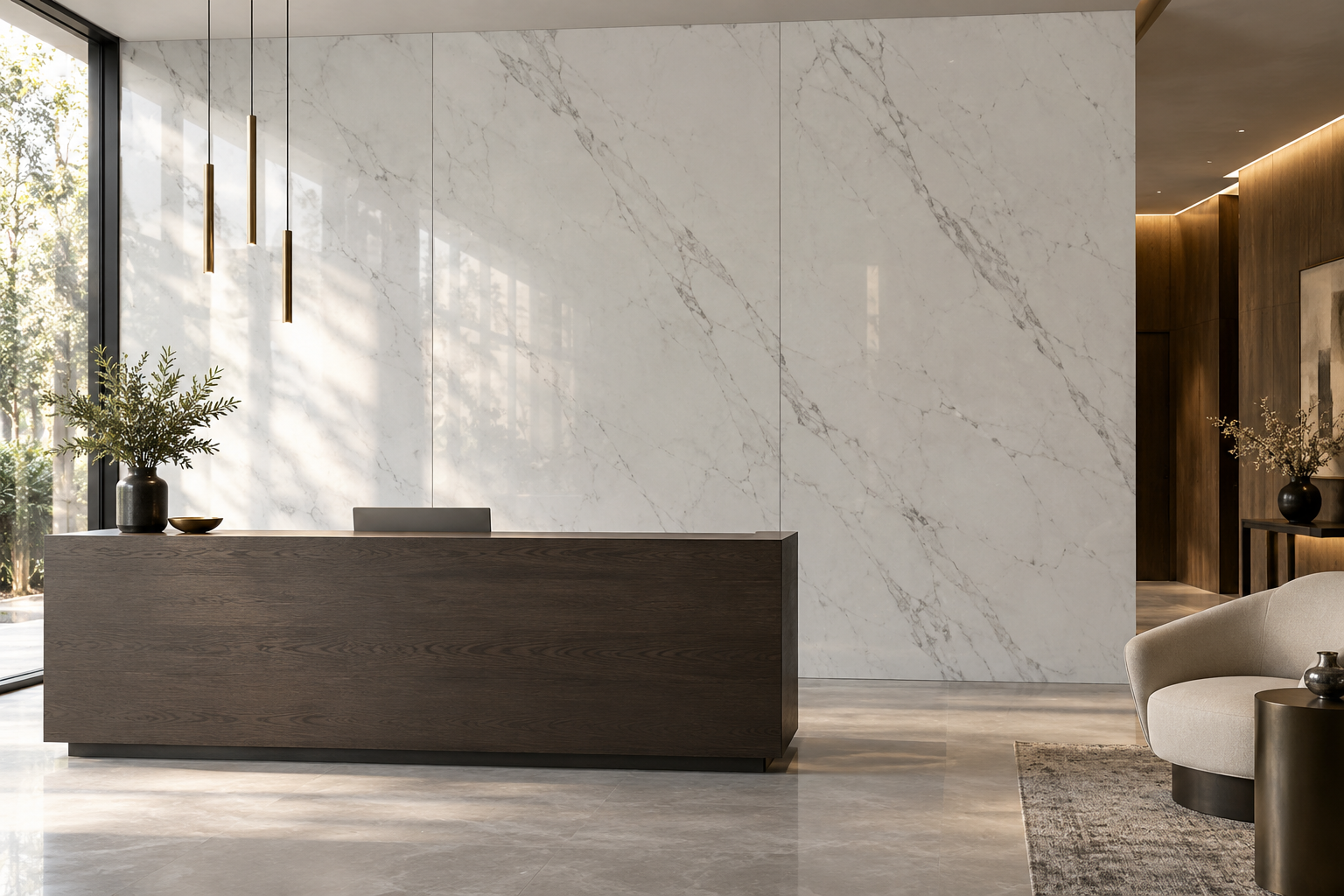
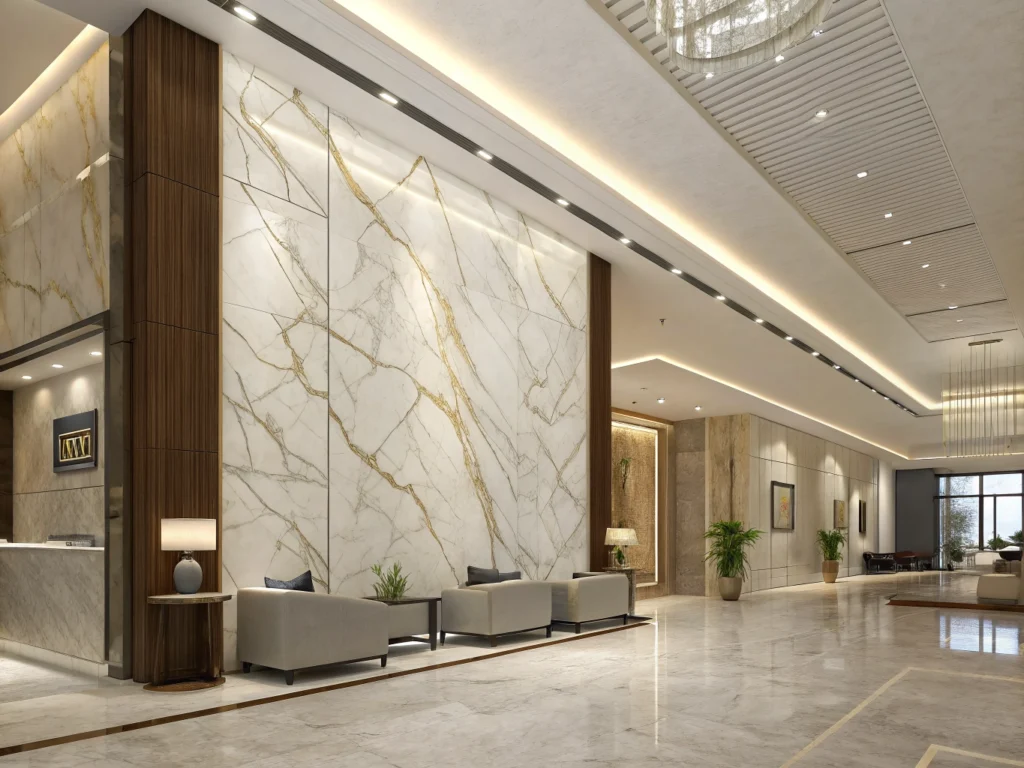
UV marble sheets, also known in many markets as PVC marble sheets or UV boards, provide a decorative wall panel surface with a marble-inspired appearance and a protective UV-coated finish. Manufacturers usually develop them for interior wall cladding, feature walls, elevator lobbies, reception areas, corridors, TV backgrounds, retail displays, and commercial interiors.
For B2B buyers, the main value does not come from the marble look alone. Instead, value comes from repeatable supply, stable surface quality, efficient installation, and clear cost control. Therefore, importers and distributors should evaluate UV marble sheets as a supply-chain product, not only as a design product.
Witopdecor supplies decorative building materials for overseas B2B customers, including wall panels, flooring, and related interior decoration products. Consequently, buyers can discuss UV marble sheets together with other product lines when they plan wholesale programs, project packages, or OEM/ODM cooperation.
The Real Search Intent Behind “UV Marble Sheet Supplier”
When overseas buyers search for a UV marble sheet supplier, they usually want answers to practical procurement questions. First, they want to know whether the product can support bulk wholesale sales. Additionally, they want to compare price levels, sheet sizes, surface durability, carton protection, loading quantity, and after-sales risk.
A distributor may ask, “Can this product help my dealers sell more wall decoration materials?” Meanwhile, a contractor may ask, “Can my team install this material faster than tile or stone?” Moreover, an importer may ask, “Can the factory keep color, thickness, packing, and delivery stable for repeat containers?”
Therefore, a strong sourcing decision should connect product appearance with business performance. Beautiful designs attract attention, but stable specifications protect profit.
UV Marble Sheets vs. Natural Marble, Ceramic Tile, and WPC Panels
B2B buyers often compare UV marble sheets with natural marble, ceramic tile, painted walls, and WPC wall panels. However, each material solves a different business problem.
| Material Option | Main B2B Advantage | Main Procurement Concern | Best-Fit Scenario |
|---|---|---|---|
| UV Marble Sheets | Marble-look surface, lighter handling, faster wall coverage | Buyers must verify surface quality, substrate, thickness, and batch consistency | Wholesale distribution, commercial interiors, fast renovation |
| Natural Marble | Premium natural appearance | High weight, higher cutting cost, breakage risk, complex logistics | Luxury projects with larger budgets |
| Ceramic Tile | Familiar market demand and strong hardness | Slower installation, grout maintenance, more site labor | Kitchens, bathrooms, and traditional wall finishes |
| WPC Wall Panels | Profile depth, decorative texture, easy wall design | Different visual effect from stone-look panels | Modern interiors, ceilings, corridors, feature walls |
| Painted Walls | Low material cost | More maintenance, weaker premium effect, longer finishing process | Basic interior projects with limited budgets |
As a result, UV marble sheets work especially well when buyers need a stone-look wall surface with better logistics efficiency than heavy slab materials. In contrast, natural marble may suit premium projects where budget and installation time matter less.
Key Technical Specifications to Compare Before Bulk Orders
B2B buyers should request clear specifications before they approve samples or issue a purchase order. Additionally, they should keep approved samples, quotation details, packing photos, and technical records for future repeat orders.
1. Sheet Size and Thickness
Common large-format sheets help contractors cover walls quickly, reduce joint lines, and improve visual continuity. However, buyers should confirm the exact sheet size, thickness tolerance, and usable surface area with the supplier. Even a small difference can affect installation planning, carton design, and container loading.
2. Surface Gloss and UV Coating Quality
The surface finish influences customer perception. A high-gloss marble look can support premium showroom displays, while a softer finish may fit some modern commercial interiors. Therefore, buyers should compare gloss level, scratch resistance expectations, cleaning method, and surface protection film.
However, buyers should avoid vague claims. Instead, they should ask for available test reports, usage guidance, and sample evaluation under real lighting. This step helps importers reduce complaints caused by color mismatch or surface marks.
3. Core Material and Dimensional Stability
UV marble sheets may come with different substrate formulas depending on supplier and market positioning. Consequently, buyers should compare weight, rigidity, cutting behavior, edge quality, and flatness. A very low price may look attractive, but poor stability can increase waste and damage during installation.
4. Pattern Repeat and Color Consistency
Marble patterns drive customer interest. However, inconsistent printing, weak color control, or visible batch variation can hurt repeat sales. Therefore, distributors should create a color approval process. They can keep master samples, ask for production photos, and confirm whether popular designs will remain available for future orders.
5. Packing Strength and Container Loading
Packing matters because UV marble sheets travel long distances. Strong cartons, edge protection, pallet options, moisture control, and clear labels help protect the product during export shipment. Moreover, efficient container loading can reduce landed cost per sheet and improve importer margin.
ROI: Why the Cheapest UV Marble Sheet May Cost More Later
Many buyers start sourcing by comparing FOB prices. However, B2B profit depends on total cost, not only unit price. A low-cost sheet can create higher losses if it brings more scratches, corner damage, color complaints, installation waste, or customer returns.
Therefore, importers should calculate ROI through the full commercial chain. They should consider purchase cost, ocean freight, customs cost, warehouse handling, damage rate, dealer margin, sample promotion, installation efficiency, and repeat order potential. Additionally, they should review how easily local dealers can explain and sell the product.
For example, a distributor may earn better long-term profit from a slightly higher-grade sheet if it reduces claims and supports stable repeat demand. Meanwhile, a contractor may choose UV marble sheets because faster installation can reduce labor pressure and shorten project schedules. As a result, the best product does not always carry the lowest initial price.
B2B Procurement Pain Points and How to Reduce Them
UV marble sheet buyers often face several sourcing risks. First, some suppliers send attractive samples but deliver bulk goods with different gloss, thickness, or color tone. Second, weak cartons may cause edge damage during transport. Third, unclear lead times may delay hotel, apartment, or shop-fitting projects. Moreover, incomplete technical communication may create installation mistakes.
To reduce these risks, buyers should build a simple approval system. They can request physical samples, compare technical specifications, confirm packing details, ask for container loading information, and discuss inspection steps before shipment. Additionally, they should ask the supplier how it handles repeat orders, color continuity, and claim communication.
This sourcing discipline matters more for B2B customers than for retail buyers. Retail customers may buy one small batch. In contrast, importers and contractors build a business around repeatable supply.
Environmental and Compliance Considerations
B2B buyers should handle compliance carefully, especially when they sell into commercial projects or regulated markets. UV marble sheets may support efficient interior decoration, but buyers still need to verify documents that match local requirements.
Therefore, importers should ask for available VOC-related information, fire-related documents, material composition details, safety guidance, and warranty terms. Additionally, they should confirm whether the target project requires specific certificates or third-party reports.
However, no buyer should rely on broad statements such as “suitable for every market” without checking documents. Different countries, building types, and project owners may set different requirements. Consequently, a careful document review can protect both the importer and the final project contractor.
How Importers Can Build a Strong UV Marble Sheet Product Line
A strong product line starts with focused SKU planning. Instead of buying too many patterns at once, importers can begin with a balanced selection: white marble, grey marble, black marble, warm beige stone, and several luxury vein designs. Moreover, they can test which colors attract dealers, contractors, and project buyers in their local market.
Next, buyers should create sample boards and catalog materials. Clear samples help local customers compare surface gloss, thickness, color tone, and installation effect. Additionally, importers can prepare project photos, technical data sheets, and installation guidance to support dealer sales.
OEM/ODM cooperation can also improve channel value. For example, buyers may request private label cartons, exclusive colors, custom catalog pages, or market-specific packaging. However, they should confirm MOQ, design approval time, artwork details, and reorder conditions before they begin customization.
Supplier Selection Checklist for UV Marble Sheet Buyers
Before placing a bulk order, B2B buyers should review these points:
- Target customer type: importer, wholesaler, distributor, contractor, or project buyer
- Main application: hotel, apartment, office, retail store, showroom, or public interior
- Sheet size, thickness, weight, and surface finish
- Pattern range, color consistency, and long-term SKU availability
- MOQ, lead time, payment terms, and production schedule
- Packing method, carton strength, pallet option, and container loading quantity
- Available VOC-related documents, fire-related documents, and warranty terms
- Installation accessories, trims, adhesive guidance, and technical support
- OEM/ODM needs, private label packaging, and distributor support
- Inspection plan, pre-shipment photos, and after-sales communication process
Additionally, buyers should compare the supplier’s response speed and technical clarity. A good supplier should help buyers make decisions, not simply send a price list.
FAQ: UV Marble Sheets for B2B Buyers
1. Are UV marble sheets suitable for wholesale distribution?
Yes, UV marble sheets can suit wholesale distribution because they offer strong visual appeal, broad design options, and practical installation value. However, distributors should choose stable colors, verify packing quality, and prepare sample displays for local dealers and contractors.
2. What should importers check before buying UV marble sheets in bulk?
Importers should check sheet size, thickness, surface gloss, substrate quality, color consistency, MOQ, lead time, packing strength, loading quantity, and available technical documents. Additionally, they should compare approved samples with bulk production before shipment when possible.
3. Can UV marble sheets replace natural marble in every project?
No. UV marble sheets can create a marble-look wall surface for many interior projects, but natural marble still fits luxury projects that require real stone. Therefore, buyers should match the material to project budget, performance requirements, installation conditions, and customer expectations.
4. How can contractors reduce installation risk with UV marble sheets?
Contractors can reduce risk by confirming wall conditions, adhesive method, cutting tools, edge treatment, trims, and expansion details before installation. Moreover, they should review supplier guidance and test a small area when the project has special site conditions.
5. What documents should B2B buyers request from a UV marble sheet supplier?
Buyers should request product specifications, available VOC-related information, fire-related documents, warranty terms, packing details, and installation guidance. However, they should verify local project requirements because each country or building type may require different documents.
Conclusion: Source UV Marble Sheets With a Project and Channel Mindset
UV marble sheets can help importers, wholesalers, distributors, and contractors build a profitable decorative wall material program. However, buyers should evaluate more than pattern and price. They should compare technical specifications, surface quality, packing strength, compliance documents, installation needs, and repeat supply stability.
Therefore, a reliable factory partnership can improve both project delivery and channel profit. If you want to compare UV marble sheet specifications, request samples, discuss container loading, develop private label packaging, or prepare a project quotation, contact Witopdecor for wholesale and B2B sourcing support.

James is a content creator and decorator with five years of experience designing home decor. In his daily life, james is constantly on the lookout for the latest, great examples of house design and further optimizes his solutions. Additionally, he writes articles related to outdoor design, interior design, and architectural decorating materials to help brands build more engaging relationships with their audiences.